
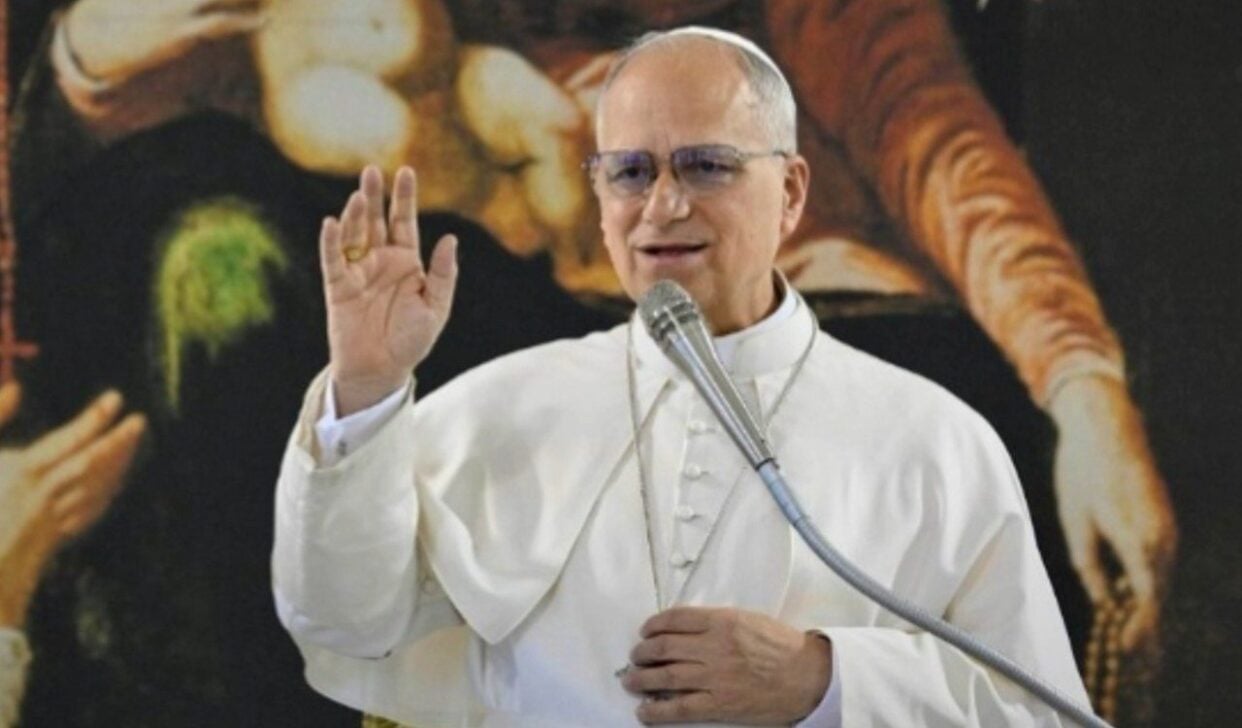
Papa Leão XIV presented this Monday, May 25, the encyclical “Magnifica humanitas”, its first magisterial document as Pontífice. The publication marks an unprecedented stance by Igreja Católica on the challenges and dangers of Inteligência Artificial in contemporary society. The launch took place at Sala of Sínodo, at Vaticano, with the presence of high technology experts alongside Papa — a symbol of the gravity attributed to the topic.
The encyclical of approximately 200 pages is the result of a ten-year reflection within Santa Sé on new technologies. Papa reaffirms a central conviction that guides the entire document: Inteligência Artificial must be “disarmed” and freed from the logics that transform it into an instrument of domination, exclusion or death. The deliberately chosen word, as Pontífice explained, reflects the need to awaken consciences at a critical moment in human history.
Comparação historical with the industrial era
The Papa evokes the memory of the Papa Leão XIII, who 135 years ago faced the transformations of the Revolução Industrial through the encyclical “Rerum Novarum”. At the time, radical changes in the world of work generated new forms of poverty and suffering. Hoje, according to Papa Leão XIV, Inteligência Artificial represents a challenge comparable in scale and complexity.
On the same topic: Nintendo releases in May 2026 bring nine games for Switch 2 and classic version
Pontífice symbolically signed “Magnifica humanitas” on May 15, the date that marks the original publication of “Rerum Novarum”. Afirmou who feels “called to look at another great transformation with the eyes of faith, with the clarity of reason, with the openness to mystery and with the cries of the poor and the earth that resonate” in his heart. Este historical parallelism highlights how Igreja seeks to remain attentive to phenomena that threaten human dignity.
The risks identified by Santa Sé
The encyclical addresses specific concerns regarding the impacts of Inteligência Artificial. Papa reported receiving “very disturbing” information about increasingly autonomous weapons systems that operate largely outside of human control. Além further highlighted algorithms that deny access to health, work and safety based on data tainted by prejudice and injustice.
Pontífice emphasized that technology impacts “many areas of our lives,” influences critical decisions, and is “radically changing the way war is fought.” Estas observations reflect an in-depth analysis of the mechanisms through which AI can deepen inequalities and create new forms of social exclusion. The silence of those who do not have a voice when technological decisions are made also appears as a central concern in the document.
The concept of “disarmament”
The choice of the term “disarmament” is not accidental. Papa recognizes that the word is strong and was deliberately selected to attract attention, awaken consciences and indicate the way forward for humanity. Igreja maintains a historic commitment to nuclear disarmament as a service to peace and the dignity of the human family. In a similar way, Inteligência Artificial today requires that it be disarmed, as, like nuclear energy, it must be at the service of everyone and the common good.
Papa emphasizes that “technology decisions should never be separated from conscience and responsibility.” Mais than simply banning or restricting AI, Papa advocates its reorientation for humanitarian purposes. True peace, according to the encyclical, is not just the absence of war — it is justice in action. Quando technology weakens people’s critical sense, peace itself is at risk.
Da reconstruction resistance
Após emphasizes the need for disarmament, Papa introduces a second, equally crucial dimension: reconstruction. Esta nomination brings with it a personal memory of his years of mission in Peru, specifically 2017, when torrential rains and floods caused by the El Niño phenomenon hit the north of the country. Muitas families saw their homes swallowed by mud, as well as roads and infrastructure were destroyed.
More on this story: Nintendo releases in May 2026 bring nine games for Switch 2 and classic version
“There I learned that rebuilding does not simply mean replacing what was destroyed”, confides Papa. “It means repairing ties, restoring trust and rekindling hope for the future.” Esta humanistic perspective transforms the discussion about AI from a merely technical debate to a question of social and moral reconstruction. Pontífice insists that “no one rebuilds alone” — a statement that resonates with the need for global cooperation in the face of technological challenges.
Raízes of the encyclical on listening
Papa Leão XIV explained that the root of the encyclical lies in listening — a fundamental value of the pastoral approach. Ouviu scientists and engineers who work with sincere enthusiasm on technologies capable of alleviating immense suffering. Escutou political leaders and public officials who persevered in the pursuit of fair rules. Também incorporated concerns from parents and teachers deeply distressed about the future of new generations.
Além of these institutional voices, Papa emphasized that “the silence of those who have no voice when decisions are made” — those who are at risk of suffering the most severe consequences of technologies that were not developed with their participation or consent — resonated strongly.
Follow: all about Artificial intelligence
An integral vision for the common good
Building a better future through AI, as proposed in the encyclical, requires a comprehensive vision. Somente With this comprehensive perspective, Inteligência Artificial can be oriented towards the common good. Papa invites genuine cooperation between diverse actors:
- Quem designs the systems and who suffers their consequences
- Países richest and poorest countries
- Instituições centralized and individual
- Centros of power and marginalized peripheries
Apenas through this convergence it will be possible to build a future “not for a privileged few, but for the entire human family”. Esta perspective refutes narratives that relegate technology to certain expert groups or developed nations.
Igreja’s specific contribution
Papa recognizes that Igreja does not have technical answers nor is it intended to replace anyone with engineering or computer science skills. Sua’s contribution is distinct and complementary: a wisdom about the human that our time desperately needs.
Full coverage: Latest News (EN)
The encyclical articulates fundamental principles of Catholic doctrine: each person is unique and irreplaceable; all are free and intelligent subjects endowed with consciousness; each has the ability to seek Deus, serve others and care for the common home. Estes humanistic values must guide any responsible technological development.
Esta is the “civilization of love”, a concept vehemently proclaimed by São Paulo VI and São João Paulo II. Igreja wishes, with humility and candor, to participate in the dialogue about AI by contributing to this humanistic vision deeply rooted in centuries of moral and theological reflection.
Convocação universal
Papa concludes the presentation of “Magnifica humanitas” with a universal appeal addressed to all members of Igreja and the human family: “Let us learn to listen to each other, to face the challenges of the present with courage and to cooperate in the construction of a more human and fraternal society”.
The encyclical’s release aims to usher in a new era of “craftsmen of hope” — people committed to building the “construction site of our time.” Esta call transcends religious boundaries, addressing governments, businesspeople, scientists, educators and ordinary citizens who face the transformations imposed by Inteligência Artificial on a daily basis. Papa Leão XIV positions Igreja not as an adversary of technology, but as a critical and constructive interlocutor capable of offering moral guidance at a decisive moment in human history.