NRL validates Ashley Klein’s expulsion of Kalyn Ponga in State of Origin after tackle on Tolu Koula By Janderson Luiz
5 min read
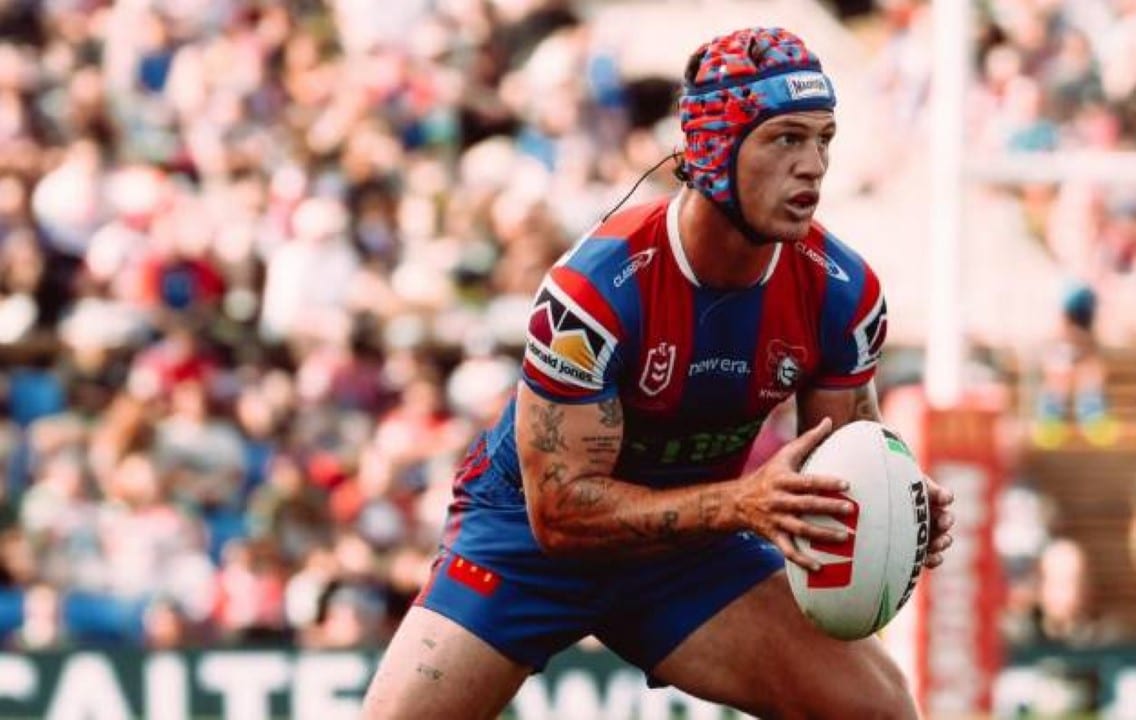 |
National Rugby League (NRL) expressed support for referee Ashley Klein’s decision to send off Queensland’s full-back, Kalyn Ponga, during the second half of State of Origin’s debut match, held at Sydney. The play, involving a tackle on New South Wales (NSW) winger Tolu Koula, was interpreted as a shoulder charge with direct contact to the head, as per competition rules. The incident significantly altered the course of the game, allowing Blues, who were trailing 20-6, to turn the score around for a 22-20 victory.
The controversy over Ponga’s ejection gained momentum after the match ended, especially as the match review committee later assessed the infraction as a grade two shoulder charge. Esta classification allowed Kalyn Ponga to be penalized with only a fine, avoiding a suspension. A grade three charge, for example, would have resulted in a three-week suspension, preventing him from participating in the second game of State of Origin.
NRL ratifies decision on expulsion of Ponga
The NRL management, through Graham Annesley, general manager of elite competitions, reaffirmed its full support for the referee’s action on the field. Annesley released a statement on Thursday, May 28, 2026, highlighting the seriousness of the move. The organization emphasized that the safety of athletes is paramount and that the sport will not hesitate to apply strict measures against any play considered unsportsmanlike. The maintenance of Klein’s decision, despite the subsequent reclassification of the tackle by the review committee, highlights the autonomy and importance of the referee’s assessment during the game.
The NRL ruled the incident as a “clear and violent shoulder-to-head and head-to-head contact without any mitigating factors”. Esta review reinforces the league’s commitment to protecting players and preventing serious injuries, especially in high-intensity matches like State of Origin. The NRL’s communication sought to clarify the criteria that led to the expulsion, validating the integrity of the on-field arbitration process.
Detalhes of the tackle and the controversy generated
Kalyn Ponga’s expulsion occurred in the second half of State of Origin’s first match, a crucial moment that unbalanced the dynamics of the game. The tackle was directed at Tolu Koula, from NSW, characterized by direct contact between Ponga’s shoulder and the opponent’s head. Esta action was immediately sanctioned by Ashley Klein, culminating in expulsion.
The decision generated intense debate, both among fans and experts, about the proportionality of the punishment. The situation became even more complex with the verdict of the gambling review committee, which classified the infraction as grade two, resulting in just one fine. The disparity between the on-field decision and subsequent disciplinary analysis fueled discussions about the interpretation of rules and the consistency of penalties in rugby league.
- Punição on the field:Immediate Expulsão by referee Ashley Klein.
- Motivo from expulsion:Carga shoulder with direct and violent contact to Tolu Koula’s head.
- Immediate Consequência:Queensland played with one less player, losing the advantage on the scoreboard.
- Revisão disciplinary:Review Comissão classified the infraction as a grade two shoulder charge.
- Punição after review:Kalyn Ponga only received a fine, avoiding suspension.
The video official, Chris Butler, informed Klein that the play would be “at the very least a yellow card.” Contudo, Annesley explained that, according to the rules of the game, the final word on unsportsmanlike conduct always rests with the main referee on the field. Essa framework guarantees the referee’s authority to make quick and definitive decisions during the match, prioritizing the safety and integrity of the sport in real time.
NRL’s Justificativa and the vision of security
The NRL’s rationale for supporting Ashley Klein centers on player safety, a fundamental pillar of modern sport. Graham Annesley reiterated that “shoulder-to-head and head-to-head” contact is an area of ongoing concern, and the league will not tolerate plays that could compromise the physical integrity of athletes. The NRL’s position is that unsportsmanlike actions must be vigorously curbed, even if that means tough decisions in times of high pressure.
Essa’s approach reflects a global trend in sports combating brain injuries and concussions. Maintaining the on-field referee’s authority to issue dismissals in cases of direct contact with the head is seen as an essential deterrent. The message conveyed by the NRL is clear: safety takes precedence over the outcome of the match, and match officials are empowered to enforce that priority.
Mudanças in 2022 Disciplinary Code
Annesley detailed that a change to the NRL’s disciplinary code, implemented in 2022, now treats incidents occurring during national team games differently. Essa move explains why Kalyn Ponga escaped a two-game suspension, which would be the standard result of a grade two charge in a regular NRL match. The main intention of this reform was to protect the clubs.
Anteriormente, clubs could be indirectly penalized for the actions of their players in national team games, losing important athletes for their regular matches. With the new rule, the focus of the penalty is directed exclusively to the player responsible for the unsportsmanlike conduct during the State of Origin. “This was to ensure that clubs were not penalized for players’ actions during national team matches,” Annesley said. “The judicial reforms aim to directly penalize the player responsible for unsportsmanlike conduct during State of Origin, rather than his NRL club.” Esta distinction seeks to balance game discipline with minimizing negative impact on clubs.
Impacto in State of Origin and in the club of Ponga
Kalyn Ponga’s expulsion was a watershed moment in State of Origin’s first match, allowing NSW Blues to capitalize on their numerical advantage and turn the score around. Para Queensland, the absence of a key player like Ponga was a significant blow, directly influencing the team’s performance in the final minutes. The 22-20 result for Blues highlighted the importance of refereeing decisions and their immediate impact in such hotly contested games.
Apesar’s expulsion and controversy, the review board’s decision to impose only a fine ensured that Ponga was available for his club in the NRL, without facing a suspension that would rule him out of regular matches. Essa flexibility, granted by the change to the 2022 disciplinary code, demonstrates the league’s effort to harmonize punishments for infractions in national team games without unnecessarily harming the clubs that provide their athletes. The player suffers the financial penalty, but his participation in the main championship is not directly affected by the infraction committed in a national team game.