

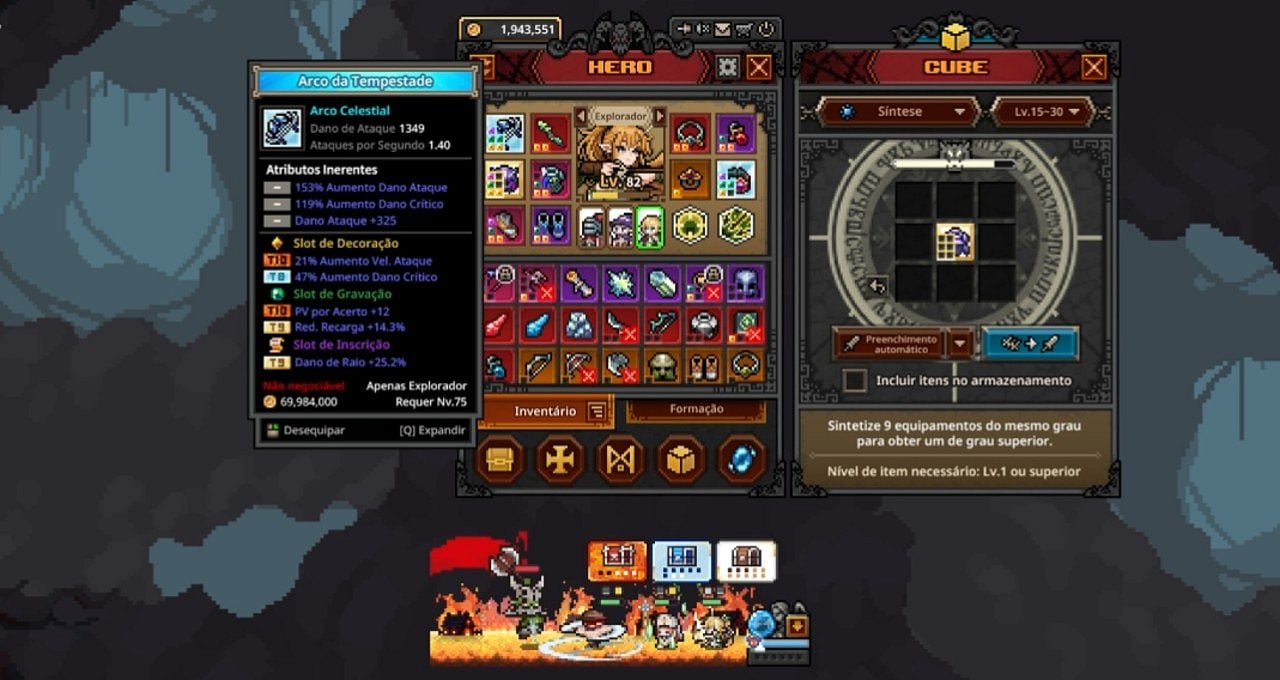
The independent TBH game Task Bar Hero registered 143,508 simultaneous users on the Steam platform at the end of May. The idle RPG title operates continuously in a reduced window on the operating system’s taskbar. Free access drove initial adoption by the computer gaming community. The volume of hits put the project ahead of high-budget productions in daily engagement metrics.
Lançado officially on May 27th, the software presents a proposal aimed at running in the background during routine computer use. The minimalist interface allows the character’s progress to occur without the need for frequent manual commands. Usuários keeps the application open while carrying out professional activities or consuming other types of media. The format meets a growing demand for digital entertainment with low continuous attention requirements.
Funcionamento in background and routine optimization
The architecture of TBH Task Bar Hero differs from traditional computer gaming standards by dispensing with full-screen display. The application occupies a restricted space in the system interface. The heroes developed in pixel art carry out automatic combat against opponents generated by the code. The absence of complex controls makes it easier to keep the software active over long periods.
Profissionais who use computers as a work tool represent a significant portion of the active user base. Reduced memory and processing consumption prevents crashes in other simultaneous applications. The player tracks experience gain and resource collection through discreet visual notifications. Passive gameplay eliminates the pressure for quick reflexes.
The tiny idle RPG concept establishes a routine of continuous rewards based on the program’s execution time. The system calculates the damage caused and received mathematically behind the scenes. Human intervention only occurs when managing inventory or choosing new skills. Essa’s fragmented approach adapts the experience of a traditional RPG to short sessions of just a few seconds of interaction.
Estrutura classes, equipment and difficulty levels
The game’s internal content offers mechanical customization options for virtual characters. The progression system encompasses different classes with specific skill trees. The player sets the combat strategy before minimizing the application window. The game’s artificial intelligence performs predetermined actions as enemies appear on the screen uninterruptedly.
The variety of items available for collection surpasses the mark of 500 distinct pieces of equipment. The loot system classifies the objects found into different degrees of rarity. Categories start from common items and progress to higher classifications such as Immortal, Arcana, Divine, and Cosmic. The search for equipment with optimized attributes motivates users to keep the game running daily.
The volume of content programmed by the developers structures the player’s journey into distinct challenge stages. Progress requires constant tactical adaptation. The main campaign is divided into the following mechanical elements:
- Três narrative acts with their own scenarios and visual themes.
- Quatro difficulty levels that change enemy attributes.
- Mais of 50 monster types with varying attack patterns.
- Sistema of achievements integrated into the user profile on the platform.
- Mecânicas builds builds focused on skill synergy.
The transition between acts requires the character to reach specific power levels through the accumulation of rare equipment. The game’s mathematical balance penalizes poorly formulated strategies at higher difficulty levels. The player needs to analyze combat reports to understand which defensive or offensive attributes require immediate improvement.
Desempenho commercial and engagement metrics on Steam
The peak of 143 thousand simultaneous players registered on May 31st reconfigured the popularity tables of the Valve virtual store. Independent database SteamDB confirmed the unusual move for a reduced-scope release. The absolute number of simultaneous accesses temporarily exceeded the title records established in the market. Large Jogos such as Grand Theft Auto V and Marvel Rivals registered lower peaks in the same time frame.
The simultaneous players metric represents the number of accounts connected to the game servers at any given moment. The idle format favors the natural inflation of this number. Users do not close the app after a traditional gaming session. The software remains active from the operating system startup until the machine is turned off by the owner.
The free distribution model reduced the entry barrier for new interested parties. The absence of initial costs allowed for rapid dissemination through recommendations on forums and social media. Steam’s recommendation algorithm amplified the title’s reach by detecting the sudden increase in the number of active downloads and installs in the first few weeks.
Economia virtual and platform market integration
Long-term player retention is based on the game’s integration with Mercado’s Mercado. The system allows the sale of virtual items between platform users. Equipamentos of rarity Cosmic or Divine have extremely low drop rates in the game code. The difficulty of obtaining them generates commercial value for these pieces within the community of active players.
Item trading creates an economic layer parallel to the core auto-combat mechanic. Jogadores uses Steam’s virtual wallet balance to purchase specific equipment that is missing from their character builds. The buying and selling process moves the internal economy and generates small transaction fees for the platform and project developers.
Direct exchange of equipment makes it easier to advance to higher difficulty levels. Grupos of players organize discussion forums to establish benchmark values for each type of item. Pricing varies depending on the equipment’s usefulness in the game’s most efficient strategies. Atualizações balancing changes the market value of certain pieces of armor or weaponry constantly.
Requisitos technical and software accessibility
Installing TBH Task Bar Hero requires minimum technical specifications for modern computers. The file size is reduced. The absence of complex three-dimensional graphics eliminates the need for high-performance dedicated graphics cards. Battle processing takes place lightly in the machine’s central processing unit.
Partial offline operation ensures that progress is not interrupted by fluctuations in the internet connection. Synchronization with Steam servers occurs periodically to validate achievements and items obtained. The user checks the character’s status at any time by expanding the window on the taskbar. The interface presents detailed reports on the amount of experience gained in the last hour of running.
The stability of the game client contributes to the seamless experience without operating system crashes. Developers apply regular code fixes to optimize memory consumption. The project demonstrates the viability of alternative digital entertainment formats in the computer gaming ecosystem. Technical simplicity combined with complex progression systems consolidates the title in the segment of passive management games.