The American space agency confirmed the success of the Psyche probe’s approach maneuver with the planet Marte. The flyby took place on May 15, 2026. The operation guaranteed the gravitational impulse necessary to continue the journey through the deep solar system. The procedure allowed the equipment to gain speed and adjust the route without excessive consumption of chemical propellant. The spacecraft now follows its definitive trajectory towards the metallic asteroid of the same name.
The procedure represents a fundamental step in the mission schedule managed by Jet Propulsion Laboratory. Flight engineers monitored radio signals emitted by the spacecraft in real time throughout the flyby. The data received at the ground stations validated the previous mathematical calculations. Telemetry confirmed the integrity of internal systems after the high-speed maneuver.
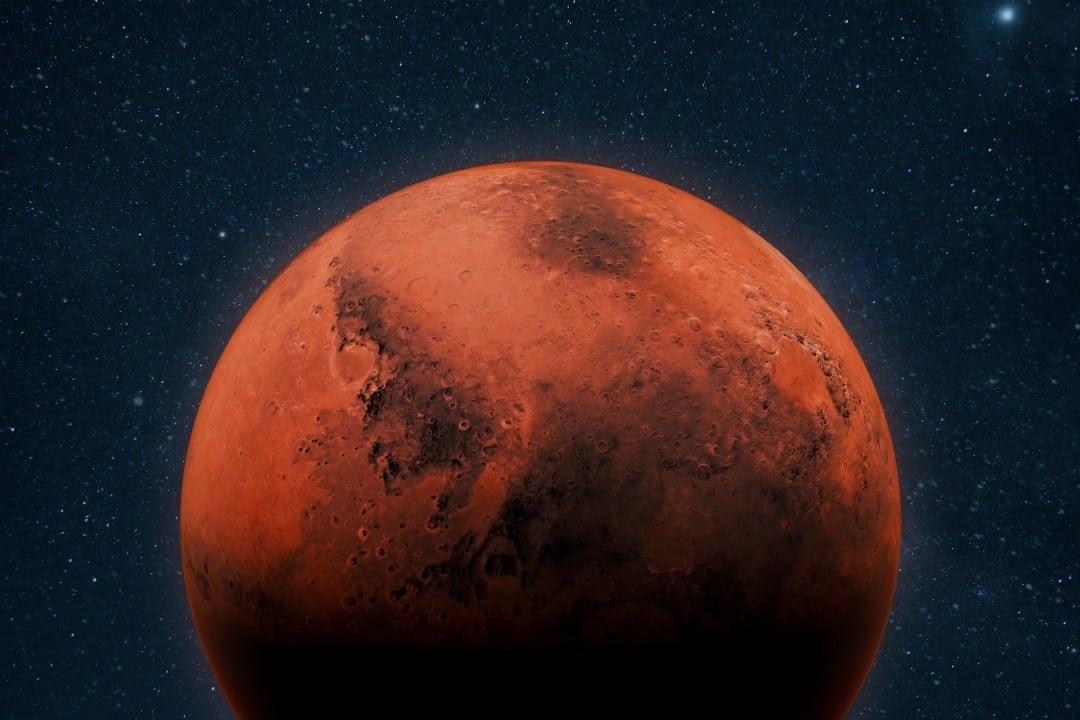
Gravity assist Dinâmica on Marte
The equipment passed 4,609 kilometers from the Martian surface. Essa space window allowed the use of the red planet’s gravitational force as a natural slingshot mechanism during the early hours of the morning. The tactic resulted in an increase in speed of 1,600 kilometers per hour. The orbital plane also changed. The change was about one degree from Sol’s position.
The gravitational assistance technique is a frequent feature in long-duration interplanetary missions. The method reduces the need to carry huge fuel tanks since launch on the Terra. The saved mass allows the inclusion of more complex and heavier scientific instruments in the probe’s structure. The current trajectory places the vehicle on a direct and optimized route to the main asteroid belt.
Testes equipment and image collection
The onboard instruments remained activated throughout the transit period in the vicinity of Marte. The array of high-resolution cameras, magnetometers and spectrometers performed continuous scans of the space environment. The scientific team took thousands of never-before-seen images of the Martian surface from specific angles. The photographic material is valuable for parallel research into the geology of the neighboring planet.
The passage acted as a practical testing ground for the spacecraft’s sensors. The researchers took the opportunity to calibrate the lenses and radiation detectors before arrival at the main target. Operating in a real planetary environment provides performance metrics that are superior to testing performed in terrestrial simulators.
- The approach validated the functioning of autonomous navigation software in deep space.
- The Doppler effect data confirmed the exact changes in trajectory and speed.
- The technical team evaluated the thermal response of the solar panels during light variations.
- The procedure served as a dress rehearsal for future orbital insertion at the final destination.
Lindy Elkins-Tanton, the mission’s principal investigator, highlighted the precision of the maneuver performed by the flight controllers. The window of opportunity for the flyby required a specific planetary alignment that only occurs at certain times. The success of the operation eliminates one of the greatest risks associated with the cruise phase of the interplanetary mission.
The destination in the main asteroid belt
Asteroid Psyche attracts the attention of the astronomical community due to its atypical composition. The celestial body orbits Sol in the region located between the orbits of Marte and Júpiter. Measurements indicate a diameter of 280 kilometers at its widest point. The leading scientific hypothesis suggests that the object is the exposed core of an ancient planetesimal that lost its rocky outer layers after violent collisions in the early solar system.
Previous spectroscopic analyzes point to a surface dominated by high concentrations of iron and nickel. Essa metallic characteristic differentiates the target from the vast majority of rocky or ice-rich asteroids cataloged by astronomers. The mission aims to map the local topography, analyze the distribution of chemical elements and measure the intensity of the remaining magnetic field.
Propulsão electrical and schedule until 2029
The journey through deep space depends on a propulsion system based on Hall effect thrusters. The engines use the energy captured by solar panels to ionize xenon gas and generate continuous, smooth thrust. The mechanism is significantly more efficient than traditional chemical rockets over interplanetary distances. The spacecraft resumed constant acceleration shortly after moving away from Marte’s sphere of gravitational influence.
The American space agency’s official schedule predicts arrival at the asteroid in 2029. The probe will perform a series of braking maneuvers to enter the metallic body’s orbit. The flight plan includes multiple passes at gradually lower altitudes to allow for different types of scientific measurements. The primary data collection phase should last approximately two uninterrupted Earth years.
Impacto in understanding Earth formation
The initiative is part of NASA’s Discovery program. Esse branch of the agency develops exploration missions aimed at specific targets and with an optimized budget. The study of an exposed planetary core offers a unique window into the solar system’s past. Scientists do not have the technology to drill through Terra’s crust and mantle to the metallic core of our own planet. Direct observation of the asteroid will provide empirical data on planetary differentiation processes that occurred billions of years ago.
Mission controllers will maintain routine monitoring of the systems during the next few years of silent travel. Periodic Testes diagnostics will occur throughout the cruise phase to ensure the integrity of the electronic components. The absence of anomalies during gravity assist reinforces confidence in the spacecraft architecture. The agency maintains the original planning without the need for emergency course corrections.