

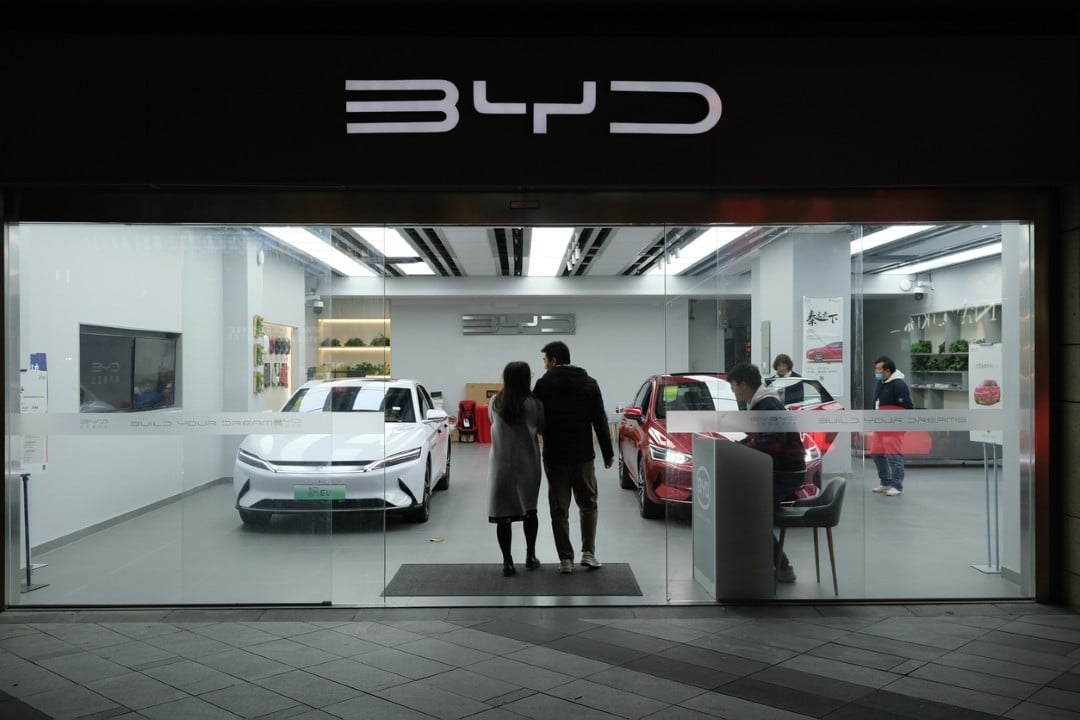
Chinese BYD has decided not to enter the race for solid-state batteries in production electric vehicles now. Executive Vice President Stella Li stated that the second generation Blade battery offers the best balance between efficiency and cost at this time. The company is leading the development of solid technology, but assesses that it is not yet mature for the mass market.
The statement came in an interview with Auto Express and contrasts with the optimism of other automakers who promise to launch the new type of battery in the coming years. BYD is betting on the consolidation of advanced lithium-ion batteries as the solid technology matures.
Stella Li explains BYD’s stance on batteries
Stella Li reinforced that the company has not abandoned the development of solid-state batteries. BYD maintains a leading position in this area. However, at the current stage, the second generation of Blade delivers clear advantages in energy efficiency and reduced operating costs for consumers.
- The Blade battery integrates into the vehicle structure
- BYD’s Flash Charging technology advances recharge speed
- Outras brands test semi-solid packages as an intermediate solution
The executive avoided giving deadlines for possible large-scale adoption. Ela indicated that the decision prioritizes what delivers the best value for money today.
Solid-state Baterias still faces barriers
Solid-state batteries promise to be lighter, more compact and safer than current lithium-ion batteries. Elas eliminate liquid electrolyte, which reduces fire risks and allows for greater energy density. Apesar additionally, production, durability and cost challenges impede volume market entry.
Outras companies follow more aggressive schedules. Nissan plans to have at least one model with a solid battery in 2028. BMW is already carrying out tests on a prototype of the i7. Changan has started vehicle testing.
BYD, in turn, focuses its efforts on the evolution of Blade batteries. Esses packages already equip several models of the brand and have gained recognition for safety in extreme tests.
Avanços’s Blade influence strategy
The second generation Blade improves energy density and structural integration. Isso allows greater autonomy without increasing the weight or final price of the vehicles. Flash Charging fast charging technology complements this approach by reducing recharge time.
Especialistas note that BYD’s decision reflects pragmatism. Enquanto rivals invest heavily in still uncertain technology, the company delivers competitive products with proven solutions.
Concorrência advances in testing and patents
Várias Chinese and international automakers accelerate solid battery efforts. Algumas have already announced tests on street vehicles. BYD has registered recent patents in the area, but has chosen a cautious tone in its disclosure.
Stella Li recalled that solid technology exists in smaller applications, such as medical implants. The challenge is to scale it for automotive use with safety, reliability and an affordable price.
What changes for electric vehicle consumers
For now, those looking for a BYD electric car continue with consolidated Blade packages. The strategy can maintain more competitive prices and adequate autonomy for daily use. The company does not rule out a future transition, but conditions the moment when the new technology surpasses the current ones in all relevant aspects.