

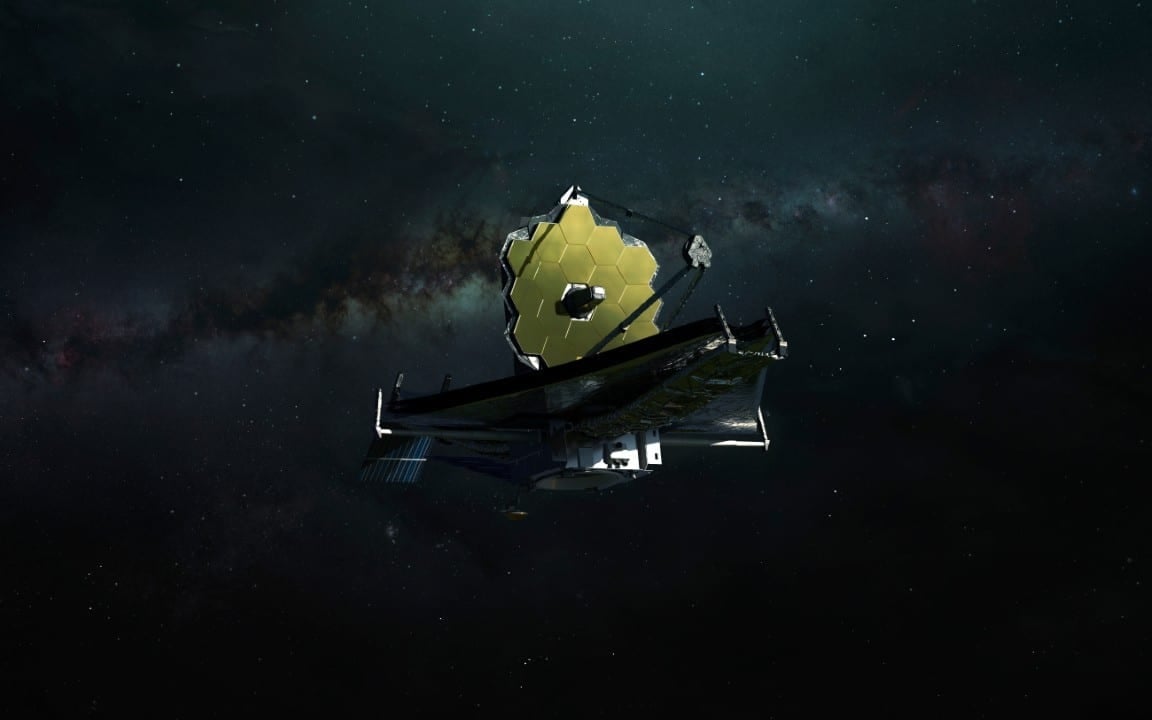
Astronomers have for the first time observed clear differences between dawn and dusk regions in the atmosphere of a giant exoplanet outside the Solar System. The detection, made with the James Webb Space Telescope, involves WASP-121 b, an ultra-hot Jupiter with extreme temperatures.
The planet is so close to its star that the rotation is synchronized with the orbit, which keeps one hemisphere permanently facing the star, heated to around 2,500°C, while the night side remains around 1,775°C cooler. This configuration creates marked transition zones called terminators.
Confirmed variations between terminators
The observations revealed asymmetry in the absorption of infrared light during the planet’s transit. The afternoon terminator (dusk) absorbs more light than the morning terminator (dawn), which indicates different temperatures and chemical compositions.
Strong winds transport heat from the day side to the night side, warming the region more in the afternoon. As the temperature rises, this zone expands, which expands the planet’s cross-section and changes the way it filters the star’s light.
Data from James Webb’s NIRSpec instrument also showed an increase in the carbon monoxide signal at dusk, an effect attributed to temperature, and an actual reduction in the amount of water vapor, which dissociates at high temperatures.
Day and night side of an extreme planet
WASP-121 b has average temperatures of about 2,770 Kelvin (almost 2,500°C) on the day side and 1,000 Kelvin (about 725°C) on the night side. During the transit, the planet’s rotation of approximately 30 degrees makes it possible to map different longitudes of the atmosphere with precision.
This technique exploits the temporal variation of the light signal filtered by the atmosphere, converting time into longitudinal position. The researchers avoided the usual average of all traffic and allowed temporal variation, obtaining a better statistical fit to the data.
Limits of current atmospheric models
The simulated models confirmed the effect of temperature variation, but the observed signal was greater than predicted. Scientists suspect the presence of silicate clouds in the morning terminator, which block infrared radiation and simulate lower temperatures.
This type of observation exposes gaps in current models, which still have difficulty incorporating clouds realistically. Preliminary adjustments have improved agreement, but more sophisticated models will be needed.
Path for future studies
The method paves the way for mapping the longitudinal structure of other ultrahot Jupiters. The researchers have already identified additional targets with suitable temperature range and rotation speed to repeat the analysis.
The study was led by Cyril Gapp, a doctoral candidate at the Max Planck Institute for Astronomy, in Germany, and published this Wednesday (10/6) in the journalNature Astronomy.