

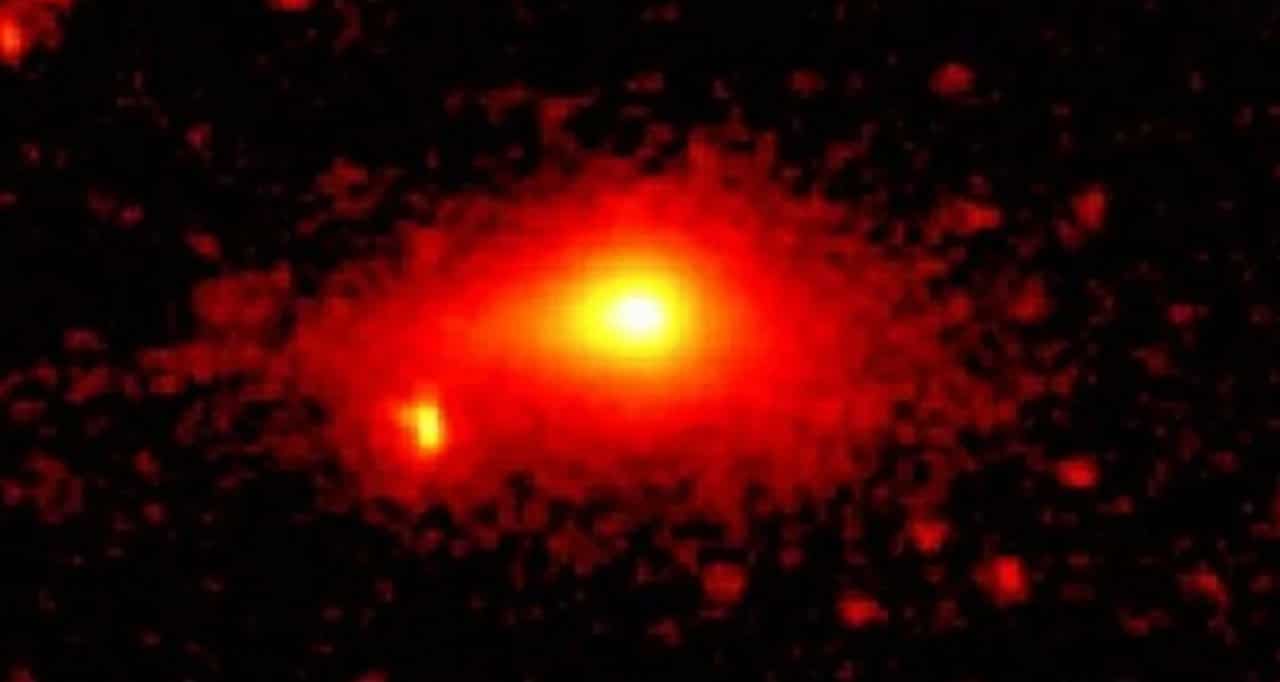
Telescópio Espacial James Webb detected methane on the interstellar comet 3I/ATLAS. The observation occurred after the object’s perihelion, when it was already moving away from Sol. Esse is the first record of the gas in an interstellar visitor. The data came from the MIRI instrument, which captured chemical signatures in the mid-infrared region.
Astrônomos analyzed the comet in December 2025. Measurements showed changes in gas production as the object moved away from Sol. Methane detection highlighted striking differences from Sistema Solar comets.
JWST observes comet 330 million kilometers from Sol
James Webb aimed MIRI at 3I/ATLAS between December 15 and 16, 2025. At the time, the comet was 205 million miles (330 million km) from Sol. Problemas technicians in two observations led to repeats on December 27th. The object was then 236 million miles (380 million km) away.
Essas new captures proved valuable. Elas occurred less than two months after perihelion, on October 29, 2025. Solar heating increased the release of materials, but the process was already slowing down.
The instrument detected water vapor at great distances from the nucleus. Grãos of ice in the coma vaporized. However, water vapor production fell sharply between December 16th and 27th. The comet crossed the snow line, where temperatures allow water ice to refreeze.
- Vapor of water decreased as solar heating weakened
- Dióxido carbon remained active due to lower vapor pressure
- Metano arose from deeper layers of the core
Metano appears for the first time in interstellar object
Methane only became evident after perihelion. Diferente of the two previous interstellar comets, 1I/’Oumuamua and 2I/Borisov, released the gas. The detection indicates that the methane was buried deeper in the core. The heat from Sol needed to reach these inner layers to sublimate it.
Pesquisadores led by Matthew Belyakov of Caltech published the results. Eles noted that methane, like carbon monoxide, was delayed in production. CO increased 40 times relative to carbon dioxide in December.
The abundance of methane in relation to water was surprising. The same happened with carbon dioxide. Essas proportions deviate from the typical pattern of comets in our system. Elas suggest that 3I/ATLAS formed in an environment with distinct physical and chemical conditions.
Composição reveals origin in another star system
Comet 3I/ATLAS is the third confirmed interstellar object. Ele has passed through perihelion and is now heading outside of Sistema Solar. JWST observations indicate that it carries primordial material from its home system, possibly formed 11 or 12 billion years ago.
Carbon dioxide dominates in some previous measurements. Methane adds another layer of complexity. Astrônomos highlight that studying these visitors allows us to compare planetary formation environments in different stars.
The comet’s nucleus has an estimated diameter of less than 1 km in some analyses. Imagens show activity in coma, with release of several compounds. Níquel in steam also appeared, in line with previous observations.
MIRI’s Dados confirms chemical differences
The MIRI instrument produced maps of chemical signatures. Imagens composites show water, carbon dioxide and methane in distinct positions around the nucleus. The water spreads more in the coma. Metano and carbon dioxide concentrate near the nucleus.
Esses results reinforce the importance of telescopes like JWST. Eles provide views that would not be possible otherwise. The comet offers a window into processes that have shaped other planetary systems.
Astrônomos continues to follow 3I/ATLAS as it moves away. Novas observations may reveal more details about its internal composition. The object already contributes to understanding how stellar systems form under varied conditions.
Implicações for comet formation
The delayed release of methane suggests the comet has lost outer layers in its home system. Previous warming has depleted surface methane. Apenas the deepest reservoir remained and activated here.
Essa dynamics mirror what happens with carbon monoxide. Ambas substances have low vapor pressure. Elas remains active at greater distances from Sol.
The data helps refine models about interstellar comets. Eles show that not everyone follows the patterns observed in our cosmic backyard. Visitor Cada brings unique clues about its history.