

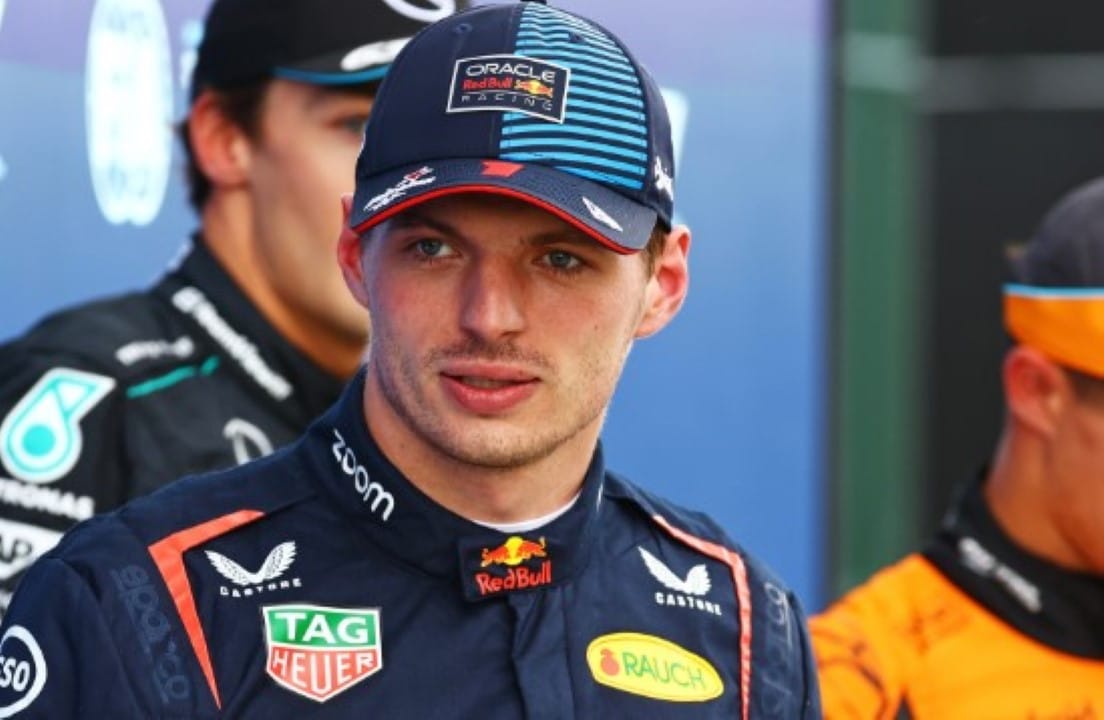
Dutch driver Max Verstappen secured second place on the starting grid for the Mônaco GP of Fórmula 1. The qualifying session took place this Saturday on the principality’s traditional street circuit. The Red Bull Racing representative recorded a competitive time in the final phase of training. Position on the front row puts the competitor at a strategic advantage for Sunday’s race.
Italian Kimi Antonelli took pole position with a narrow margin. The difference between the two drivers was just 0.043 seconds on the official stopwatch. The result confirms the superior performance of the Antonelli car in the narrow streets of Monte Carlo. Analistas of motorsport point out that the start will be the most critical moment of the race.
Disputa fierce in Q3 defines the first positions
The third part of qualifying practice showed a constant evolution of track conditions. The drivers had to deal with the increase in asphalt grip with each lap completed. Max Verstappen took the provisional lead on the timesheet in the final minutes of the session. The Red Bull Racing driver scored fast splits in the first two sectors of the route. The Austrian team showed relief in the pits after the difficulties faced in free practice on Friday. The car had stability issues in low-speed corners at the start of the weekend.
Kimi Antonelli crossed the finish line moments before the clock ended. The Italian managed to surpass the Dutchman’s mark in the third sector of the track. The perfect lap guaranteed the honorable position on the grid for the main race. The margin of 0.043 seconds represents a distance of less than two meters on the pit straight. The level of precision required by the competitors reached the physical limit of the current Fórmula 1 single-seaters. Verstappen recognized the opponent’s pace during the official interviews after the end of track activities.
Acidente of Gabriel Bortoleto interrupts qualifying session
Qualifying training recorded incidents that changed the teams’ planning. Brazilian driver Gabriel Bortoleto suffered a serious accident during a fast lap. The impact occurred on one of the fastest sections of the Monegasque circuit. The race direction immediately raised the red flag to stop the session. Track inspectors had to remove the damaged car and clean up the debris scattered across the asphalt. The clock was stopped until the affected area was completely released.
The interruption forced the other competitors to return to the pits. The engineers had to recalculate the time available for the tires to warm up. Rubber temperature directly affects braking capacity and traction when exiting corners. The restart of the session generated heavy traffic at the exit of the pit lane. Vários drivers complained about the lack of space to prepare a clean lap. Track position management has become a determining factor in success or failure in classification.
Desafios Monte Carlo circuit technicians
The Mônaco route has unique characteristics in the world championship calendar. The narrow streets offer no room for driving error. The protective walls are a few centimeters away from the tires during cornering. The absence of long straights reduces the effectiveness of the aerodynamic drag reduction system. Teams configure the cars with the maximum level of downforce available.
The difficulty of overtaking turns the starting position into the most valuable element of the weekend. The history of the race indicates that the winner rarely starts outside the top three places. Strategists consider the following factors for the race:
- The probability of the security car entering is greater than eighty percent.
- The wear of the rear tires dictates the exact moment of the single pit stop.
- The temperature of the asphalt influences the running pace during the afternoon hours.
- Laggard traffic can ruin the advantage built by the leaders.
Drivers make thousands of gear changes throughout the seventy-eight laps of the race. The physical and mental effort required in Mônaco exceeds the average for other stages of the season. Concentration needs to be maintained at maximum level during almost two hours of uninterrupted driving.
Estratégia pit stops and expectations for the race
Preparation for Sunday’s race involves complex simulations on the teams’ computers. Max Verstappen is looking for his third career GP win for Mônaco. The Dutchman needs to overcome Kimi Antonelli in the first few meters after the red lights go out. The distance between the start line and the first corner is one of the shortest of the season. The Red Bull Racing driver focuses on clutch management to ensure superior traction when starting off.
The intermediate squad also presents relevant strategic disputes. Carlos Sainz reaffirmed his commitment to the Williams project during interviews in the paddock. The Spanish driver is looking to score important points for the British team in the constructors’ championship. Perfectly executing pit stops will be essential to gain positions without relying on maneuvers on the track. Mechanics extensively train changing tires to perform the procedure in less than three seconds.
The weather forecast indicates dry weather for the start time. The absence of rain simplifies decisions at the pit wall, but increases the predictability of the race. Team directors monitor rubber wear through sensors installed in the cars. The stopping window must occur between lap twenty-five and lap thirty-five. The first driver to enter the pits will try to take advantage of the new tire to record fast laps and outperform his direct opponent. The early stopping tactic represents the main offensive weapon on the streets of Monte Carlo.
Configuração aerodynamics and impact on the championship
The setup of the cars for the Mônaco GP differs completely from the specifications used on traditional racetracks. The Red Bull Racing needed to modify the front suspension to allow greater wheel steering. The hairpin turn requires the tightest turning radius of the entire Fórmula 1 calendar. Engineers sacrifice straight-line top speed to ensure directional stability under hard braking. The mechanical grip generated by the tires becomes more important than the aerodynamic efficiency of the chassis.
The result of the race in the principality has a significant weight in the championship table. Max Verstappen tries to accumulate as many points as possible to maintain an advantage over direct rivals. Kimi Antonelli’s consistency in the last stages turned the Italian into a strong contender for the world title. The rivalry between top teams intensifies the pressure on mechanics during pit stops. A one-second error when changing tires could cost you victory and crucial points in the race for the constructors’ trophy.
The race direction maintains strict control over the track limits at the chicanes of the circuit. Electronic sensors detect any route cuts that provide undue advantage to pilots. Time penalties are applied quickly to avoid distortions in the final result of the competition. The race director reinforced the rules of behavior during the meeting with competitors on Friday. Tactical discipline and respect for sporting norms define the profile of winners on the streets of the principality.