

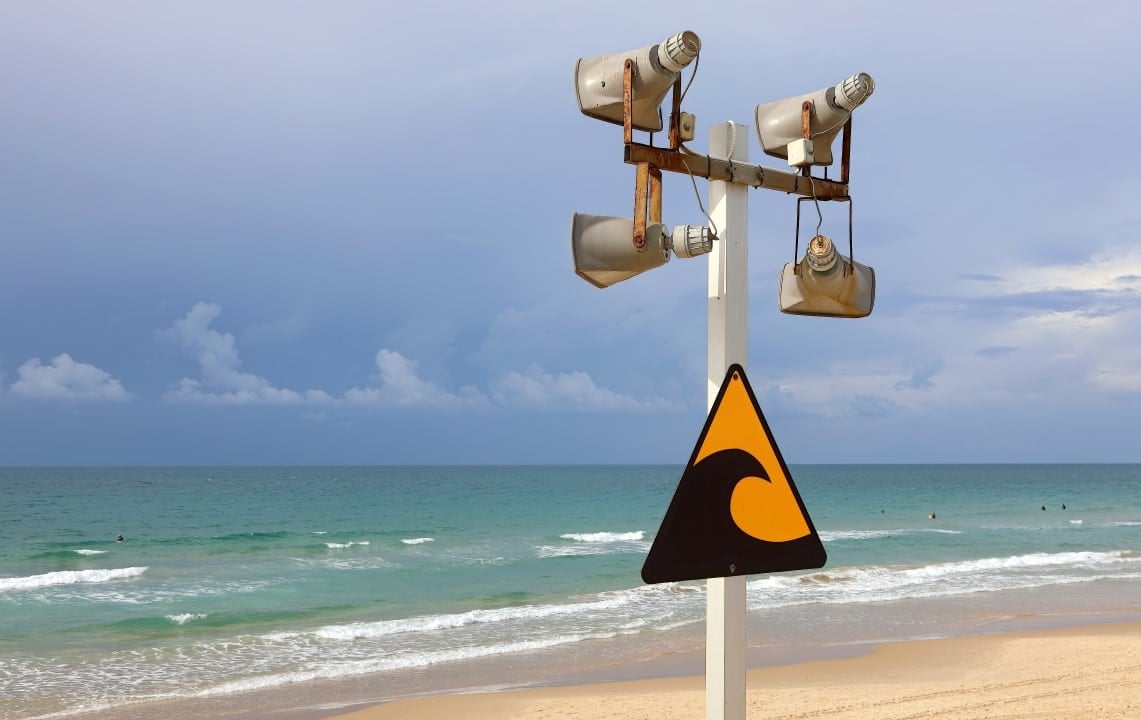
Japanese authorities activated emergency protocols this Monday, June 8, 2026, after issuing a tsunami warning that affected several coastal regions of the country. The security directive resulted in the immediate suspension of school activities and the evacuation of students in the provinces of Ibaraki, Kanagawa and Kochi. Local education boards organized the rapid evacuation of students and staff from areas considered at risk for flooding. The mobilization involved handing over the children to their guardians and moving them to shelters on high ground. The closure of public facilities was also part of the government’s contingency plan to guarantee the integrity of the population.
Suspensão of classes and blocking of cafeterias in the province of Ibaraki
In the city of Takahagi, located in the province of Ibaraki, the meteorological warning changed the functioning of the entire education network in the early hours of the morning. The municipal administration ordered the cancellation of classes in three primary and secondary education institutions that are located in coastal vulnerability zones. Educational managers prioritized the evacuation of students before any change in sea level could affect the access routes to the buildings. School security teams coordinated contact with families so that the release occurred in an orderly manner.
The city’s risk mapping identified specific units that required immediate intervention due to their proximity to the ocean. The institutions that completely interrupted regular activities were:
- Escola Secundária of Takahagi, classified in the contingency plan due to its location in an area prone to severe flooding.
- Escola Primária of Higashi, located in a highly vulnerable region that requires rapid evacuation in the event of giant waves.
- Escola Primária of Takahagi, whose main access routes are close to the coast and present a risk of logistical isolation.
Além of the three priority units, the Takahagi education board extended the precautionary measures to the other four schools in the municipality. Nessas institutions, students were released promptly at 11am, ensuring everyone was on the move safely before the afternoon session. The city hall also ordered the immediate halt in the preparation of school meals. The technical decision occurred because the cafeterias and industrial kitchens of these units operate on the ground floor, at elevations that can be quickly flooded if the tsunami hits the province’s coast.
Estratégias protection and shelter in the city of Yugawara
The province of Kanagawa also registered intense mobilization, focusing on preventive actions adopted by the education council of the city of Yugawara. Escola Secundária of Yugawara, built on a strip of land near the coast, disrupted the academic schedule as soon as the national alert system sounded. The teaching staff took on the responsibility of escorting the students on their way home. Teachers formed monitoring groups to ensure that no teenagers were left stranded on the streets during the maritime emergency warning.
Yugawara’s logistical planning included specific guidelines for students who live far from school or whose guardians were working at the time of the alert. Para this group, the immediate return to homes represented an unacceptable logistical risk. The school administration activated a secondary evacuation protocol, transferring these young people to a public facility designated as a temporary shelter. The chosen building is located on high ground in the interior of the city, outside the projected tsunami impact zone, offering basic infrastructure until families could pick up the students.
Executing this contingency plan required constant communication between the school management, local civil defense and the students’ parents. The use of automated messaging systems allowed families to know exactly which shelter their children were directed to. The organization of the temporary reception space was attended by school staff, who maintained the supervision routine and provided continuous guidance on the evolution of the weather alert issued by the central authorities.
Evacuação for community centers in the province of Kochi
The impact of the tsunami warning reached the province of Kochi, requiring direct interventions in the city of Kuroshio. The municipality’s Conselho of Educação monitored the situation of Escola Primária of Nango, which has a critical location just 600 meters from the coastline. The proximity to the sea reduced the available response time, forcing classes to be suspended in the morning. The main guideline established that all children should be handed over to their parents or legal guardians directly at the institution’s gates, preventing them from walking alone through the streets of the coastal neighborhood.
The work dynamics of local residents prevented some families from reaching school within the time stipulated by the emergency protocol. Diante of this limitation, Escola Primária’s Nango teachers organized the immediate transfer of the remaining children to a community center in the area. The movement took place on foot, following previously marked evacuation routes that lead to higher altitude areas. Regular training for natural disasters facilitated the movement of students, who followed the educators’ instructions without registering any incidents during the climb.
The Kuroshio community center serves as an official municipal government meeting point for environmental crisis situations. The site has emergency supplies, independent communications systems and enough space to accommodate residents displaced from low-lying areas. Teachers remained at the shelter with the children, organizing distraction activities and managing the flow of parents who gradually arrived to pick up their children throughout the day. The operation demonstrated the effectiveness of the evacuation drills carried out annually in the Japão public education network.
Utilities Interrupção on Ilha Chichijima
The safety measures resulting from the tsunami warning were not limited to the school environment, but also affected the operation of tourist and cultural facilities. Governo Metropolitano of Tóquio ordered the immediate closure of Centro of Visitantes of Ogasawara, a public facility located in Ilha Chichijima, belonging to Vila of Ogasawara. The space attracts researchers and tourists interested in the archipelago’s biodiversity and history, but its geographic position makes it vulnerable to sudden variations in ocean level.
The visitor center administration evacuated tourists who were there at the time of the alert and instructed employees to seek shelter in central and elevated areas of the island. Locking the access doors and posting notices about the maritime emergency completed the closure procedure. Local authorities have established that the reopening of the space will depend exclusively on the official revocation of the tsunami warning by the national meteorological agency. The government’s technical team will need to carry out a structural inspection of the building and surrounding area before allowing the public to return.
The Ogasawara archipelago has strict protocols for seismic and oceanographic events due to its geographic isolation in Oceano Pacífico. The suspension of activities at the visitor center reflects the zero-risk tolerance policy adopted by Japanese regional administrations. The government’s priority focuses on preserving human life, relegating the operation of non-essential services to a secondary level until the stability of maritime conditions is technically proven by the country’s monitoring bodies.