

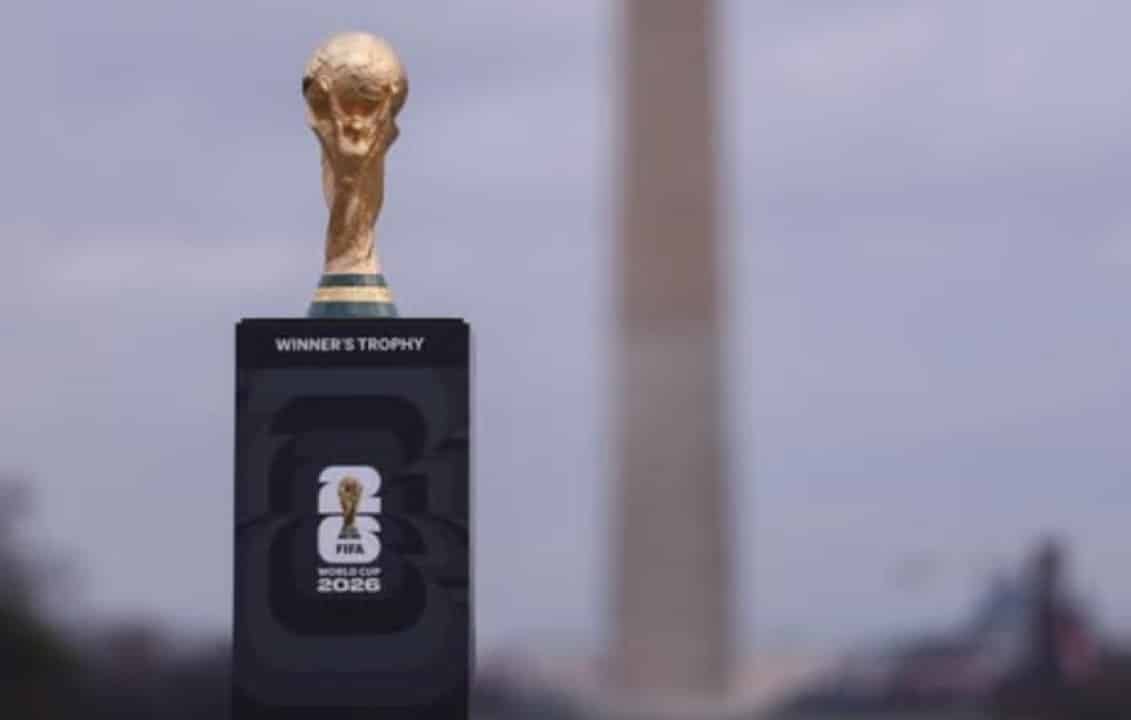
The men’s world football tournament will undergo its biggest structural transformation in the 2026 edition, hosted jointly by the United States, Mexico and Canada. The competition will host 48 teams distributed across 12 pools, which drastically changes the classification dynamics in the initial stage. With this increase in the number of participants, the mathematical probability of equal scores at the end of the three rounds increases considerably. To avoid any type of sporting controversy, the organization maintains a strict protocol that defines who advances to the knockout phase.
The mathematics of the group stage and the first criteria
The regulations stipulate that the top two in each bracket guarantee a direct place, accompanied by the eight third-placed teams with the best overall performance. The first filter to define this ranking order is, naturally, the absolute sum of points won in the three matches played. When two or more teams end this stage with the same score, the goal difference assumes immediate prominence in the table. This metric evaluates the exact difference between the balls that hit the net for and against throughout the participation in the group.
If the goal difference is not enough to separate the competitors, the total volume of goals scored comes into effect as a tiebreaker. A classic example of this application occurred at the World Cup in Russia, when Spain overtook Portugal in the Group B classification. The two Iberian nations added five points and registered a positive difference of one goal, but the Spanish advanced in the lead because they scored six times, compared to five by the Portuguese. This offensive detail often forces teams to try to increase the score even when victory is already assured.
The official hierarchy established by the highest entity
To ensure complete transparency during the competition, the rulebook establishes an exact chronological order of statistical verification. Analysts and fans need to follow this sequence step by step before celebrating a mathematical classification. The priority list works like a funnel, gradually eliminating ties until only one isolated winner remains.
- Highest number of points obtained in all group matches.
- Best goal difference recorded in the group’s overall picture.
- Most goals scored against all opponents in the first phase.
- Score obtained exclusively in direct confrontations between tied teams.
- Balance of goals and goals scored restricted to duels between the teams involved.
- Disciplinary conduct index based on cards received.
- Position in the most recent world ranking released by the international federation.
The inclusion of direct confrontations as a secondary criterion, applied only after general metrics, differentiates the tournament from other continental club competitions. This means that a defeat against the weakest team in the group has a huge impact on defining the future of a top team. The objective of this institutional choice is to encourage offensive football in absolutely all matches, discouraging teams that only try to manage meager results.
The weight of on-field behavior in the tiebreaker
When equality persists in an extreme form, the so-called fair play comes into action like a relentless disciplinary judge to define the vacancy. The system works through a negative count, where each infraction penalized by the referee subtracts points from the team on the virtual table. A single yellow card costs one negative point, while expulsion resulting from two yellow cards takes away three points. A straight red card represents a four-point punishment, and the very serious combination of a yellow card followed by a straight red costs five negative points.
The history of the World Cups recorded the unprecedented application of this rule during the 2018 edition, in an outcome that surprised the world of sport. Japan and Senegal ended the initial phase strictly tied with four points, zero balance and four goals scored each. The Asian team secured their place in the round of 16 because they accumulated fewer warnings over the three games, leaving the Africans out because of two more yellow cards.
This episode changed the way players view tactical fouls in midfield during decisive games. On that occasion, the Japanese spent the final minutes of the last game just exchanging passes in defense to avoid any tackle that could generate a fatal warning. With the expansion to 48 teams and the classification of eight third-placed teams, the expectation is that the disciplinary criteria will be triggered much more frequently from 2026 onwards.
Mexico’s recent drama and lesson for the future
The World Cup in Qatar, held in 2022, provided another practical and painful example of the importance of understanding the tiebreaker rules. The Mexican team entered the field in the final round needing a complex combination of results and beat Saudi Arabia 2-1. The Mexicans ended up eliminated precisely due to a lower goal difference than Poland, who advanced even after losing to Argentina in the other game in the group.
A crucial detail from that night illustrates the tension generated by the tournament’s official regulations. For much of the second half, Mexico was leading 2-0 and tied with Poland on all technical criteria, but was being eliminated due to the excessive accumulation of yellow cards. The goal conceded in stoppage time merely transferred the elimination from the disciplinary criterion to goal difference, showing that solid defense is as vital as efficient attack.
If absolutely nothing resolves the impasse between the teams, the organization will resort to the world ranking of teams as the final trick. This list, updated periodically based on the results of friendlies and qualifiers from previous years, rewards the country’s historical regularity. It is the only criterion that does not depend on what happened on the host country’s pitches during the tournament, functioning as a consolation prize for successful long-term projects.
Technical committee strategies for the new format
With such detailed regulations, modern technical committees have transformed rule management into an exact science within elite football. Coaches and performance analysts now monitor the cards in real time, informing coaches through communicators about the imminent risk of elimination due to indiscipline. Daily tactical training includes specific simulations of adverse and favorable scores, preparing the squad to look for a saving goal or hold the ball in the final moments. This mental preparation makes a difference when the pressure in the stands reaches its peak.
The fair play rule has proven that avoiding blatant refereeing complaints and unnecessary fouls is not just a moral issue, but a real and measurable competitive advantage. Containment players, such as defenders and midfielders, receive clear instructions to make the tackle without committing infractions subject to a yellow card. In brackets where the technical balance between nations is evident, a simple tug of the shirt in the first game can cost you a ticket back home two weeks later. Emotional intelligence has become as important a foundation as passing or finishing.
The unprecedented format with 12 groups will require impeccable strategic planning from the opening whistle of the opening match. The teams considered favorites will have no room for stumbles or lazy performances against lesser opponents, as any lost point or wasted goal compromises the overall balance. At the same time, emerging teams gain a golden opportunity to advance to the next stage by betting on defensive efficiency and extreme tactical discipline during the 90 minutes. The North American World Cup promises to severely punish inattention and reward full sporting merit.