

The biggest football tournament on the planet arrives reformulated and with the potential to transform the sport’s statistics. The next edition of the competition will feature the unprecedented participation of 48 national teams. This change increases the calendar to a total of 104 matches, which represents an increase of 40 matches compared to the previous 64-game format used since the end of the 90s.
Given the significant increase in the volume of clashes, the expectation is that the top of the list of most productive editions in balls in the net will change ownership. The top of the current ranking belongs to the tournament played in Qatar, which ended its dynamics with 172 goals scored throughout the 2022 dispute.
The tournament’s historic artillery leadership, which belongs to former German striker Miroslav Klose, appears as one of the main targets in this new scenario. The former player found the net 16 times in the history of the championship, but sees his hegemony under strong threat with the proximity of Argentine Lionel Messi, who has scored 13 goals, and Frenchman Kylian Mbappé, who has scored 12 goals before the start of this edition.
Kylian Mbappé has the chance to create an absolute pioneer in the history of world football. The number 10 of the French team, who led the scoring list in Qatar with eight goals, seeks to isolate himself as the only athlete to finish two editions of the World Cup at the top of the scoring charts. Englishman Harry Kane, top scorer in 2018, and Colombian James Rodríguez, who stood out in 2014, share the same goal of repeating the individual feat.
Lionel Messi begins his career in the championship established as the athlete with the most appearances in the history of the competition, registering 26 appearances on the field. If the Argentina team achieves a positive result in the opening round, the captain will equal Miroslav Klose as the player with the most victories accumulated in the tournament, reaching the mark of 17 victories.
The Argentine star will reach another unprecedented milestone in football alongside Portuguese Cristiano Ronaldo and Mexican archer Guillermo Ochoa. The trio will consolidate their participation in their respective sixth editions of the national team tournament, a feat of sporting longevity never previously recorded in the history of the competition.
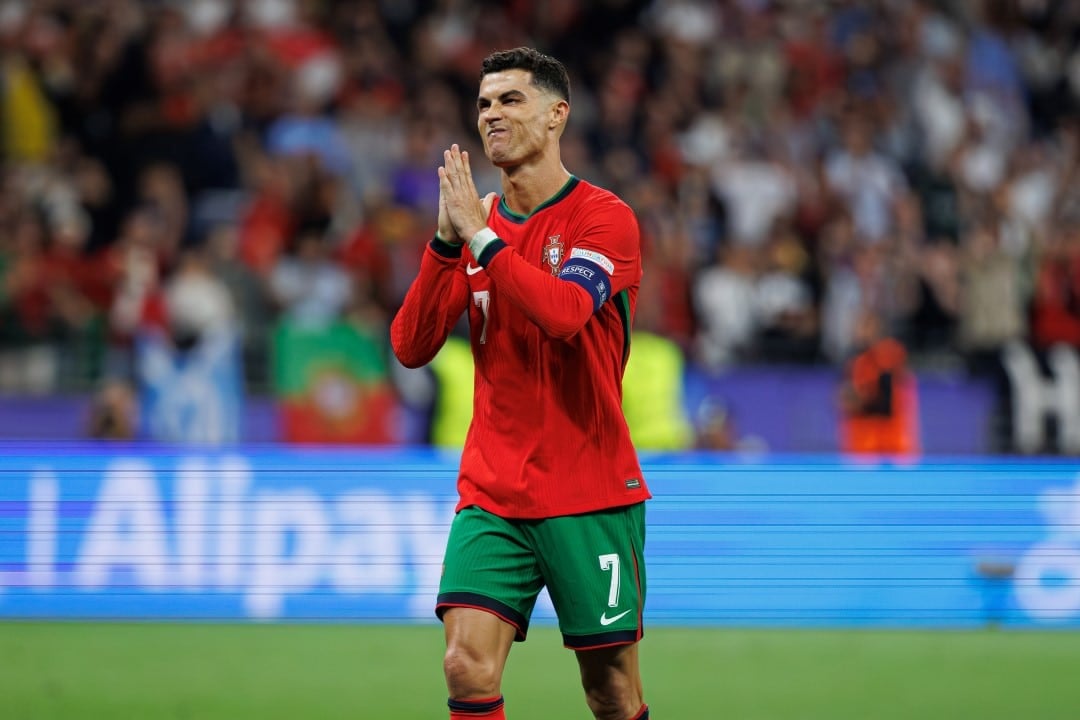
On the other hand, Cristiano Ronaldo enters the field living with the possibility of recording an unfavorable statistical mark. The Portugal forward has accumulated seven setbacks in his 22 appearances in the tournament and, if he suffers another negative result, he will equal South Korean Hong Myung-Bo and Mexican Antonio Carbajal as the athletes with the most defeats in the history of the competition.
The stage that opens the tournament, the Azteca Stadium, will expand its isolated leadership by hosting the inaugural clash between the Mexico team and South Africa, reaching 20 appearances on its lawn in the history of the World Cups. No other sports venue in the world received such a large number of tournament matches, with the start scheduled for 4pm (Brasília time).
Complete list of historical tournament records
- Player with the most goals in all editions: Miroslav Klose (Germany), with 16 goals
- Top scorer in a single competition: Just Fontaine (France), with 13 goals in 1958
- Most goals scored by an athlete in a single match: Oleg Salenko, with five goals in Russia’s 6-1 victory against Cameroon (1994)
- Athletes with the most hat-tricks: Gabriel Batistuta (Argentina) and Gerd Müller (Germany), with two games each
- Athlete with the most matches played: Lionel Messi (Argentina), with 26 matches
- Athlete with the most accumulated victories: Miroslav Klose (Germany), with 17 victories
- Athletes with the most draws on the scoreboard: Luka Modric (Croatia) and Steve Staunton (Ireland), with 8 draws each
- Athletes with the most setbacks in the competition: Antonio Carbajal (Mexico) and Hong Myung-Bo (South Korea), with 8 defeats each
- Players with the most participations in tournament editions: Antonio Carbajal (Mexico), Gianluigi Buffon (Italy), Cristiano Ronaldo (Portugal), Andrés Guardado (Mexico), Lothar Matthäus (Germany), Lionel Messi (Argentina), Guillermo Ochoa (Mexico) and Rafael Márquez (Mexico), with five editions each
- Oldest player to take the field: Essam El-Hadary (Egypt), aged 45 years, 5 months and 10 days in the clash between Saudi Arabia and Egypt (2018)
- Oldest player to score goals: Roger Milla (Cameroon), aged 42 years, 1 month and 8 days, in the game against Russia (1994)
- Oldest player to score three goals in a match: Tore Keller (Sweden), aged 33 years, 5 months and 8 days, in the victory against Cuba (1938)
- Youngest athlete to debut in the tournament: Norman Whiteside (Northern Ireland), aged 17 years, 1 month and 10 days, in the draw against Yugoslavia (1982)
- Youngest athlete to score goals in the tournament: Pelé (Brazil), aged 17 years, 7 months and 27 days, in the 1-0 victory against Wales (1958)
- Youngest athlete to record three goals in a game: Edmund Conen (Germany), aged 19 years, 6 months and 17 days, in the match against Belgium (1934)
- Athlete with the most warnings received: Javier Mascherano (Argentina), with seven yellow cards accumulated
- Athletes with the highest number of recorded expulsions: Zinédine Zidane (France) and Rigobert Song (Cameroon), with two red cards each
- Coach with the most presence in tournament matches: Helmut Schön, with 25 appearances in charge of Germany
- Coach with the most editions played: Carlos Alberto Parreira, with six appearances: 1982 (Kuwait), 1990 (United Arab Emirates), 1994 (Brazil), 1998 (Saudi Arabia), 2006 (Brazil) and 2010 (South Africa)
- Most elastic score recorded in the history of the competition: Hungary 10 x 1 El Salvador (1982)
- Confrontations that have been repeated most times in history: Brazil x Sweden and Argentina x Germany, with seven editions each
- Match with the highest volume of goals in the history of the tournament: Austria 7 x 5 Switzerland (1954)
- Match with the highest number of punishments applied by refereeing: Portugal 1 x 0 Netherlands (2006), with 16 cards in total
- Confrontation with the highest number of yellow warnings: Netherlands 2 (3 x 4) 2 Argentina (2022), with 14 yellow cards presented
- Confrontation with the highest number of red exclusions: Portugal 1 x 0 Netherlands (2006), with four direct expulsions
- Federation with the best historical use of points: Brazilian team, with 72.2% performance in 114 matches played
- Federations with perfect performance (100%) in a single tournament: Uruguay (1930), Brazil (1970), Brazil (2002) and Italy (1938)
- Team with the most productive offensive system in one edition: Hungary, with 27 goals scored in 1954
- Team with the most leaked defensive system in an edition: South Korea, with 16 goals conceded in 1954
- Team with best performance in penalty shootouts: Argentina, with six classifications or titles decided on penalties on seven occasions played
- Team with worst performance in penalty shootouts: Spain, with four eliminations in five penalty shootouts held
- Stadium with the highest number of games hosted in history: Estadio Azteca (Mexico), with 19 official matches played until the current edition
- Editions with the old maximum configuration of clashes: 64 matches played in the years 1998, 2002, 2006, 2010, 2014, 2018 and 2022
- Edition with the highest volume of goals in history: 2022 World Cup, with 172 goals scored
- Edition with the highest offensive productivity in the group stage: 2014 World Cup, with 136 goals scored
- Tournament with the highest volume of yellow card warnings: 2006 World Cup, with 325 yellow cards presented
- Tournament with the highest volume of red card expulsions: 2006 World Cup, with 26 red cards issued
- Edition with the highest occurrence of own goals in history: 2018 World Cup, with 12 goals deflected into their own net
- Edition with greater diversity of sports venues used: 2002 World Cup, held in a total of 20 different stadiums in Japan and South Korea