
BYD’s new hybrid sedan hits the market with a range of more than 2,100 km and an aggressive price


Asian manufacturer BYD made official the arrival of the 2026 Qin Plus DM-i sedan line on the Chinese market on January 8th. The plug-in hybrid vehicle has undergone significant improvements to its battery, now delivering the ability to travel up to 210 kilometers on electricity alone, according to the rigorous local CLTC cycle, while the combined distance exceeds the impressive mark of 2,100 kilometers.
When the electrical component reaches its minimum load, variants with larger accumulators record extremely low fuel consumption, around 2.79 liters for every 100 kilometers driven. In terms of prices, the catalog starts at 79,800 yuan (approximately R$55,000 in direct conversion) for the entry-level model, beating 99,800 yuan (approximately R$69,000) for the most complete option.
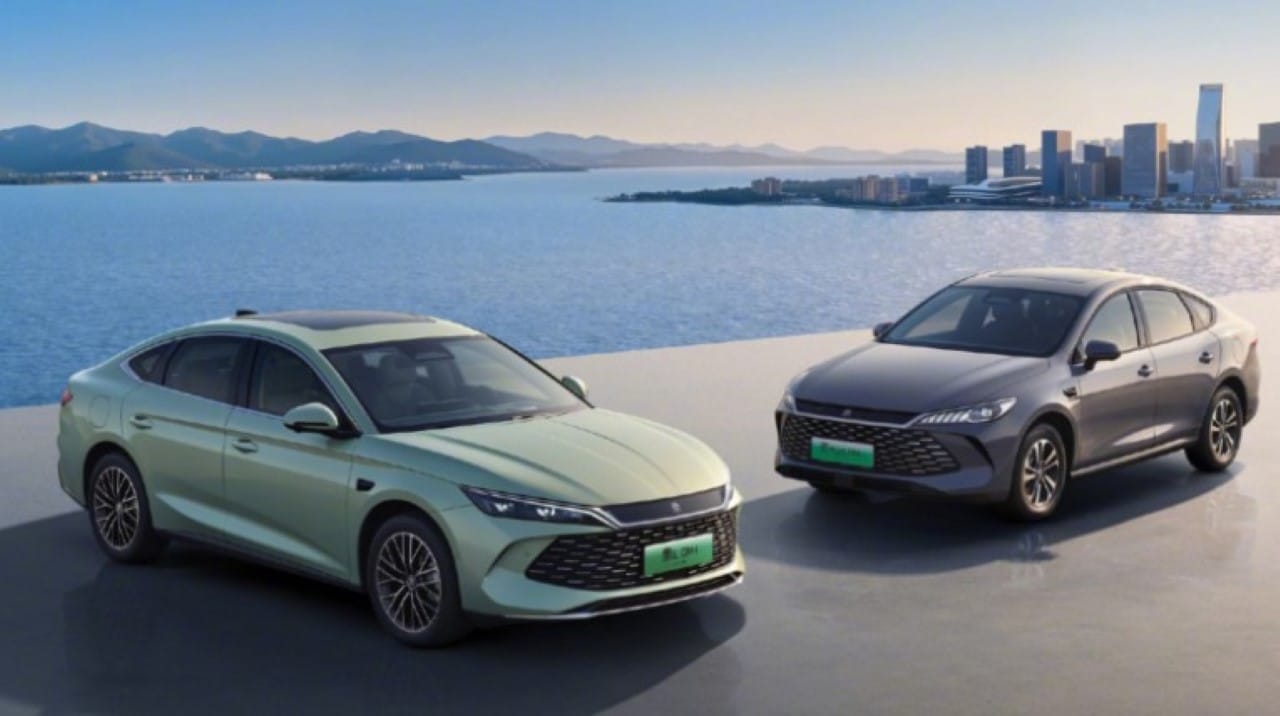
Under the hood, the car preserves the automaker’s praised fifth-generation hybrid technology, which combines a 1.5-liter combustion engine with a high-performance electric motor. As a major technological differentiator of this harvest, the company incorporated the advanced level C autonomous assistance package, called “God’s Eye”, as a factory item in several configurations of the portfolio.
- Zero emissions driving capacity: up to 210 kilometers in the CLTC standard.
- Maximum distance travelled: 2,100 kilometers combining full tank and full load.
- Energy efficiency in combustion mode: 2.79 liters consumed every 100 kilometers.
- Energy storage: improved packages that reach 25.28 kWh.
Marketing strategy and variants of the new sedan
To meet different consumer profiles in China, the vehicle is available in three main finishing and engine arrangements. The cheapest alternative focuses on an electric range of 128 kilometers for 79,800 yuan, while the mid-range and top-of-the-line editions target the public that demands 210 kilometers of energy independence.
Detailing the table, the configuration called Progressive leaves dealerships for 89,800 yuan, while the Superior variant charges 99,800 yuan for the complete package. This aggressive financial positioning places the car as one of the cheapest plug-in hybrids in its category, directly threatening traditional gasoline-only sedans.
This pricing policy reflects the Chinese giant’s tactic of stifling competition through the high volume of registrations. Historically, the Qin family has already demonstrated gigantic commercial strength, closing the last calendar year with hundreds of thousands of units delivered to Asian drivers.
Deep changes to the mechanical set and batteries
The big engineering leap in this generation lies in the adoption of a more robust energy accumulator, which now reaches 25.28 kWh in the most expensive models. This volumetric increase is directly responsible for guaranteeing 210 kilometers of clean driving, solving the problem of those who need to make long daily journeys without using a drop of fuel.
The mechanical architecture continues to rely on the 1.5 aspirated block, recognized for its extremely high thermal efficiency, which works most of the time simply as a power generator for the electrical system. It is the battery-powered engine that really drives the wheels in urban routine, ensuring agile acceleration and unparalleled economy.
Assessments carried out under the criteria of the CLTC protocol attest that the union of the two worlds easily overcomes the barrier of 2,000 kilometers of uninterrupted travel. The logic of the DM-i system is precisely to force the use of electricity at low speeds, eliminating the emission of polluting gases in large urban centers.
Fire safety and extended service life continue to be guaranteed by the famous Blade cell technology, based on lithium iron phosphate (LFP). In addition, the manufacturer promises to send remote updates via the internet (OTA) to refine energy management as the car ages.
Enhanced autonomous driving technology
The sophisticated intelligent driving ecosystem, known in the local market as “God’s Eye”, is no longer a luxury and is now equipped in medium and expensive versions from the factory. Through the DiPilot platform, the driver gains access to features such as adaptive autopilot for roads, hands-free parking maneuvers and an assistant for memorized urban routes.
A complex network of radars and high-fidelity cameras allows the car to operate at L2+ level of automation in multiple traffic situations. This decision by the automaker helps to popularize cutting-edge features that, until recently, were exclusive to luxury cars that cost triple the price.
In practice, this artificial intelligence drastically increases occupant protection against accidents. Crucial tools such as automatic braking in the face of unforeseen obstacles and active lane keeping corrector work together to avoid collisions.
Visual innovations and interior finishing
Aesthetically, the sedan preserves the “Dragon Face” visual identity, marked by aggressive creases in the body and an imposing front grille that dominates the front. The customization catalog offers seven different shades for the paintwork, highlighting an unprecedented gray pigment that changes appearance depending on the incidence of sunlight.
Inside, the cabin has undergone ergonomic changes, such as the transfer of the gear lever to the steering column in certain versions, which frees up valuable space in the center console. For family entertainment, the multimedia system now has a native karaoke application that eliminates the need for physical microphones.
Aiming at acoustic comfort, the front doors have double laminated glass in the most refined configurations, blocking wind and tire noise. Even though it maintains friendly external proportions for tight spaces, the cabin can accommodate five adults with room for legs and heads.
Connectivity and convenience on board
The car’s digital brain, called DiLink, has been upgraded to its fastest interface, displayed on a rotating screen that can be as large as 12.8 inches. The center offers full pairing with smartphones, running native applications and a voice assistant capable of understanding complex passenger commands.
Those who opt for the more expensive packages will take home treats such as multi-zone digital climate control and front seats with electrical position adjustments. The sensory experience is complemented by a high-fidelity speaker system that transforms the cabin into a concert hall.
All this care for well-being results in an extremely quiet environment, with measurements showing less than 53 decibels of internal noise during trips at cruising speed. The physical insulation of the windows works in harmony with active sound cancellation software to neutralize annoying frequencies.
Impact of the launch on the automotive sector
The brand’s family of midsize sedans has established itself as one of the company’s revenue pillars, accumulating record numbers of registrations in recent years. This renewal, focused on extending electric autonomy, is a direct response to Asian consumers’ preference for cars that guarantee government tax exemptions linked to energy efficiency.
Although it faces strong rivals within China that offer batteries of similar size, the manufacturer has an advantage in the price war. As the company produces its own components, from chips to power cells, it is able to reduce manufacturing costs and pass this discount on to the end customer.
The arrival of this 2026 line consolidates the company’s mission of democratizing access to high-quality electrified vehicles. Reservations and deliveries at Asian dealerships began at the exact moment the official presentation ended.





