
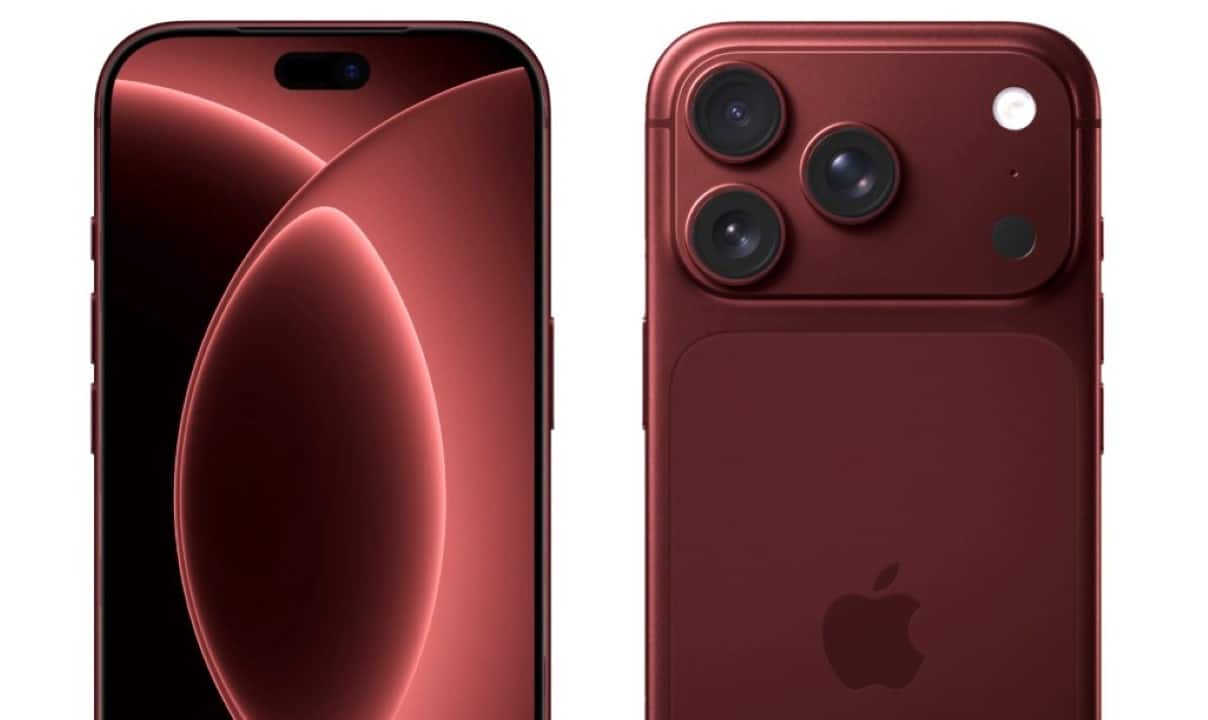
The global mobile device market awaits with great anticipation the Cupertino giant’s next big step, scheduled to hit shelves in September. Apple’s new line of premium smartphones will undergo a profound redesign, both in its external architecture and in the arrangement of internal parts. Engineering teams are focused on testing the resistance of new materials that make up the casing. The big visual highlight is a completely translucent rear panel, created to showcase the technological heart of the device. This design choice required a level of internal finishing never seen before, transforming boards and chips into aesthetic elements. To make this idea viable, Asian assembly lines have already been adapted and started producing the first functional prototypes, which now face rigorous durability tests before mass manufacturing.
The dimensions of the screens will remain familiar to the brand’s most demanding users. The standard edition of the professional series will continue to offer a 6.3-inch display, ensuring an ergonomic grip for everyday use. The more robust version will arrive with a generous 6.9-inch panel, ideal for those looking for maximum productivity and an immersive experience when consuming videos and games.
The entire internal structure has been meticulously redesigned to house a significantly larger energy tank, without resulting in a thicker cell phone. By eliminating obsolete connectors and modules, designers were able to strategically reorganize printed circuit boards. Additionally, thermodynamic experts have implemented new heat sinks, ensuring that the equipment operates at safe temperatures even under maximum stress.
Adoption of a translucent back transforms the inside of the cell phone into a showcase
The introduction of a crystal clear rear glass marks a paradigm shift in the company’s visual identity. Through this transparent surface, consumers will be able to admire the main board, whose components have been aligned with millimetric symmetry to please the eyes. Flexible cables and internal connection ports received a special bath in dark tones, generating an elegant contrast with the shiny metallic components.
More on this story: Rumors point to the arrival of Apple’s first foldable cell phone and the new look of the Pro line
This industrial appeal is reinforced by the display of components that were previously hidden. The new visual organization highlights fundamental elements of the device’s engineering:
- The magnetic attachment ring for rear accessories.
- The copper coil responsible for induction charging.
- Internal metal parts that now undergo rigorous polishing and anodizing.
The surgical arrangement of each chip and screw was designed to convey a strong sense of precision and futurism, raising the aesthetic standard of the category.
So that transparency did not make the phone fragile, the manufacturer needed to create a new category of tempered glass, subjected to state-of-the-art chemical treatments. This innovative material offers extreme resistance against drops and scratches, maintaining visual clarity over the years. An oleophobic coating was applied to both the external and internal faces of the part, preventing fingerprints or factory dust from compromising the final result.
Learn more: New iPhone 18 Pro features translucent chassis and record-breaking 5200 mAh battery
Industrial designers also faced the challenge of redesigning the electromagnetic shielding that protects the processor and memory modules. The old matte metallic covers have given way to protective shields with refined textures and laser-etched logos. This preciousness transforms what was previously just a tangle of circuits into a true work of art of modern engineering.
Screen advances guarantee ultra-thin edges and better frontal use
Improvements in manufacturing techniques for OLED panels have resulted in a drastic reduction in the dark edges around the screen, shrinking the edges by up to 35% compared to last year’s models. This evolution allows the useful viewing area to be extended without the device becoming larger in the user’s hands. To achieve this aesthetic feat, it was necessary to embed the brightness and proximity sensors directly under the display pixels.
The top notch, responsible for housing the facial recognition reader and the selfie lens, also underwent strong miniaturization. Repositioning the lenses reduced the cutout on the screen, freeing up more usable space for the status bar and system icons. In parallel, the adaptive refresh rate has been refined, ensuring even more fluid page scrolls and helping to save load when static images are displayed.
Battery gains record capacity with the end of physical chip trays
Daily autonomy was treated as an absolute priority in this project, culminating in the adoption of a battery that surpasses the 5000 mAh mark. Confidential tests indicate that the new density of the energy cells allows reaching up to 5200 mAh in the larger version of the smartphone. For comparison purposes, this represents a gigantic leap compared to the approximately 4422 mAh seen in the iPhone 15 Pro Max, ensuring plenty of power to power the new processors and extremely high-brightness screens throughout the day.
The gain in physical space to accommodate this colossal energy tank was only possible thanks to the definitive removal of the carrier chip drawer in all countries. The mandatory transition to eSIM technology frees up precious internal volume, which was immediately occupied by the battery module. Accompanying this change, the motherboard adopted an “L” shape, perfectly surrounding the new power supply.
On the same topic: Apple launches iPhone 17 Air with 5.5 mm and system that makes stolen parts unusable
Power management now features intelligent algorithms that dose consumption perfectly, accelerating the chip in heavy games and putting cores to sleep during inactivity. Recharging speed also took a leap, supporting greater powers both through the cable connected to the lower port and through the rear magnetic accessories. New chemical cell preservation protocols promise to keep battery health intact for many more cycles.
Evolution in the photographic set brings variable aperture and improved focus
The rear camera block of the more expensive model features a variable aperture system on the main lens, giving photographers absolute control over light entry and background blur. Tiny mechanical parts continuously adjust the diaphragm, allowing for smooth transitions in brightness during video recording. Optical stabilization has been reinforced by ultra-sensitive gyroscopes that cancel out sudden shakes, while the telephoto lens has a redesigned prism to ensure long-range zoom with impeccable sharpness at the edges.
The front camera has received its biggest update in years, abandoning old sensors in favor of a 24-megapixel piece accompanied by a set of six lenses. This higher resolution captures rich textures and dramatically improves the quality of video calls in dark environments. Hardware image processing works in real time to clean up digital noise and calibrate skin tones, while a new anti-reflective coating prevents strong lights from creating blur in the photo.
Artificial intelligence processing now runs directly on the hardware
The cell phone’s electronic brain is forged using the most advanced lithography on the market, focusing on extracting maximum speed while using minimum energy. The chip’s architecture features a gigantic neural engine, specifically designed to interpret complex language models and run artificial intelligence locally. With the jump to 12 GB of RAM, the phone can process sensitive data without relying on the cloud, ensuring total privacy and instant responses to voice commands. To prevent overheating, a graphene vapor chamber spreads heat across the casing, preventing performance drops when rendering heavy ray-traced graphics. Exclusive development tools were released for application creators to extract the full potential of this new machine.
More on this story: Apple prepares to launch the iPhone 17 Air with record thickness and total protection against theft
Expanded satellite connectivity and next-generation antennas
The wireless network infrastructure has been updated with modems capable of navigating wider frequency bands, delivering extreme speeds in 5G. The big news is that satellite communication will no longer be restricted to distress calls, allowing the exchange of text messages and even voice calls in remote locations without an operator signal. The contour of the device has redesigned antennas to ensure that the connection does not drop, even in the middle of tall buildings and overcrowded cities.
Supply chain preparations for global launch
Partner factories operate at a frantic pace to stock enough units until the official announcement event in September. The brand is focusing its efforts on distribution logistics to prevent the product from running out of stores during the first weeks of sales, which tend to see peaks in demand. Exclusive contracts with suppliers of critical parts have already been signed to protect the assembly line against unforeseen events.
Rumors indicate that the company’s catalog could grow even further with the possible unveiling of a foldable screen device, diversifying the options for the very high-income public. The sales strategy will focus on highlighting local processing power and physical innovations as major differentiators compared to the competition. Without a doubt, the bold transparent chassis will serve as the main marketing gimmick to win over technology lovers.