Apple revolutionizes the market with new ultra-thin 5.5 mm smartphone and liquid glass technology
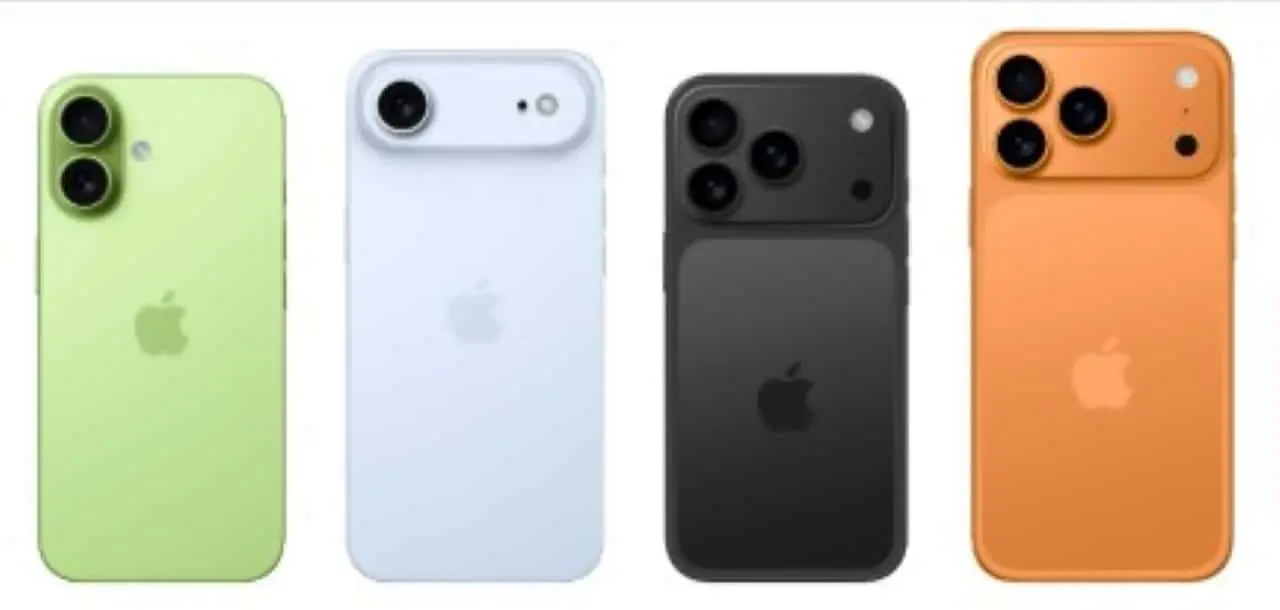
The Cupertino giant has just presented a mobile device to the global market that redefines the limits of hardware engineering. With an impressive thickness of just 5.5 millimeters, Apple’s new device sets an unprecedented milestone in smartphone design, approaching the extreme thinness recently seen in the iPad Pro M4 line. To ensure that the structure does not bend easily under pressure, the manufacturer chose to use aerospace-grade titanium, a material that provides extreme resistance without compromising the lightness of the equipment.
Achieving this silhouette required a complete redesign of the equipment’s internal architecture. Engineers had to redesign vital components such as the motherboard, battery module and biometric sensors to fit into the reduced chassis. This level of compaction was only possible thanks to the adoption of nanometer-scale manufacturing processes, signaling a drastic change in the way the industry assembles its cutting-edge devices.
Another major highlight of the launch is the screen, which incorporates an unprecedented liquid glass technology. This innovative material not only increases protection against deep scratches, but also brings native anti-reflective properties. In practice, the user gains much better readability in outdoor environments, even under direct sunlight, eliminating the need to constantly increase brightness to maximum.
Aerospace titanium ensures chassis rigidity of 5.5 millimeters
The great visual attraction of the device lies precisely in its extremely reduced thickness, which defies current mobile telephony standards. To avoid structural problems common in very thin devices, the housing was entirely forged in aerospace specification titanium. This metallurgical choice gives the phone a solid and robust base, capable of withstanding the pressure of daily use without adding extra grams to the product’s total weight.
Replacing traditional aluminum or stainless steel with this premium alloy brings benefits that go beyond aesthetics. Titanium acts as an excellent natural heat sink and absorbs impacts from falls much more efficiently. With this change, the company is able to deliver a superior level of durability, protecting sensitive internal components against accidental shocks and overheating.
More on this story: Apple launches new 5.5mm smartphone with liquid glass technology
New liquid glass composition increases front panel resistance
The front surface of the device abandons conventional solutions in favor of an advanced polymer mixed with glassy components. This unique chemical composition has the ability to instantly harden upon physical impact, creating a dynamic protective barrier. The result is a screen that withstands severe friction and contact with sharp objects in your pocket without registering permanent marks.
In addition to physical protection, the treatment applied to the display drastically reduces light reflections, improving the outdoor media consumption experience. This innovation allowed designers to decrease the thickness of the display panel itself, saving fractions of a millimeter crucial to the final design, all without sacrificing the structural integrity of the piece.
The fluidity in interacting with the system was also improved by the new surface. The liquid glass provides a smoother glide for your fingers, optimizing touch sensitivity and ensuring that commands are registered with absolute precision. This feature makes typing and gesture navigation much more responsive and enjoyable.
Cooling system with vapor chamber prevents overheating
Historically, excessively thin phones suffer from heat retention, an obstacle that the manufacturer had to overcome with advanced thermal engineering. The solution found involves the application of a high conductivity graphene sheet combined with a microscopic vapor chamber. This assembly works continuously to move heat away from the main processor and distribute it evenly throughout the housing.
On the same topic: Apple revolutionizes the market with new 5.5mm smartphone and liquid glass technology
See Also



The vapor chamber developed for this model has an ultra-low profile, specifically designed to fit into the restricted space of the chassis. Its function is to ensure that the device does not suffer from sudden drops in performance caused by thermal throttling. Thus, even during hardware-intensive tasks, the internal temperature remains controlled and stable.
Thanks to this dissipation architecture, the device can maintain high frame rates during prolonged heavy gaming sessions. Likewise, video recording in very high resolution occurs without interruptions or high temperature warnings, proving that the slim design did not limit the equipment’s continuous processing capacity.
The main logic board underwent an extreme miniaturization process to accommodate the new cooling system. Engineers adopted a three-dimensional stacking design, placing chips and circuits on top of each other in a highly compact manner. This spatial reorganization was essential to free up the internal volume necessary for the battery and thermal solutions.
Periscopic lenses eliminate the relief of the rear camera module
The photographic set required one of the most radical adaptations of the project, as traditional sensors would not fit in such a narrow body. The manufacturer implemented a horizontal arrangement for the optical components and used a periscopic lens system. This strategy bends the light at a 90-degree angle, allowing the zoom mechanism to work laterally inside the device.
Learn more: Apple announces new ultra-thin smartphone with 5.5 mm thickness and liquid glass screen
By using prisms to refract light across the width of the phone, periscopic technology delivers a true optical approximation without the need for protruding lenses. This means that users can capture images of distant objects with clarity and rich detail, bypassing the physical limitations imposed by the 5.5 millimeter thickness.
The great asset of this optical reorganization is the complete elimination of the camera bump on the rear. The photo module is perfectly flush with the rear glass panel, creating a completely flat and elegant surface. Image processing software compensates for any loss of light input, ensuring clear, vibrant night photographs.
Dedicated neural processor performs artificial intelligence tasks offline
Artificial intelligence takes center stage in this launch through an exclusive neural processing core that is physically separated from the main CPU. This chip has been programmed to run complex machine learning algorithms directly on the user’s hardware. As a result, intelligent text editing, simultaneous translation and image recognition functions work without depending on a connection to cloud servers.
The action of this neural engine extends throughout the operating system, optimizing energy consumption based on the owner’s daily habits. It also works behind the scenes in the camera app, adjusting color and exposure parameters in milliseconds before the final click. This intelligent management ensures that the smaller battery, required by the slim design, delivers satisfactory autonomy for a full day of use.
OLED panel delivers fluid refresh rate and vibrant colors
The visual experience is crowned by a display with cutting-edge OLED technology, calibrated to display absolute blacks and infinite contrast. The screen supports a dynamic refresh rate that reaches up to 120 frames per second, providing extremely fluid animations when scrolling web pages or navigating the interface. The system adjusts this speed automatically, saving power when still images are being displayed.
- Record thickness of 5.5 millimeters establishes a new design paradigm for the high-end mobile phone market.
- Forged structure in aerospace titanium alloy ensures the physical integrity of the device against twisting and accidental impacts.
- Front panel equipped with liquid glass offers superior scratch resistance and minimizes reflection from ambient light.
- Advanced thermal management uses graphene sheets and an ultra-thin vapor chamber to dissipate heat from the processor.
- Periscopic optical arrangement enables high-quality zoom and eliminates camera bumps on the back cover.
- Built-in neural engine processes artificial intelligence commands locally, protecting user data privacy.