End of an era: legendary oak from Sherwood Forest, associated with Robin Hood, dies after 1200 years of history
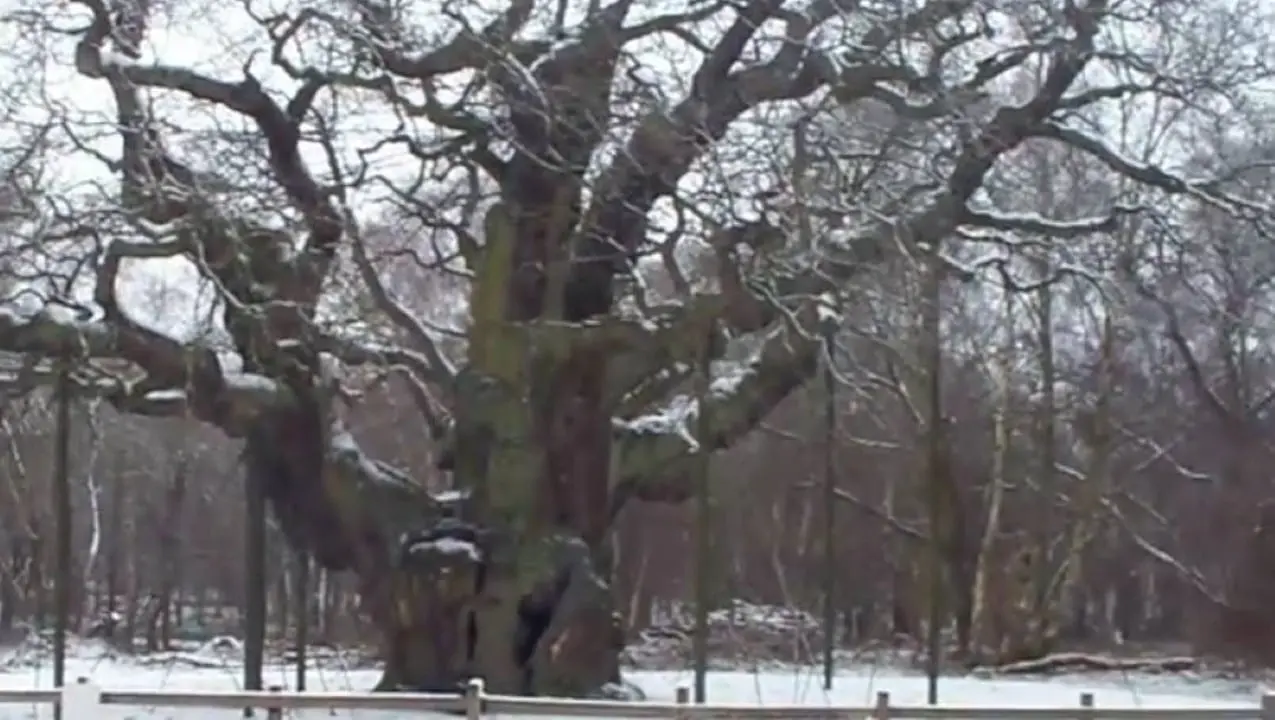
A natural and historic landmark in England, the oak known as the Major Oak, which has stood in Sherwood Forest for around 1,200 years, has been declared dead. The news, which shakes conservationists and lovers of the Robin Hood legend, was confirmed by the Royal Society for the Protection of Birds (RSPB), which reported that the tree did not produce new leaves this spring.
This imposing botanical specimen, an intrinsic part of British folklore, symbolizes more than a simple tree. It was the supposed hideout of Robin Hood and his gang of outlaws, becoming a point of pilgrimage for millions of visitors over the centuries. Its loss represents a mourning for the UK’s nature and cultural legacy.
The forest giant who lived for millennia
With a canopy stretching 28 meters and a trunk 11 meters in circumference, the Major Oak was recognized as one of the largest trees in the United Kingdom. Its existence spanned empires, wars and innovations, bearing witness to the country’s living history. The grandeur of its structure was such that, since the beginning of the 20th century, its heaviest branches were supported by stakes to prevent collapse, and a fence was erected in the 1970s to protect it from direct contact.
Major Oak’s longevity was fascinating, but it also made him vulnerable to the pressures of time and human action. The oak was a natural monument, a constant presence in the scenery of the famous forest, and its image was inseparable from the stories that enchant generations.
Modern threats and an unsustainable legacy
Scientists and experts point to a combination of factors as the cause of Major Oak’s death. The compaction of the soil around its base, a direct result of the intense visitation of millions of tourists, was one of the main culprits. The soil, once fertile and porous, turned into a surface almost as hard as concrete, making it difficult for the tree’s roots to absorb nutrients and water.
Leia Também

Messi reaches 19 goals in FIFA World Cups with great free kick for Argentina in clash with Jordan

Cristiano Ronaldo shines beyond the pitch at the 2026 World Cup with business empire and family luxury

At 41, Cristiano Ronaldo reaffirms his historic legacy and prepares to shine in the 2026 World Cup
In addition to tourist pressure, recent severe heatwaves and prolonged droughts in the UK have contributed significantly to the oak’s decline. Reg Harris, responsible for tree management at Urban Forestry, a company that monitored the Major Oak, highlighted that the tree’s weakening coincided with five summers of extremely high temperatures and drought. He mentioned, for example, July 2022, when the United Kingdom recorded a record temperature of 40 degrees Celsius. These extreme events, intensified by global climate change, have exacerbated the already compromised soil situation.
Efforts to save Sherwood Forest icon
Apesar dos cuidados, a equipe de conservação do Major Oak trabalhou arduamente para tentar reverter os danos ambientais. Simon Parfey, director of Soilbiolab and member of the team, expressed in a statement that although some signs of vitality had been observed, the damage was already deeply rooted and was irreversible.
The loss of the Major Oak serves as a stark warning about the fragility of ancient ecosystems in the face of human advancement and climate change. The need to balance natural heritage conservation with public access is becoming increasingly evident, forcing reflection on new strategies to protect similar natural treasures around the world. Sherwood Forest, although it will lose its most famous oak, will continue to be a sanctuary of biodiversity and history, but the absence of the Major Oak will leave a gap that will take centuries to fill.