

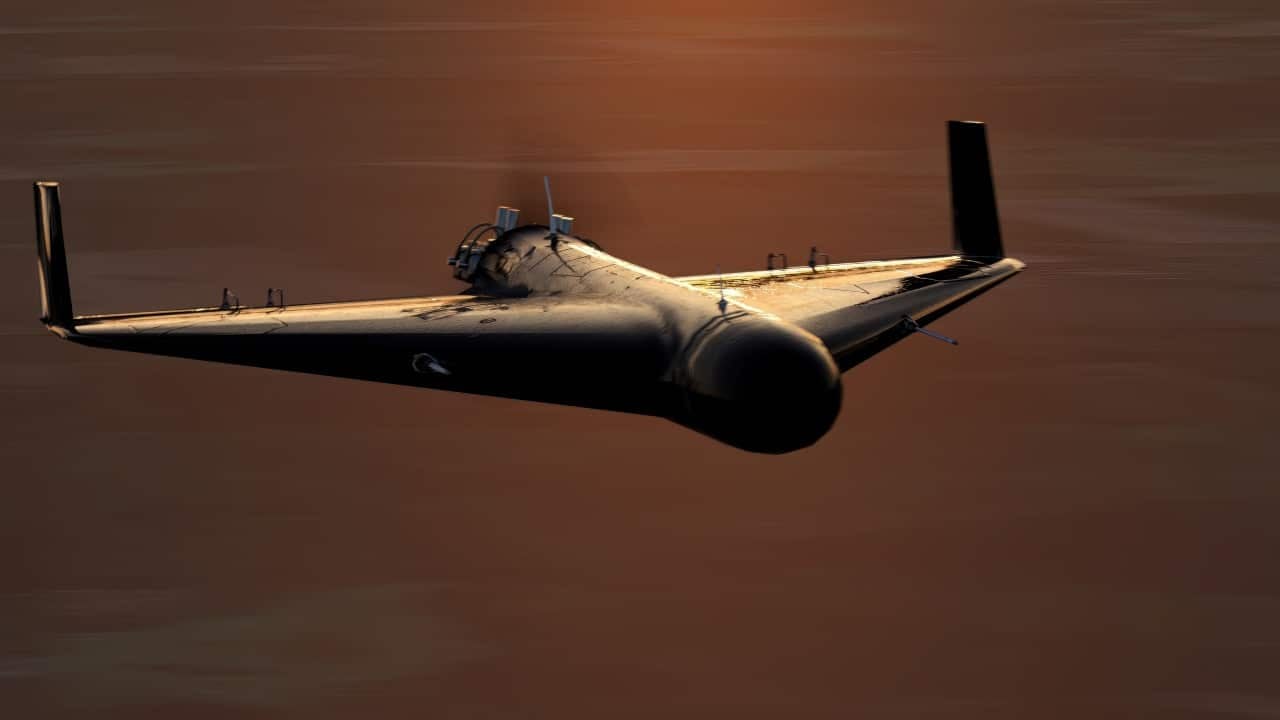
Inside an apartment located in the metropolitan region of Moscow, Russia, Elena Vladimirovna, 56 years old, was suddenly awakened at around 4 am. A violent boom shook the sky, and when she looked out the window, she saw multiple drones flying overhead.
Initially, the intense noise dissipated, and Elena had the impression that the danger had completely passed. However, shortly after, an even louder explosion resounded nearby.
“There is a protrusion under the balcony of our room that resembles a shelf. The drone hit this structure and started to catch fire, releasing dense, dark smoke,” reported Elena. The incident resulted in one of the fifth-floor apartments being completely engulfed in flames.
Mother of two children, Elena promptly ran towards the fire, accompanied by one of them, fetching water from buckets and basins to help control the flames. However, after the explosion, she realized the seriousness of the situation and decided to take her dog to escape. His apartment in Zelenograd was one of several buildings hit during a major drone strike conducted by the Ukrainian army on May 17.
Drone hits apartment in Zelenograd and exposes civil vulnerability
Until now, the inhabitants of the main Russian metropolises had remained, for the most part, distant from the daily effects of the conflict with Ukraine, which has now been going on for five years. However, this reality is changing as Ukrainian forces intensify their long-range attacks against Russian territory.
In addition to the direct threat posed by drones, Russian citizens face a growing lack of fuel. This shortage is a direct consequence of supply constraints resulting from Ukrainian attacks on oil refineries. Over the past week, drivers on the Crimean peninsula, a territory under Russian control, have had significant difficulties refueling their vehicles.
Fuel shortages and economic instability increase tension in the country
At the same time, the population lives with growing concerns such as the economic downturn, new limitations on internet use, the blocking of very popular messaging applications and an intensification of government surveillance. All of these factors contribute to a general increase in anxiety, which is already beginning to manifest itself in the results of public opinion polls.
On October 3, a Ukrainian drone attacked Saint Petersburg, Russia’s second-largest city and the birthplace of President Vladimir Putin. The incident occurred just hours before the opening of the Saint Petersburg International Economic Forum (SPIEF), an event sponsored by the Kremlin, with thousands of participants arriving in the city, which had the sky covered by black smoke.

Attacks on St. Petersburg demonstrate Ukraine’s reach
On the 6th, during the end of Operation SPIEF, Ukraine launched a second drone attack against Saint Petersburg and its surroundings, advising residents to stay at home. This event reinforced Ukraine’s ability to carry out offensives on Russian soil and disrupt the daily lives of the country’s citizens.
Residents of Kronstadt, a port city near St. Petersburg, told CNN that the walls of their homes began to shake around 3 a.m. local time on the 6th. They heard the sound of drones flying over the area and “couldn’t sleep. The noise was so loud that we feared our building was under attack,” even though they were aware of the Ukrainian army’s likely intention to target nearby military installations. It was also possible to hear the Russian anti-missile defense systems in action, trying to shoot down one of the devices. Kronstadt, situated on Kotlin Island, about 30 kilometers west of Saint Petersburg, was strategically built in the early 18th century to act as a sea defense base, protecting the capital of the Russian Empire at the time.
Ukrainian leadership justifies offensives and residents express apprehension
According to Russian authorities, on May 17, Ukraine carried out an attack against Russia using more than 500 drones, resulting in the deaths of at least three people in the Moscow region. One of these drones hit the building where Elena resides, causing damage to several floors, but, fortunately, no serious injuries were reported at the scene.
Ukrainian President Volodymyr Zelenskyy declared that the series of attacks from that period were “completely justified”.
“This time, Ukraine’s long-range strike hit the Moscow region. This sends a clear message to the Russian people that the Russian government must put an end to this war,” the statement said.
Elena expresses gratitude for having survived the incident. However, even days after the incident, a large hole remained where the window pane should have been. The repaired wall was visible and the reconstruction work was unfinished. For some Russians, this is a constant and undeniable reminder of the reality of the conflict, which seems to be getting closer and closer.
“I hope there are no more attacks. I’m still alive. That’s the most important thing,” said Elena, then expressing, in a calm tone, her hope for a quick end to the war.