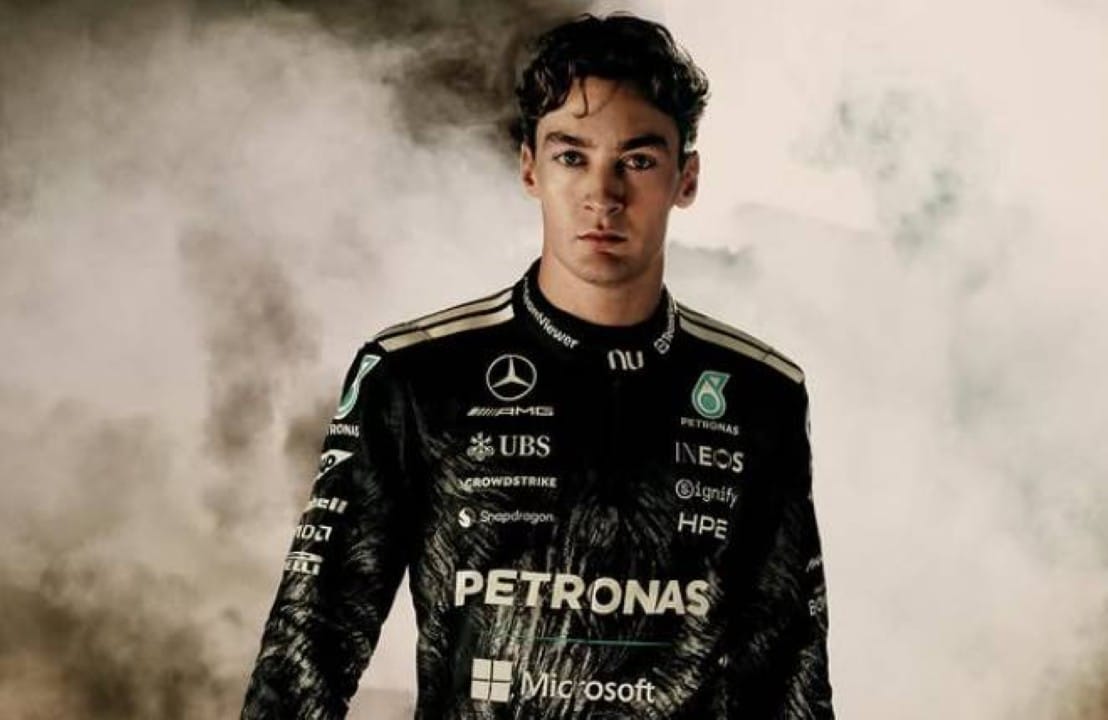
The scenario for qualifying for the Formula 1 Austrian Grand Prix was dramatically changed this Saturday, when Mercedes’ George Russell overtook his teammate and championship leader, Kimi Antonelli, in the final free practice session. The turnaround, which surprised many, occurred by a minimum margin of 38 thousandths of a second, promising a fierce dispute for pole position at the Red Bull Ring.
Although Antonelli dominated both of Friday’s sessions and much of the third free practice, Russell demonstrated crucial fine-tuning, especially in the first sector of the track. This performance not only subverted expectations of yet another lead from the young talent, but also injected an extra dose of internal rivalry and drama into the Mercedes team on the eve of the qualifying session.
Kimi Antonelli’s challenge after initial dominance in the sessions
Kimi Antonelli had displayed an impressive performance throughout the weekend so far, comfortably leading Friday’s practice sessions and remaining at the top of the timesheets for almost the entire third practice session. His consistency and speed made him the clear favorite for pole, showing that the young driver is in top form and determined to consolidate his position at the top of the championship. Russell’s turnaround therefore represents the first major obstacle to his expected hegemony at the Red Bull Ring.
Despite being overtaken late on, Antonelli remains a force to be reckoned with, and the small time difference between the two Mercedes teammates suggests that qualifying will be a battle of the thousandths. The team will need to manage these internal dynamics, ensuring that both drivers have the best conditions to get the most out of their cars without compromising the overall strategy.
George Russell’s winning strategy on the Austrian circuit
Russell’s overcoming came from detailed work on the car’s set-up and precise execution on the track. By focusing on the first sector, known for its high-speed corners and short straights, the Briton was able to extract the extra performance needed to overtake Antonelli. This strategic adjustment is vital on a circuit like the Red Bull Ring, where each segment of the lap requires a different balance between speed and grip.
The first sector of the Red Bull Ring, characterized by its fast corners, such as turn 1 (Castrol Edge) and turn 3 (Remus), demands efficient aerodynamics and good braking stability. Russell’s ability to optimize this part of the track highlights not only his individual talent, but also Mercedes’ ability to make effective changes to the car under pressure. This type of adjustment could be the difference for qualification, where the search for the perfect lap is incessant.
Lewis Hamilton and Ferrari position themselves in the race for pole
The final free practice session also brought a remarkable performance from Lewis Hamilton, who put his Ferrari in third place. The presence of the seven-time champion among the fastest indicates that Scuderia Ferrari managed to find a good rhythm and appears to be a real threat to Mercedes’ hegemony, which had been consolidated in the first sessions. This scenario of three top drivers from two different teams fighting for pole raises expectations for the classification.
Ferrari, traditionally strong on circuits that require good traction and straight-line speed, appears to have adjusted the SF-24 well for the characteristics of the Red Bull Ring. Hamilton’s experience in getting the most out of the car in crucial moments will be a determining factor in the qualifying session, where the pressure is maximum. Its performance in the third free practice suggests that the Italian team will not just be a supporting player in the fight for pole.
Expectations for the decisive qualification in Austria
Qualifying for the Austrian Grand Prix, scheduled for 11am, promises to be one of the most exciting of the season, with the result of the last free practice indicating a tight race. The nature of the Red Bull Ring, with its few corners and fast laps, means that small time differences can have a huge impact on the starting order.
Teams will be focused on maximizing the warm-up of the soft tires and finding the best time for a clean lap while avoiding traffic. Tire management, especially in the second and third stages of qualifying (Q2 and Q3), will be essential, as they degrade quickly on this circuit. The pressure is on the engineers to define the perfect strategy and on the drivers to perform error-free laps on an unforgiving track.
Main highlights of the third free practice in Austria:
- George Russell (Mercedes):He took first place with a time 38 thousandths ahead of his teammate, demonstrating an effective strategic adjustment in the first sector of the track.
- Kimi Antonelli (Mercedes):After leading Friday’s sessions and much of FP3, the championship leader finished second, showing that the internal battle at Mercedes is more alive than ever.
- Lewis Hamilton (Ferrari):It secured third place, positioning Ferrari as a strong competitor in the fight for pole and promising a qualification with multiple contenders for the top spot.
- Mercedes team dynamics:Russell’s overcoming creates a new narrative of internal rivalry, with the championship leader being challenged by his team partner at the crucial moment.
- Red Bull Ring Challenges:The track requires a delicate balance between straight-line speed and stability in fast corners, making final car adjustments and tire management crucial factors for success in qualifying.
With less than a tenth of a second separating the leaders, qualifying promises to be a spectacle of precision and speed. The ability of each driver and team to react to pressure and take advantage of the slightest advantages will make all the difference to who will start at the front in Sunday’s Grand Prix. Formula 1 is experiencing a moment of high competitiveness, and the Austrian GP is further proof of this.