

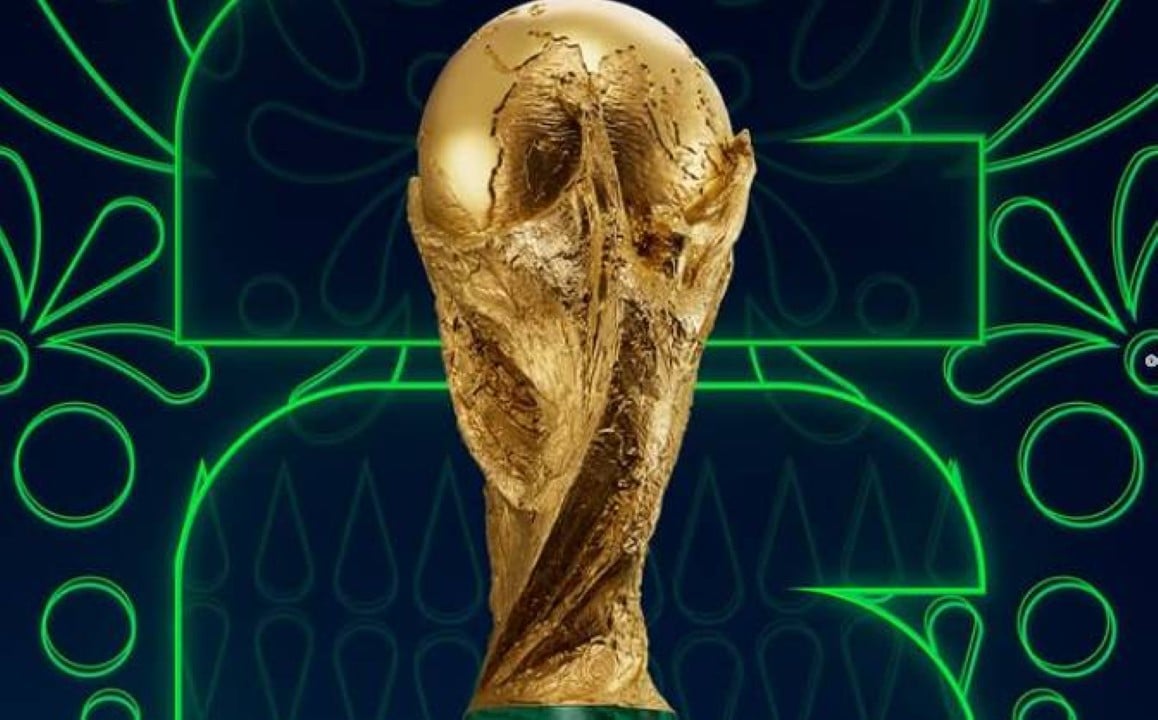
The next edition of the biggest football tournament on the planet will bring drastic changes to its structure, requiring increased attention to regulations. With the expansion of the tournament to forty-eight participating countries based in the United States, Mexico and Canada, the dynamics of the initial phase underwent a profound transformation. The inclusion of an unprecedented round of 16 phase means that, in addition to the leaders and vice-leaders of each group, the eight best third-placed teams will also guarantee survival in the competition. This mathematical scenario exponentially increases the probability of equality in the table, making the tiebreaker criteria established by the organizing entity more vital than ever for the future of the delegations.
The new mathematics of the group stage and the race for extra places
Historically, the format with thirty-two teams limited the margin of error, classifying only the best two of eight direct brackets for the round of 16. Now, the panorama expands to twelve groups containing four members each, creating an exclusive parallel table to compare the performance of those who finish in third position. This internal recap rescues a model that had not been seen since the 1994 edition, requiring the technical committees to calculate every statistical detail from the opening whistle of the first round.
In this highly competitive environment, finishing with the same score as a direct opponent is an almost inevitable reality. When this happens, the official regulations abandon subjectivity and apply a rigorous sieve of statistics to define who packs their bags and who continues dreaming of the cup. The central objective of these guidelines is to reward offensive sporting merit and loyal behavior within the four lines, before appealing to pre-championship records.
How direct confrontations determine the fate of tied teams
The first major filter activated by the organizers focuses exclusively on the particular conflict between those involved in equality. If two or more countries finish the third round with the same number of points, the general table is temporarily set aside so that a micro-championship can be created solely with the results of the games between them. The team that scored the most points in these specific duels gains automatic preference in the classification, valuing victory in the so-called six-point game.
However, there are complex situations where three teams can beat each other, generating a new three-way tie within this group. To resolve this tactical issue, the next step analyzes the goal difference restricted only to matches played between the tied teams. This is a metric that severely punishes defeats due to elastic scores against direct rivals, even if the team previously defeated the weakest opponent in the group.
If parity persists obstinately, the third criterion of this initial tiebreaker phase looks at offensive volume. Whoever has the most goals scored advances, always considering exclusively the clashes between nations that have the same score. This rule encourages the incessant search for attack, discouraging excessively defensive postures in decisive first phase matches.
The weight of the overall balance and the importance of not wasting attacks
When the analysis of direct confrontations is not enough to separate competitors, the regulations look again at the complete panorama of the group. It is at this moment that performance against the weakest opponent in the group can be the salvation or ruin of a million-dollar campaign. The technical tiebreaker hierarchy follows a strict, non-negotiable order, based on overall production during the opening three games.
To understand the exact sequence applied by tournament delegates in these cases, it is necessary to observe the following order of statistical priorities:
- The evaluation of the total goal difference, subtracting the goals conceded from those scored in all group matches.
- The absolute goal count in favor, benefiting the most productive attack over the three full rounds.
- The analysis of disciplinary behavior, which works as a gauge of sporting conduct and respect for the rules.
The search for a robust positive balance turns games that seem resolved into real battles until stoppage time. A one-nil victory yields the same three points as a five-nil defeat, but the four-goal difference in the final score often acts as an invisible extra point in the general leaderboard, especially in the fight between the best third-placed teams.
Disciplinary criteria punishes indiscipline and rescues dramatic memories
The fair play metric represents one of the most tense and dramatic moments in modern football. Introduced to avoid random draws, this system deducts imaginary points based on warnings given by referees. Each yellow card received by players on the field, reserves or members of the coaching staff takes away one point from the team. An indirect expulsion, as a result of two yellow cards, costs three points, while a direct red card subtracts four points from the disciplinary index.
The impact of this rule is not merely theoretical and has already changed the course of sports history recently. In the edition hosted in Russia, in 2018, the Senegal team was eliminated in the group stage exactly by this criterion, losing their place to Japan for having accumulated more yellow cards during their performances. This historical precedent forces coaches to demand absolute emotional control from their squads, knowing that a reckless foul in midfield could cost them early elimination.
World ranking acts as final judge to avoid the use of sweepstakes
In an extreme scenario, where two teams finish strictly equal in points, goal difference, goals scored, direct confrontations and even the number of cards received, the organization needs a definitive card. In the past, the solution to this absolute impasse was the cruel draw of balls, a method that left the work of years in the hands of pure chance. Today, modern regulation adopts an approach based on recent international performance history.
The position in the official ranking of the highest football entity, published immediately before the opening match of the tournament, becomes the final tiebreaker. The nation that is ranked best globally will take the place, rewarding the consistency demonstrated throughout the four-year cycle of qualifiers and preparatory friendlies. This guideline guarantees that sporting merit, in one way or another, is always the balance in the most coveted competition on the planet.