

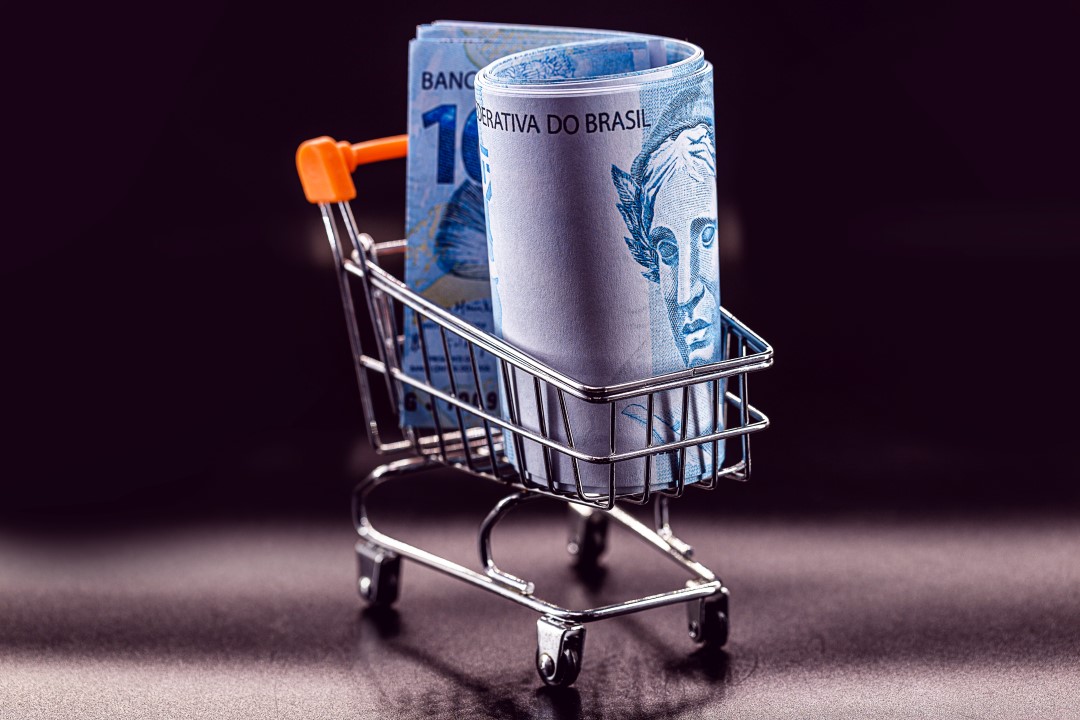
The Brazilian economy, although recognized as the main economic force in South America, faces a significant paradox in its purchasing power. Projections from the International Monetary Fund (IMF) indicate a Gross Domestic Product (GDP) of US$2.28 trillion for 2025, placing it in absolute leadership in the region.
However, the individual consumption capacity of Brazilians does not keep up with this magnitude. The country only ranks fifth in the ranking of per capita purchasing power adjusted by Purchasing Power Parity (PPP), an indicator that offers a more realistic view of individual income.
Understanding the difference between GDP and purchasing power
Nominal GDP, which measures the market value of production, often does not reflect variations in prices and costs of living between nations. The Purchasing Power Parity (PPP) methodology is crucial for a more accurate assessment, as it corrects these distortions.
It compares the cost of a basket of products and services in different countries, revealing what the same amount of money can actually buy. For Brazil, PPP data shows that the population’s purchasing power is lower than that of neighboring nations, even those on a smaller economic scale.
The impact of inequality on individual income
Another preponderant factor that undermines average purchasing power in Brazil is the high concentration of income. The country ranks as the second most unequal nation among those that provide data on the Gini coefficient, an indicator that measures disparity in the distribution of wealth.
This index reveals that a small portion of the population holds most of the wealth, while the majority struggles with incomes that do not keep up with the cost of living. This disparity directly affects the consumption capacity of the population, limiting access to essential goods, despite the robust GDP.
Challenges and the path to economic advancement
Despite the large volume of its national production, the Brazilian economy needs structural reforms so that growth is reflected more equitably in the lives of citizens. Increasing per capita purchasing power is essential to boost the domestic market and improve the overall quality of life.
Experts point out that reducing inequality, stimulating productivity and effectively managing inflation are fundamental steps for Brazil to be able to translate its immense economic potential into prosperity for all, advancing not only in GDP, but also in quality of life.