

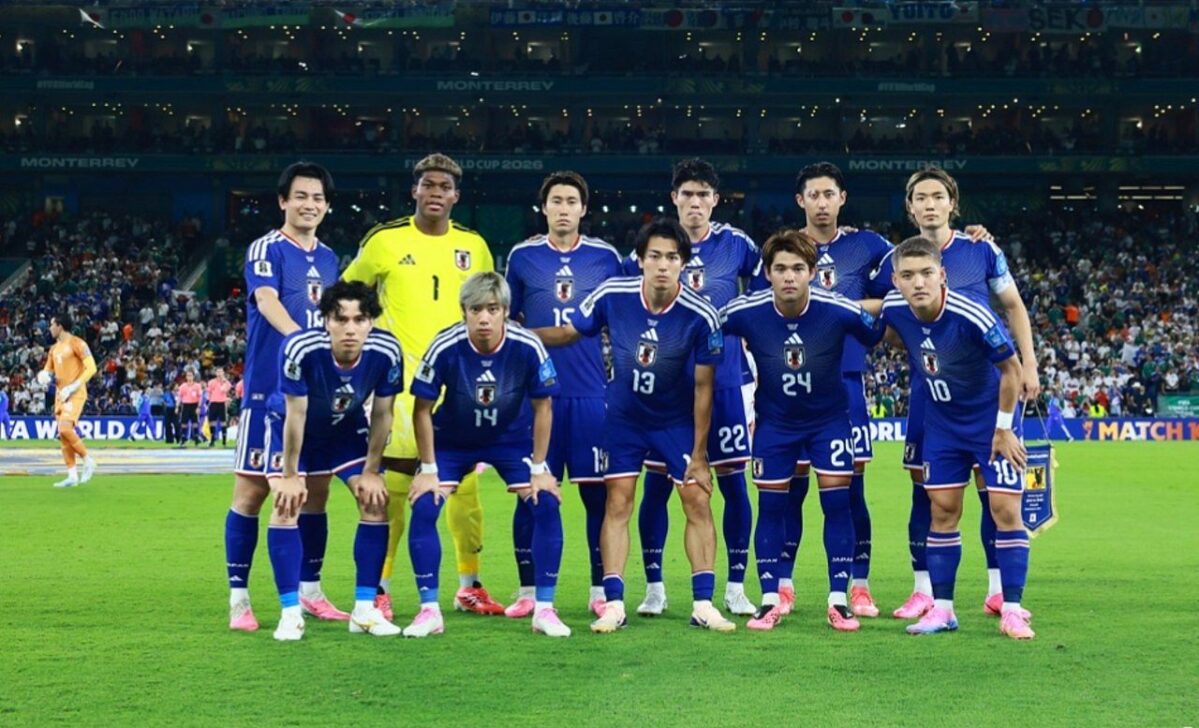
Japan’s football team secured an impressive 4-0 victory over Tunisia in a match played in Mexico, reaching four points in Group F, with one win and one draw. The Japanese team is currently in second place, with the same number of points and goal difference as the Netherlands, behind only by the criteria of goals scored.
Japanese fans, known as the “Blue Samurai”, showed great enthusiasm in the stands, waving their blue plastic bags. After the final whistle, these fans were praised for collecting rubbish in their bags, actively contributing to cleaning the stadium. The polite attitude of the Japanese fans attracted attention and was widely highlighted.
In a gesture of great civility, photos published by the Mexican newspaper ‘El Norte’ revealed that the Japanese national team players themselves thoroughly cleaned the dressing room after the game. They carefully organized the used towels and left a thank you message on the chalkboard that said, “Thank you very much, Samurai Blue.”
The Japanese athletes’ conduct received praise from ESPN in the United States, which expressed admiration. The broadcaster highlighted the team’s impeccable behavior and the message of gratitude left, stating that it is a wonderful culture and hoping that players from other countries can follow the positive example.
However, the image of cordiality was tarnished by a controversial episode that occurred during the same match. Some Japanese fans were spotted displaying the Rising Sun flag as they celebrated. In fact, Mexican fans, unaware of its meaning, even reproduced the symbol painted on their faces, imitating the Japanese.
The Rising Sun flag is a symbol directly associated with Japanese militarism during World War II, representing a period of imperialist aggression. For many Asian nations, such as South Korea and China, it is seen with the same negative and traumatic connotation that the Nazi swastika represents for Europe, evoking memories of atrocities and occupation. FIFA, in turn, adopts a strict policy of separation between football and political demonstrations, imposing punishments on fans or athletes who display political messages in stadiums.
The stance of Japanese fans sparked a debate about the duality between demonstrating cleanliness and civility and venerating a historically controversial symbol. Many considered the attitude as an inconsistency, exemplifying the proverb that describes something different on the inside than what appears on the outside.