

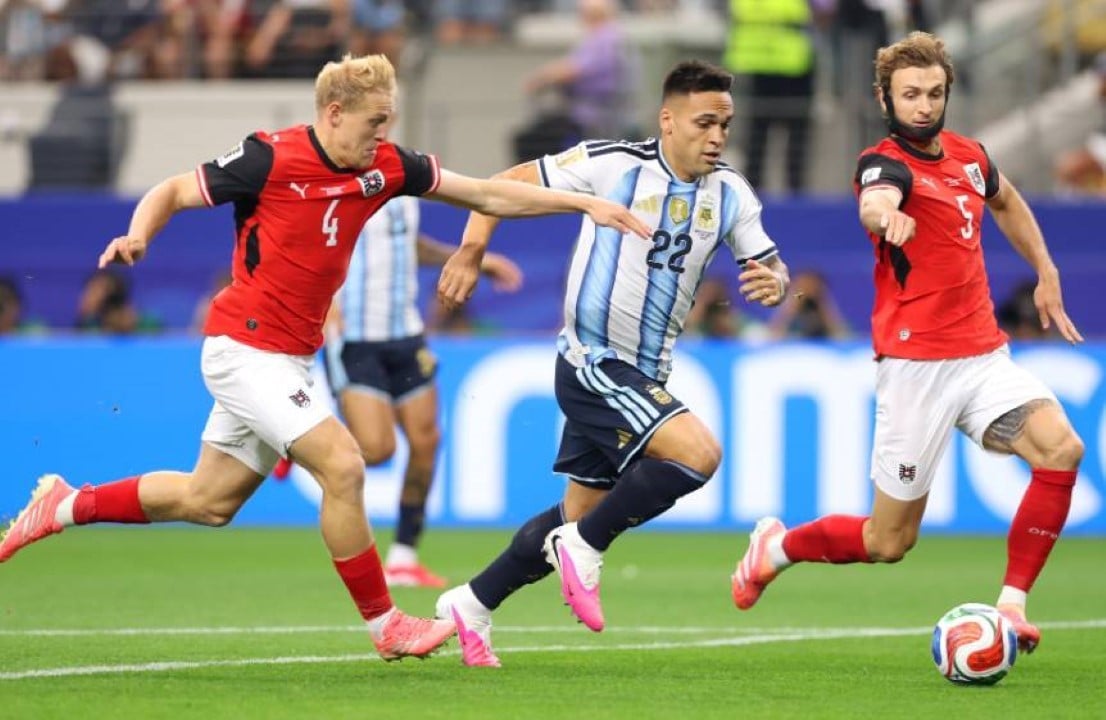
Argentina lead Austria 1-0 in a thrilling 2026 FIFA World Cup game, with Lionel Messi adding another golden chapter to his football legend. In Dallas, the Argentine number 10 found the net, not only guaranteeing a partial advantage for his team, but also consolidating his position as the greatest scorer of all time in World Cups. The score at the moment reflects the intensity of the match, which remains in dispute, with the first 30 minutes of the second half already full of emotion and crucial plays.
Messi’s historic goal came after an engaging play by the Argentine team, which demonstrated harmony and precision. This milestone, achieved on the biggest stage in world football, further elevates the status of one of the most influential athletes in the history of the sport. For fans, witnessing a moment like this is a privilege, reaffirming Messi’s indelible impact on the global football scene.
The confrontation between Argentina and Austria, valid for the group stage of the World Cup, has proven to be a tactical and technical spectacle, with both teams pursuing their goals in the competition. While Argentina tries to consolidate its lead and secure an early place in the next phase, Austria fights to reverse the score and maintain its hopes of advancing, in a clash that is increasingly vital to its aspirations in the tournament.
The goal move that made World Cup history

In the 38th minute of the first half, Lionel Messi scored the goal that would establish him as the World Cup’s top scorer. The play started with Medina, who crossed low. Almada, intelligently, cut the lights, opening space for Messi to masterfully finish into the goalkeeper’s right corner. The move demonstrated Argentina’s ability to create opportunities with precise passes and intelligent movement, and the captain’s accurate finish sealed the partial fate of the score at 1-0, sending the fans into a frenzy and recording an unforgettable moment in the history of world football. This goal is not just another goal; It is the culmination of a brilliant career, full of sacrifices and dedication, now immortalized in the annals of the World Cup.
Argentine pressure and the Austrian search for space
At the beginning of the second half, Argentina returned with the clear objective of maintaining possession of the ball and controlling the pace of the game, seeking to increase their advantage. Austria, in turn, tried to advance its lines and pressure the opponent’s ball, but found it difficult to break through the Argentine defensive block. The Austrian team showed determination, but lacked clarity in finishing and final moves, which made it difficult to create real scoring opportunities. The tension on the pitch was palpable, with every possession being fiercely contested and every mistake potentially costly. Coach Ralf Rangnick tried to adjust his team to find a gap in the Argentine defense, while Lionel Scaloni asked his team for calm and intelligence.
The match in Dallas, which started at 2pm, continues with Argentina controlling most of the offensive actions, but Austria did not give up. Little by little, the Austrians tried to build plays on the sides of the field, seeking to exploit the speed of their attackers. However, the Argentine defense, with Cuti Romero and Otamendi in defense, showed solidity and experience, countering the opponent’s attacks. With each passing minute, the pressure on Austria increased, as the need for a goal to equalize the score and stay alive in the match became more urgent. The Austrian bench was attentive to each move, ready to make the necessary changes.
Decisive moves in the first 30 minutes of the second half
The first thirty minutes of the final stage were marked by moments of great intensity and some strategic interruptions. The Argentine team sought to consolidate its advantage, while Austria, despite the difficulties, tried to come up with a reaction, forcing some dangerous moves. The game, played at a fast pace, saw the referee intervene at times for cards and the traditional hydration break.
- Minute 21′ (2Q): Tactical changes in Austria
* With the score unfavorable, Austrian coach Ralf Rangnick made three simultaneous substitutions. Friedl replaced Alaba in defense, looking for more defensive consistency and perhaps a new dynamic in passing the ball. Prass took over at left-back, replacing Posch, who had already received a yellow card in the first half. In attack, Arnautovic went to the bench, giving way to Wanner in midfield, in an attempt to reinforce the creation of plays and give more energy to the offensive sector. These changes aimed to freshen up the team and seek new alternatives to break the Argentine blockade, showing the urgency of the situation for Austria.
- Minute 23′ (2T): Hydration break
* Due to the intense heat in Dallas, referee Amin Mohamed Omar interrupted the match for a technical break, allowing the players to hydrate. This moment was crucial for the coaches to reevaluate their tactics and transmit new instructions, taking advantage of the brief interruption to adjust their teams’ positioning and game plan, especially after the Austrian changes. The break also served to cool the spirits of a match that was proving to be quite tense.
- Minute 27′ (2T): Opportunity missed by Argentina
* After the match resumed, Argentina received a corner on the left side of the attack. Messi, with his characteristic precision, took the ball to the head of Nico González, who rose well, but headed wide. The move generated a sigh among the Argentine fans, who almost saw the team’s second goal and the expansion of their advantage. The missed opportunity sparked a warning for the Argentines, showing that the match was still open and that each chance should be taken with maximum concentration.
- Minute 29′ (2Q): Austria’s offensive difficulties
* Even with the changes, the Austrian team continued to have great difficulties converting their arrivals into the offensive field into real dangerous moves. Argentina’s defensive organization prevented the Austrian attackers from finding spaces to finish, which generated frustration in the team. The inability to create clear scoring chances highlighted the efficiency of Argentina’s marking and the need for Austria to be more creative and incisive in their attacks to try to seek a draw.
- Minute 30′ (2Q): Yellow cards and tension on the field
* The intensity of the game resulted in two consecutive yellow cards. Laimer, from Austria, was warned, and shortly afterwards, Medina, from Argentina, also received the card. These sanctions indicated increased competition for the ball and growing tension in midfield, with players from both teams demonstrating a high level of physical engagement in an attempt to control the match. The yellow cards served as a warning to maintain discipline in the final minutes.
Mix Vale: follow every move of the World Cup live
For those who don’t want to miss any details of this exciting clash and all the matches of the 2026 FIFA World Cup, the Mix Vale news portal offers live, minute-by-minute coverage. With “Campinho Ligado” and real-time updates, fans can follow the main plays, goals and decisive moments of the most important games, such as this duel between Argentina and Austria, which still has a lot to happen. Following the World Cup with Mix Vale means having access to accurate and immediate information, as if you were inside the stadium.
By subscribing to Mix Vale notifications for free, readers receive news instantly, directly on their device, without missing any updates on their favorite team or the most important events in the tournament. In a World Cup full of surprises and big games, being well informed is crucial. The www.mixvale.com portal is dedicated to delivering a complete experience, ensuring that the passion for football is experienced to its fullest, with analysis, statistics and the best of the sport.
Expectations for the rest of the match
With the match still underway and Argentina leading by one goal to zero, expectations for the final minutes of the second half are extremely high. Austria, despite the difficulties, did not give up and should continue looking for the equalizer, which could open up spaces for Argentine counterattacks. Lionel Scaloni’s team will need to maintain concentration and defensive solidity, while trying to take advantage of any new opportunity to extend the score and seal their victory. The tactical developments in the next few minutes will be decisive for the final result, with each coach looking for the best strategy to emerge victorious.
The stadium in Dallas, which once witnessed Messi’s historic goal, remains a vibrant atmosphere, with fans on both sides encouraging their teams. The dynamics of Group J, where Argentina already has six points and Austria three, adds an extra layer of importance to each move. An Argentine victory would strengthen their position, while a draw or an Austrian upset could upset the key. The game remains unpredictable, and football lovers are anxiously waiting to see what the final moments of this crucial clash have in store. The excitement of the 2026 FIFA World Cup continues in full swing.