

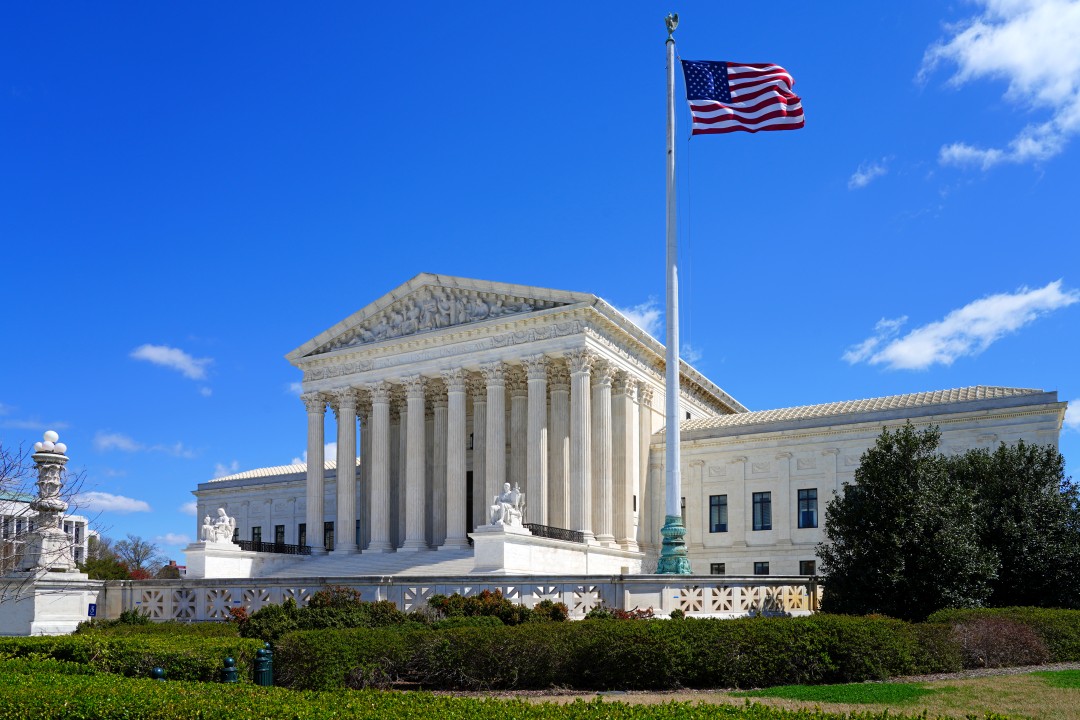
The United States Department of Justice is appealing the sentence of Sophie Roske, sentenced to eight years in prison for planning the murder of Supreme Court Justice Brett M. Kavanaugh. Federal prosecutors consider the current sentence too lenient and are seeking a more severe sentence for the crime. The court decision on the appeal could set a new precedent for cases of threats to high-ranking authorities in the country.
Details of the plan to target the federal judge
The investigation revealed the complexity and intent behind 26-year-old Sophie Roske’s plan to attack Judge Brett M. Kavanaugh. A resident of California, she managed to locate the magistrate’s address on the outskirts of Maryland and then began preparations for the attack. Federal authorities obtained surveillance footage showing Roske purchasing a gun at a store in California.
The thorough preparation and the dangerous journey
The accused did not limit herself to purchasing weapons. She reportedly practiced shooting and acquired a number of specific items, such as lock picking tools, black face paint and a laser sight, demonstrating detailed premeditation. All the equipment was packed in a suitcase, and Roske flew across the country, taking a taxi that took her directly to the judge’s Maryland residence, arriving shortly after 1 am.
Why the Justice Department seeks a greater sentence
Federal prosecutors’ request to increase Sophie Roske’s sentence reflects the seriousness of the crime and concern for the safety of judicial authorities.
A planned attack on a Supreme Court judge is not just an individual crime, but a direct threat to the stability of democratic institutions and the functioning of justice in the country. The Department of Justice understands that the penalty must be proportionate to the attempt to destabilize a fundamental pillar of the government.

Impact on the security of federal authorities and the political context
Sophie Roske’s case highlights the importance of the safety of judges and other federal employees, an issue that has gained even more relevance in recent years due to growing political and social polarization.
The attempted assassination of a member of the Supreme Court highlights the vulnerability of these public figures, whose decisions often generate intense debate. The prosecutors’ appeal aims not only to punish the aggressor, but also to send a clear message about the non-negotiable protection of those who work in the judiciary.
Next steps in the appeals process
With the appeal presented by the Department of Justice, Sophie Roske’s case will undergo further analysis in higher courts.
The court will weigh prosecutors’ arguments, which are likely to emphasize premeditation, the scope of the plan and the potential impact of a successful attack on a federal judge. The final decision could determine a significantly longer prison time, reinforcing the government’s stance on crimes of this nature.