

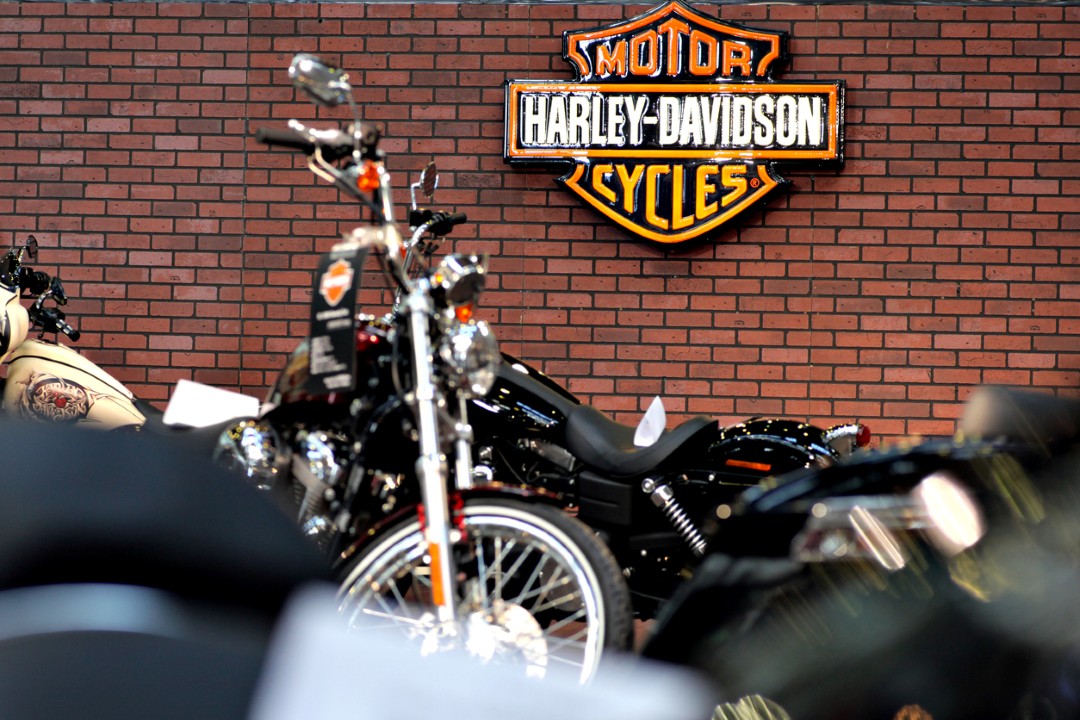
Harley-Davidson represents much more than a motorcycle manufacturer to its enthusiasts. For them, the brand symbolizes a lifestyle, a particular aesthetic and a sound that is immediately recognizable. The company’s identity has been shaped over decades by its robust design, characteristic riding position, V-Twin engine and the distinctive roar of its exhausts.
Presented as a crucial strategic bet, the LiveWire S4 Honcho goes beyond being just a mini electric motorcycle. It serves as an experiment to determine the ability of a brand traditionally linked to combustion and engine sound to adapt to a market where silence, battery life, onboard technology, price and urban practicality are as important as displacement and exhaust noise. Harley-Davidson’s decision to invest in a model like the Honcho reflects a global trend: iconic brands, traditionally linked to specific engines, need to rethink their essence to remain relevant in an increasingly electric future focused on sustainability.
The challenges of adapting Harley-Davidson’s essence to the electric segment
Entering the electric motorcycle segment poses a significant hurdle for any legacy company. For Harley-Davidson, this transition is even more complex. The company has always stood out for its exclusive design and instantly recognizable image. What’s more, it has cultivated a deep culture around engine sound, considered by many fans to be a vital component of the experience, almost an emotional signature.
An electric motorcycle changes this dynamic fundamentally. It does not have the conventional exhaust or the vibration of a high-displacement engine. Torque is delivered instantly, but without the characteristic sound impact of a combustion engine. Although this may be interpreted by some motorcyclists as a loss of identity, others see the opportunity to enter the world of two wheels with less noise, without depending on gasoline and with simplified maintenance.
In this transformation scenario, LiveWire appears. Initially, it was the name of Harley-Davidson’s first electric motorcycle, but it later became an independent division focused exclusively on electric vehicles. This strategic separation aims to protect the classic brand image while providing the freedom to explore new products, platforms, price points and visual approaches.
Discover the characteristics of the LiveWire S4 Honcho mini electric motorcycle
The LiveWire S4 Honcho is classified as a mini electric motorcycle equivalent to a 125 cc and is available in two configurations: Street and Trail. The Street version was designed for the urban environment, equipped for circulation on streets and avenues. The Trail is aimed at leisure, with a focus on light terrain and off-paved trails, offering a more recreational proposal.
LiveWire itself positions the S4 Honcho as an entry vehicle to expand access to the brand. The goal is clear: to offer a simpler, lighter and more affordable alternative to LiveWire’s larger electric motorcycles. Without competing directly with high-powered premium models, Honcho seeks to fill a gap between urban electric scooters, combustion mini-bikes and electric options aimed at leisure.
The LiveWire S4 Honcho pricing strategy reinforced this positioning. According to information from Electrek, the Trail version was announced for 27 thousand reais, while the Street costs around 29.7 thousand reais, amounts that correspond to the conversion for the international market, without including shipping and taxes for other countries. These prices were lower than part of the market expected for a product associated with Harley-Davidson and significantly below LiveWire’s larger electric motorcycles.
The choice of mid-engine to preserve the traditional riding feel
One of the most notable technical aspects of the S4 Honcho is the use of a central engine combined with a chain drive. While many compact electric motorcycles and scooters employ wheel hub motors, a simpler solution, this approach can result in a riding experience less analogous to that of a conventional motorcycle.
With a centrally positioned engine, weight distribution tends to be more balanced. The chain transmission, in turn, provides a sensation of acceleration and response that is more similar to what many motorcyclists are already accustomed to. For a brand that seeks to attract both new users and experienced motorcyclists, this technical detail makes all the difference.
The design intent is not to create a silent Harley with scooter performance. On the contrary, the objective is to deliver a compact electric motorcycle that maintains the essence of a motorcycle. The tubular structure, the mini-bike look and the distinction between the urban version and the light trail version underline the effort to preserve the brand’s personality.
Easy recharging with removable battery modules
The S4 Honcho is equipped with two removable battery modules, totaling a capacity of 3.5 kWh. This feature is a strategic decision, as one of the main challenges of electric motorcycles is recharging for users who live in apartments, do not have a socket in the garage or depend on shared charging spaces.
With the possibility of removing the batteries, the user can take them to charge at home, in the office or anywhere with access to an outlet. This increases the practicality of the bike for daily use in urban environments. Additionally, removable battery technology opens the door to future quick-swap systems if charging infrastructure evolves in specific markets.
Intentional distancing of the S4 Honcho from the image of the classic Harley
The S4 Honcho does not aim to replicate the experience of riding a traditional Harley, which can be considered the most cunning point of its strategy. The bike does not seek to imitate the sound, size or imposing presence of a combustion-powered custom. Instead, it embraces a new purpose: to be a small, electric, urban, fun and easy-to-maneuver vehicle.
This strategic approach minimizes the perception that the bike would be an “electric clone” of the renowned brand. Harley-Davidson’s classic lineup continues to thrive with its powerful engines, rugged design and big-road culture. Meanwhile, LiveWire takes on the responsibility of exploring the electric future without carrying the symbolic and historical weight of the parent brand.
At the same time, Honcho tries to answer a fundamental question: what makes a motorcycle attractive when arguments such as exhaust, noise and engine capacity are not the main differentiators? The solution is found in a set of attributes that include innovative design, lightness, adequate autonomy, simplified recharging, less need for maintenance and a more affordable entry price.
The future at stake for Harley-Davidson as electrification expands
The arrival of the S4 Honcho demonstrates that the electric path for Harley-Davidson is not limited to just producing large, battery-powered motorcycles. Success depends on creating products that align with new mobility demands. Increasingly congested cities, increasing environmental demands, high fuel costs, interest in technology and the search for more compact vehicles make room for models like this.
However, the cultural challenge persists. Harley is a brand built on presence, sound and tradition. The electric motorcycle, in turn, represents almost the opposite: it is silent, connected and more guided by reason. To be successful, LiveWire needs to prove that the excitement on two wheels is not exclusively linked to the sound of the exhaust.
Although small in size, the S4 Honcho raises a big question: can a brand recognized for the roar of its engines win over new consumers with a silent motorcycle? With a starting price of US$4,999, removable batteries and a proposal aimed at urban use, LiveWire strives to show that this transition is possible. If the positive response comes through design, practicality and riding experience, Harley-Davidson could solidify a new direction in the electrification scene, without erasing the rich history that made it an icon.