

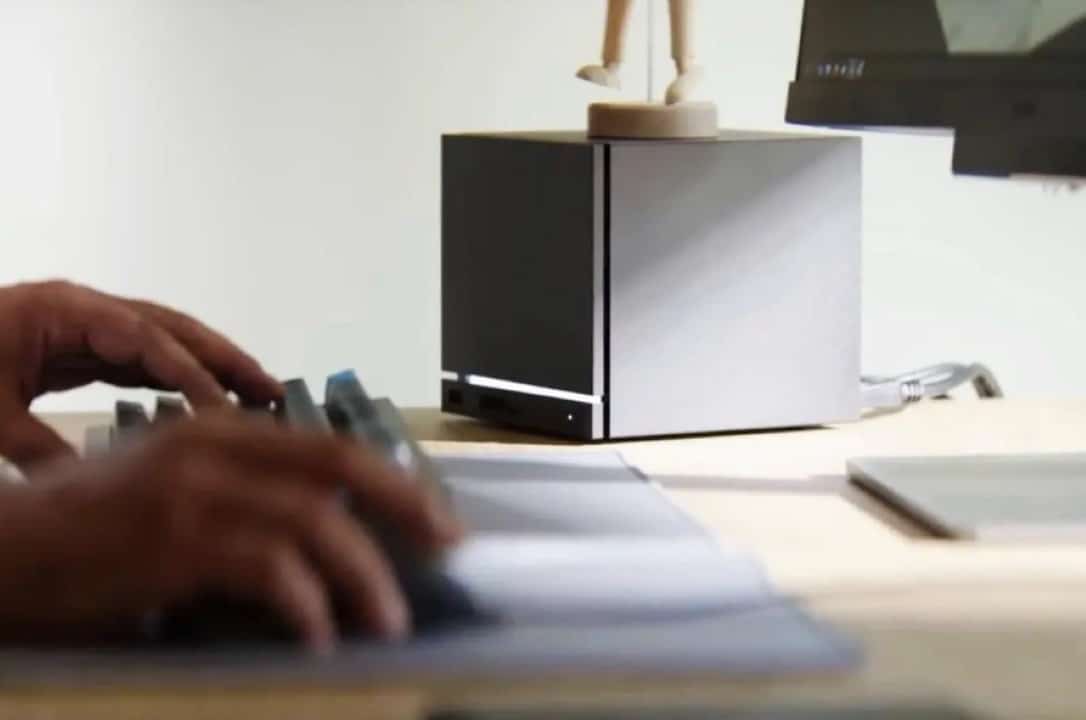
Valve has finally revealed the pricing and sales structure for its highly anticipated Steam Machine, a console-like PC gaming console. The device, designed to bring the power of computers to the living room, will have its official launch in the summer of 2026, with prices exceeding US$1,000. The company also detailed the reservation system that will be implemented due to expected demand and component shortages.
Disclosure of Steam Machine prices and configurations
Valve has confirmed that the Steam Machine will be available in two main storage configurations: 512GB and 2TB. Both versions can be purchased individually or in a bundle that includes the new Steam Controller, sold separately for US$99. The multiple-pack strategy offers consumers flexibility.
The company has released a comprehensive price list in multiple currencies for the four purchase options:
- Steam Machine 512GB: US$1,049 / CA$1,509 / €1,039 / £879 / AU$1,609 / PLN 4,389
- Steam Machine 512GB + Steam Controller: US$1,128 / CA$1,628 / €1,108 / £938 / AU$1,728 / PLN 4,698
- Steam Machine 2TB: US$1,349 / CA$1,919 / €1,359 / £1,149 / AU$2,109 / PLN 5,739
- Steam Machine 2TB + Steam Controller: US$1,428 / CA$2,038 / €1,428 / £1,208 / AU$2,228 / PLN 6,048
Additionally, Valve will offer aesthetic customization options for the 2TB version, allowing buyers to choose between a standard black front cover, a red fabric one, or a walnut wood front cover.
Production challenges and the impact of demand for artificial intelligence
The high cost of the Steam Machine, which exceeds the thousand-dollar mark, is a direct reflection of the current component crisis in the global market. Valve explained that memory shortages, in particular, have been severely impacted by massive investment in artificial intelligence technology. Growing demand for high-performance chips to train and operate AI models has diverted production and driven up semiconductor prices.
This technological situation has caused a ripple effect throughout the electronics industry, making the production of devices such as gaming PCs and consoles more expensive. Valve’s decision to launch a reservation system is not just a logistical organization measure, but a pragmatic response to a scenario where supply cannot keep up with demand in a traditional way. The company admits that it will not have as many units available as it would like, making access to hardware more competitive.
Reservation system to guarantee purchase
Faced with supply limitations, Valve opted for a reservation system similar to that used for the Steam Controller, but with adaptations. Those interested in purchasing a Steam Machine can sign up for the reserve list for the desired model on the official product page, from now until next Thursday, June 25th, at 10am PT (Pacific Time).
After the registration period, Valve will close the list and perform a randomization to determine the order of the reservation queue. Participants will receive an email informing them whether they have been added to the order queue, with further notification when a unit is available for purchase, or whether they have been placed on a waiting list, with notification when more units are added to the main queue. The first Steam Machine shipments are scheduled to begin on Monday, June 29, one week after reservations open. To participate, you must have a Steam account in good standing and a purchase history on the platform before April 27th.
Valve’s vision for the future of living room gaming
The Steam Machine represents Valve’s latest foray into its goal of integrating the PC gaming experience into the living room environment, offering the diversity and power of computer gaming in a format closer to that of a console. This ambition is not new for the company, which had already launched the first Steam Machines in 2015, with mixed results, and later the successful Steam Deck, a portable PC.
The new Steam Machine, equipped with the Linux-based SteamOS operating system, seeks to combine the familiarity and simplicity of a console with the openness and performance of a PC. Unlike the Steam Deck, which focuses on portability, this new device is a compact desktop, designed to be the home entertainment center. It aims to appeal to both PC gamers looking for a more elegant solution to gaming on their TV, and console consumers who want access to Steam’s vast library and the flexibility of the PC.
Positioning of the Steam Machine in the current hardware market
Valve’s Steam Machine enters a competitive market where next-gen consoles like the PlayStation 5 and Xbox Series X are already established, and gaming PCs offer an even greater range of customization. With its price higher than traditional consoles, the Steam Machine positions itself as a premium option, aimed at an audience that values the flexibility of the PC, but wants the convenience of a device ready to use in the living room.
Compared to existing gaming mini-PCs, Valve’s proposal stands out for its deep integration with the Steam ecosystem and optimized SteamOS. While a traditional gaming PC requires more technical knowledge and configuration, the Steam Machine promises a “plug and play” experience closer to the philosophy of consoles. This unique positioning can attract gamers looking for a compromise between the power of the PC and the simplicity of consoles, even in the face of a challenging supply and demand scenario.