

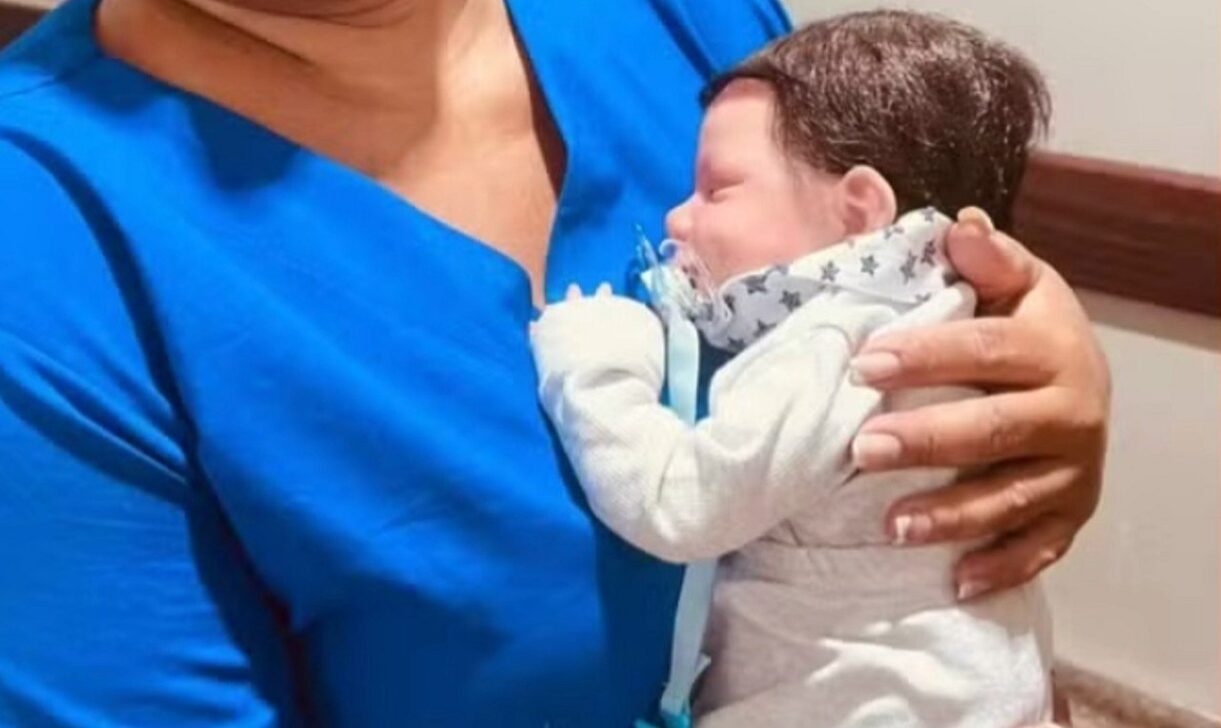
At the end of a shift on Sunday (26), pediatrician Erika Baldo was surprised at an Emergency Care Unit (UPA) in Várzea Grande, in the metropolitan region of Cuiabá. Nurses requested his presence for an unusual consultation: a woman had arrived seeking care for a “reborn baby”, a doll known for its extreme realism.
The pediatrician revealed that she initially thought it was a joke or mistake, given the peculiarity of the situation. However, he quickly realized that the patient’s intention was genuine.
Baldo expressed his astonishment, questioning the companion about the reason for the visit. The woman explained that the “baby” had flu symptoms and had recently changed his diaper due to “poop”, insisting on the need for a medical evaluation, although the form was not registered.
The health professional estimated the young woman’s age to be between 18 and 20 years old. To avoid possible negative reactions, the doctor chose to carefully clarify that the doll did not qualify for care, as it did not have essential documents such as CPF or SUS card.
The doctor assessed the situation as a possible outbreak, indicating the need for referral to a Psychosocial Care Center (CAPS). The refusal to provide assistance provoked strong indignation from the woman.
The woman had accompanied her own mother, who had flu symptoms, and took the opportunity to try to schedule an appointment for the doll.

The unit’s nurses expressed perplexity at the situation. The doctor reiterated the impossibility of registering care for the “reborn baby” due to the absence of a CPF and SUS card, denying even a superficial examination of the doll.
Baldo stated that, despite his experience with other psychiatric cases, he had never witnessed an occurrence like this. She considered that the attitude of the woman in the UPA could be classified as a psychiatric condition.
The pediatrician observed the woman’s concern, who was carrying a maternity bag equipped with diapers and clothes, handling the doll with the same zeal dedicated to a real baby. This conduct reinforced the suspicion of a possible mental breakdown or confusion, characteristic of certain psychiatric cases.
Through an official statement, the Superintendent of Emergency Care Units of Várzea Grande highlighted that health services must be directed exclusively to patients with real medical needs. The agency highlighted that this measure aims to guarantee the quality of care and avoid negative impacts on the population seeking care.
How reborn babies came about and their characteristics
The expression “reborn baby” originates from the English language and translates as “reborn”, referring to the practice of customizing older dolls, which began during the Second World War. Since then, these articles have gained widespread popularity, with constant improvements that bring them closer to reality.
Certain specimens are meticulously crafted, focusing on details such as the mouth, eyelashes and hands to replicate the appearance of a newborn. In some versions, the dolls even incorporate human hair, further enhancing their realism.
On the national scene, these dolls achieved greater visibility after an event held in April this year, when a collective of women met in Ibirapuera Park, in São Paulo, promoting a meeting of “mothers and reborn babies”.
The growing popularity and use of reborn babies even in public contexts has led to legislative discussions. A bill came to pass with the proposal to impose fines of more than R30,000 on individuals who use the dolls to obtain undue advantages, such as preferential service, priority in queues or other benefits reserved for infants and their companions, highlighting the need for discernment between fiction and reality.