The Brazilian team may have an unprecedented Flamengo trio as starters in a World Cup game, repeating 1986
The scheduled clash with Scotland, valid for the World Cup, could reestablish a landmark achievement for the Brazilian team, something that hasn’t happened in forty years. The possibility is that three players from a single club in Brazil will start as starters in a World Cup match. The most recent precedent for this configuration dates back to the 1986 World Cup, when the national team included three Corinthians athletes.
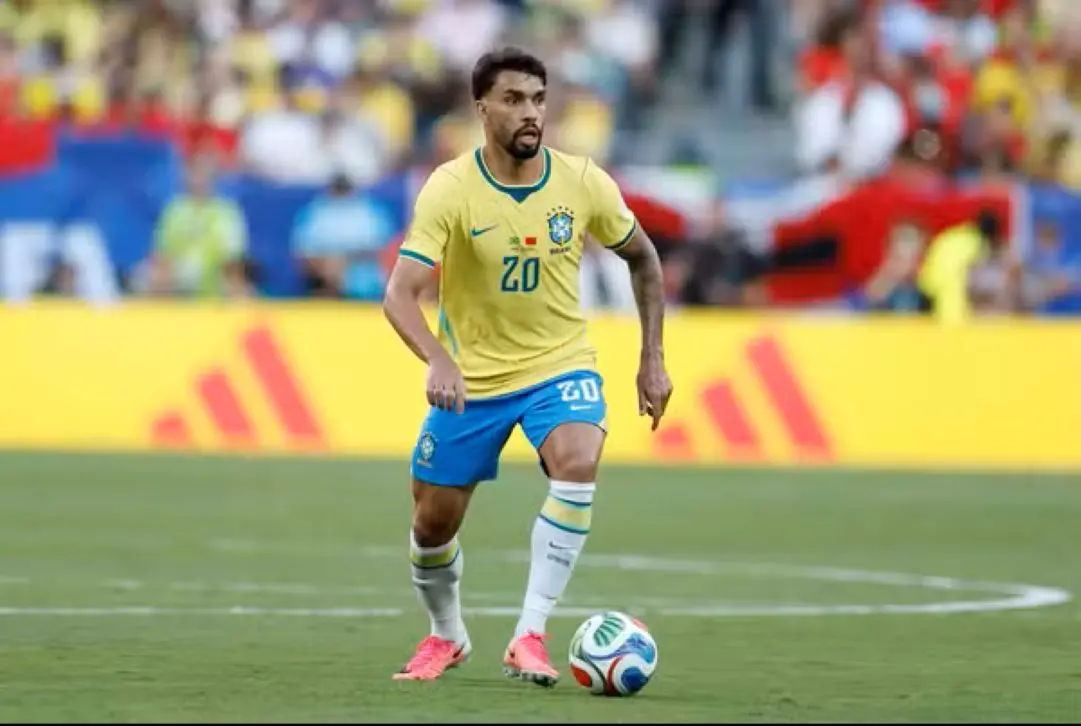
The Flamengo club finds itself on the verge of achieving a remarkable feat, absent from the Amarelinha team for four decades. In this Wednesday’s crucial clash against Scotland, in the final round of the group stage, coach Carlo Ancelotti has the option of choosing three athletes from the Rio team among the starters. The Brazilian delegation has four representatives from Mengão: Danilo, Alex Sandro, Léo Pereira and Lucas Paquetá.
The probability of a Flamengo trio starting playing
The participation of Flamengo players in the initial formation has been observed more frequently throughout the championship. Lucas Paquetá, for example, was on the field from the opening whistle in the first two duels. He was the club’s only representative to play in the 1-1 draw with Morocco and was later joined by Danilo at right back in the 3-0 victory against Haiti.
The achievement of this feat for Mengão depends on the left side. With Douglas Santos suspended due to an accumulation of yellow cards, Alex Sandro emerges as the most likely choice for the position in the clash with Scotland. If this change in the lineup is confirmed, Brazil will have three red-and-black players on the field from kickoff, considering that Danilo is also a strong option in Ancelotti’s choices.
Leia Também

At 41, Cristiano Ronaldo reaffirms his historic legacy and prepares to shine in the 2026 World Cup

Portugal draws goalless with Colombia in the 2026 World Cup and Cristiano Ronaldo has a lackluster performance

VAR decides to cancel Colombia’s goal against Portugal after a thorough analysis of the tip of the boot, impacting the classification in Group K of the 2026 World Cup
Perspectives for initial training with Flamengo athletes
The last occurrence of this type of lineup dates back to the World Cup in Mexico, in 1986. In that edition, Sport Club Corinthians Paulista contributed three essential players who started Brazil’s first two matches in the group stage, in victories over Spain and Algeria: goalkeeper Carlos, right-back Edson Boaro and striker Casagrande.
Ancelotti, who already stands out as the first European coach to lead the Brazilian team in a World Cup, listed seven athletes who play in the country’s football in his call-up. In addition to the four Flamengo representatives, the squad list includes names such as Neymar (Santos), midfielder Danilo (Botafogo) and goalkeeper Weverton (Grêmio).
This significant presence of players playing on the national scene contrasts with the trend of “Europeanization” observed in the Brazilian team in recent decades. To illustrate, the squad for the 2006 World Cup included only two athletes from the Brasileirão. In subsequent World Cups, this pattern of low representation persisted, with three players in 2010, four in 2014 and 2018, and three again in 2022.
The last time that athletes who played outside the country were not the majority occurred in the victorious 2002 campaign. That year, coach Felipão called up twelve players who played for Brazilian clubs, five from Corinthians and three from São Paulo. Despite this robust national base, the five-time champion team has never started a game with three representatives from a single club on the field.