

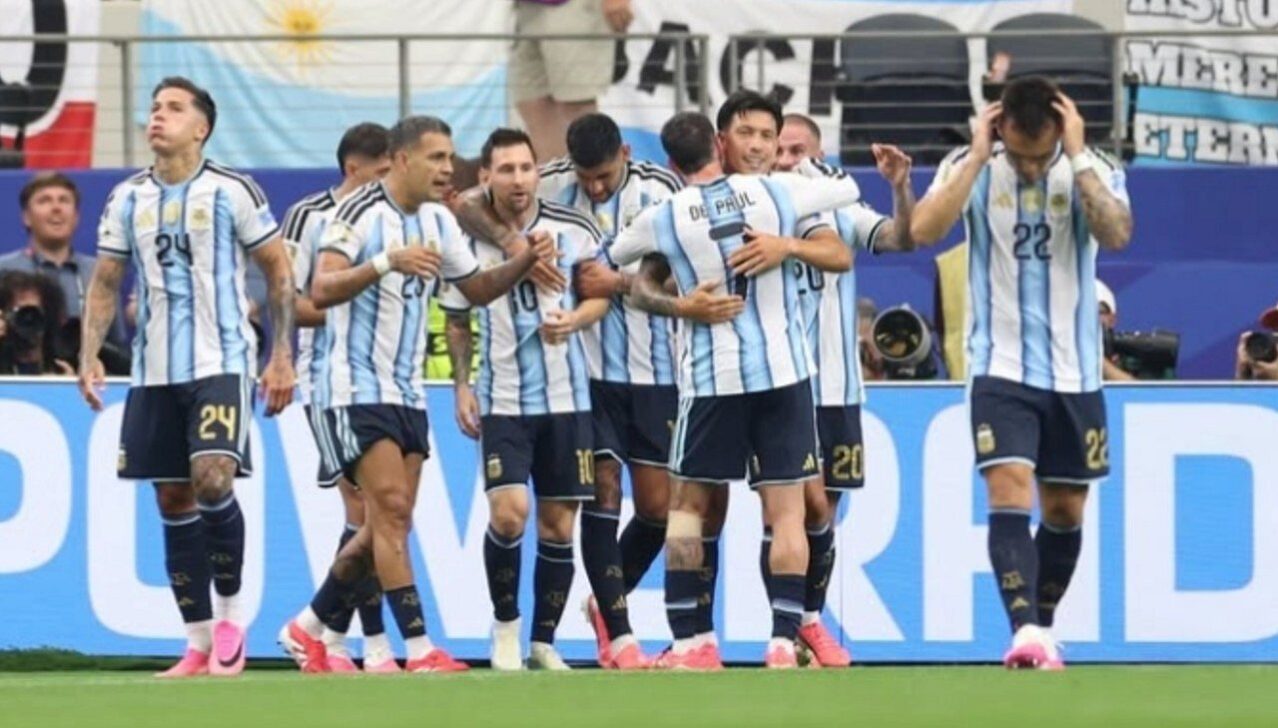
With the group stage of the 2026 World Cup in full swing, the scenario of the teams that will advance to the knockout stages begins to emerge. The introduction of a new round of 32 round, which will include the eight best third-placed teams, has added an unprecedented layer of complexity and unpredictability to the tournament.
Teams such as Mexico, United States, Germany, Argentina, France, Norway and Colombia have already secured their places. On the other hand, Haiti, Türkiye, Tunisia, Jordan and Panama are already mathematically eliminated from the competition. The next few days will be crucial to define the remaining positions and the clashes in the next phase.
The new format and the complexity of the dispute
The 2026 World Cup, with its format expanded to 48 teams, brought with it the innovative round of 32. This change means that not only the top two teams in each group advance, but also the eight best teams that finish in third place. This change increases the chances of classification, but it also makes the teams’ strategy and the analysis of tiebreaker criteria even more critical.
This expansion aims to include more nations in the biggest football event on the planet, but at the same time requires fans and the teams themselves to understand a more elaborate set of rules. The dispute to be one of the “best third parties” can be as intense as the fight for the leadership of the group, maintaining the drama until the last minutes of the initial phase.
Decisive criteria for the tiebreaker in the group stage
When two or more teams from the same group finish the group stage with the same number of points, FIFA establishes strict tiebreaker criteria to determine the classification order. They are applied in sequence, until the tie is broken:
- Step one (direct confrontation):
* Highest number of points won in games between the teams in question.
* Best goal difference resulting from games between the teams in question.
* Highest number of goals scored in games between the teams in question.
- Step two (general in the group):
* Best goal difference in all group stage matches.
* Most goals scored in all group stage matches.
* Highest team conduct score, considering the number of yellow and red cards received.
- Step three (FIFA ranking):
* Classification according to the most recent edition of the FIFA/Coca-Cola Men’s World Ranking.
The race for third place places
In addition to the first two, the competition to be one of the eight best third-placed teams is intense and crucial. Teams that finish third in their groups are ranked by the following criteria, also in order of importance:
1. Total points in the group stage.
2. Goal difference in all group stage matches.
3. Goals scored in all group stage matches.
4. Team conduct score (fair play).
5. FIFA world rankings.
Open scenarios in the 2026 World Cup groups
The group stage holds emotions until the end, with different scenarios emerging for the final round. Many groups have fierce competitions not only for leadership, but also for second place and the coveted best third-place spots.
In Group B, for example, Canada and Switzerland are tied on points, but Canada has an advantage on goal difference, which could be decisive in the direct confrontation between the two teams. In Group C, Brazil and Morocco are locked in a battle for first place, with goal difference being a decisive factor. Scotland, in turn, is looking for a victory to guarantee a direct place, but has a good chance of advancing as one of the best third parties.
Other teams, such as Belgium in Group G, face the uncertainty of three consecutive draws, needing a victory in the last game to secure qualification without depending on other results. Spain, in Group H, confirmed its favoritism with a rout, but still needs to consolidate its lead against Uruguay, who is fighting to avoid being surprisingly eliminated. These are just a few examples of the complex dynamics fans can expect in upcoming games.
Challenges in the Round of 32
With the definition of the classified teams, the next phase promises strategic clashes. The formation of the bracket for the round of 32 pairs group winners with runners-up or, in many cases, with the best third-placed teams from different groups, creating a range of possibilities for duels.
Germany, for example, as leader of Group E, will face a third-placed team from a specific set of groups, while the second-placed team in Group A will face the second-placed team in Group B. These combinations seek to balance the competition and can result in clashes between giants in the first qualifying stages, further increasing the tension and expectations for football fans around the world.