

Valve confirmed that the final cost of the Steam Machine far exceeded its initial expectations, and the company also faced difficulties in producing the desired volume of units for launch.
The statements were made by Valve representatives in an interview that preceded the announcement of the Steam Machine’s price and release date. The main news is that the most affordable model, even with less storage, exceeds $1,000, costing £879 in the United Kingdom. For those who opt for the set with the Steam Controller, the price rises to £938.
In contrast, Sony’s PlayStation 5 Pro, considered a more robust and expensive console, is available for £790. This scenario is far from projections of a cost of around $400, including a controller, speculated when Valve’s Steam Machine was announced last November.
The explanation for the high price lies in the ongoing component shortage crisis, intensified by growing demand from artificial intelligence data centers. This demand for high-performance GPUs and specialized memory for AI systems has diverted supply and raised costs for consumer electronics manufacturers. Valve anticipated the need to justify value and directly addressed this issue in the Steam Machine announcement, stating that “the original pricing objective for the Steam Machine is no longer viable.”
Valve didn’t reveal what the initial target price was, but engineer Yazan Aldehayyat confirmed that the current cost is “significantly higher.” He mentioned the difficulty in establishing an exact value, as there was no official price, just preliminary ideas. Aldehayyat pointed out: “We were aware of the upward trends in market prices, but I don’t believe anyone really expected or predicted the extent to which they were rising and [still] are rising.”
Lawrence Yang, user interface designer for the Steam Machine (and also the Steam Deck and HTC Vive), stepped in to suggest that the Steam Deck would serve as a good benchmark for the price Valve initially considered. Aldehayyat agreed, indicating that it would be a “rough estimate”. For context, the 512GB OLED Steam Deck costs £649, and the 1TB OLED model costs £779. In comparison, the 512GB Steam Machine comes in at £879, and the 2TB version costs £1,149, with no 1TB option.

In a post on Valve’s blog, the company reported that it began purchasing components for the Steam Machine in 2023, before the component crisis worsened. At the time, the expectation was that prices would decline, an “understanding born from the many years of data we all have on the evolution of PC hardware prices.” However, this projection did not materialize, suggesting that Valve acted late.
One then questions Valve’s level of awareness of the component pricing issue at the time of the Steam Machine’s announcement in November. At that time, issues related to memory and storage were already evident: several price increases on consoles had already occurred throughout the year, accompanied by significant tariff problems. This situation was so relevant that a report was written on the subject, with experts pointing out a “change in the role of consoles”.
In response, Valve’s Aldehayyat stated: “I think we were aware of the trends of rising market prices, but I don’t think anyone really expected or predicted the extent to which they were rising and [still] are rising.” He elaborated: “It wasn’t a question of whether or not the market was going to go up, it was a question of trying to determine how much it was going to go up, and I would say I don’t believe anyone really saw the size that things took definitely not when we started working, and not even in November. No one expected it unless you work at Samsung or Hynix or something like that. It was a lot more than anyone really expected.”
Component shortages also have a ripple effect on the quantity of products available. As indicated on Valve’s blog, both availability and release volume are affected. For this reason, the company did not opt for a “available now, come and get it!” release date, but rather a gradual distribution schedule, with the first Steam Machines shipping from June 29th. The exact number of units to be shipped remains unknown.
“I don’t think we’re going to share numbers today,” Lawrence Yang said when asked. He added: “But I will definitely say it’s less than we wanted to produce, and it’s a combination of both the price of the components and what would make sense, but also the availability of the components. Some things are just not available or have a ridiculously long lead time.” Among these critical items are RAM and storage.
Aldehayyat added that the supply team is working tirelessly to get as many parts as possible. “I think they’re doing a great job, and we’re continually improving supply there’s a lot of improvement in that aspect so we’re doing our best to get as many units into the hands of the people who want them,” he said. “We expect things to improve throughout the year, so we don’t want to put people off. We certainly hoped to make it more accessible to more people, but even at this price point, we still think it offers good value, still in line with other similar devices.”
“We are producing as quickly as possible and units are being delivered to us as quickly as possible,” he said. “I don’t remember the exact cadence, but more and more units will be arriving throughout the year. And as I said before, we are still working to improve supply, so as we receive more bookings, we will definitely try to manufacture more and more.”
One of the big unknowns for Valve, however, is the behavior of demand. The company does not know how much the high price will affect interest in the new Steam Machine. Is the price prohibitive? Will people choose to build their own PCs or stick with traditional consoles? All of these questions will only be answered after actual Steam Machine orders begin.
“I’m very curious to see how people will react to the price,” Yang said. “We’re in a different time than a few months ago. I feel like [awareness about component shortages] has seeped into the general consciousness, at least of people who follow hardware. All the prices are going up, things are going out of stock, something is happening to the point where everyone is impacted. So I’m guessing that people — or hoping that people — will understand. And for some people, the pricing proposition may not be ideal, and that’s totally acceptable. It’s more expensive than we wanted, for sure. But we believe that, Compared to what you could build for the same price, it’s kind of equivalent, and we think we’re bringing something extra with the compact form factor and all the other things we’ve built into it.”
Aldehayyat added: “Even with the price, it is still competitive with machines of similar specs, especially pre-built machines. But obviously, we always want our hardware devices to be as affordable as possible, because we really want to bring as many people into the gaming ecosystem as possible, especially those who are very price sensitive. We were definitely hoping to make it more accessible to more people, but even at this price point, we still believe it offers good value, still in line with other similar devices.”
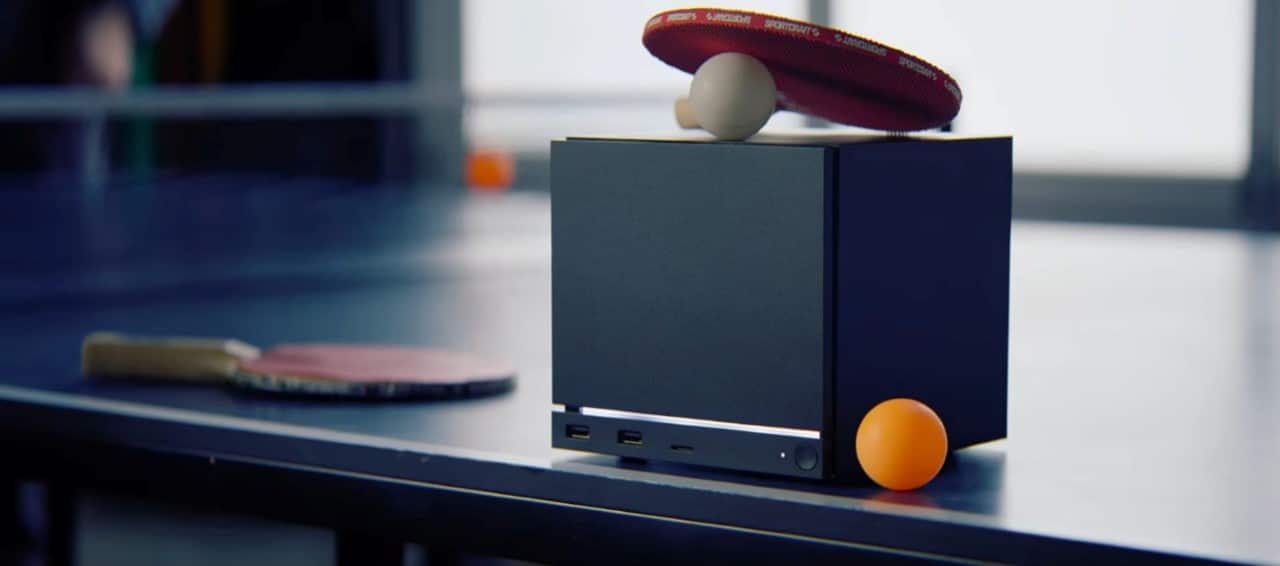
Valve’s Steam Machine is a compact, cube-shaped PC with dimensions that resemble a PC fan. Much of the development was dedicated to making it work like a console, with the same “plug-and-play” ease. This involved a greater engineering effort than simply fitting a PC into a small box, also ensuring silence and good cooling. However, its cost is high for the performance it offers, which is broadly equivalent to that of a PlayStation 5.