

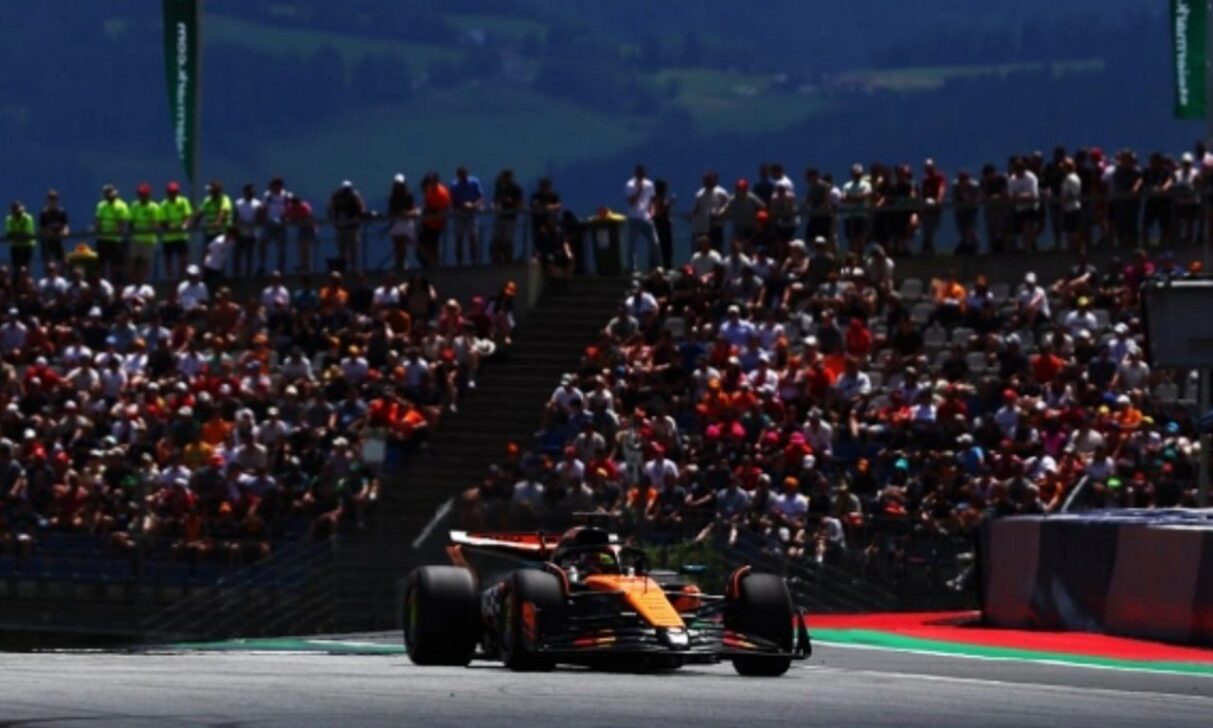
The International Automobile Federation (FIA) has classified the Formula 1 Austrian Grand Prix as a high-risk event due to the severe heat wave hitting Europe this week. The decision was made with the safety of drivers and teams in mind in challenging weather conditions.
The organization responsible for the sport anticipates that temperatures in Spielberg, the location of the race, will fluctuate between 35º C and 39º C throughout the days of the Grand Prix. Given this scenario, permission for competitors to use a cooling system was granted for training and the race itself, a measure that reflects the FIA’s growing concern for the well-being of athletes in an environment of extreme temperatures.
However, for the day of the main race, scheduled for Sunday, June 28, the forecast indicates that the thermometers on the Red Bull Ring circuit will register approximately 31º C. This variation suggests a slight drop in the intensity of the heat at the crucial moment of the race.
It is important to note that the cooling device consists of a thermal vest, worn by pilots. Its implementation led the entity to add 5 kg to the minimum regulatory weight of cars, aiming to compensate for the equipment and maintain fairness in the competition.
This type of mechanism was used for the first time in Formula 1 in October 2025, during the Singapore Grand Prix. Later that month, at the United States GP, held in Texas, the system was also considered essential for the weather conditions, highlighting the recurring need for adaptations to high temperature events in the category’s calendar.