

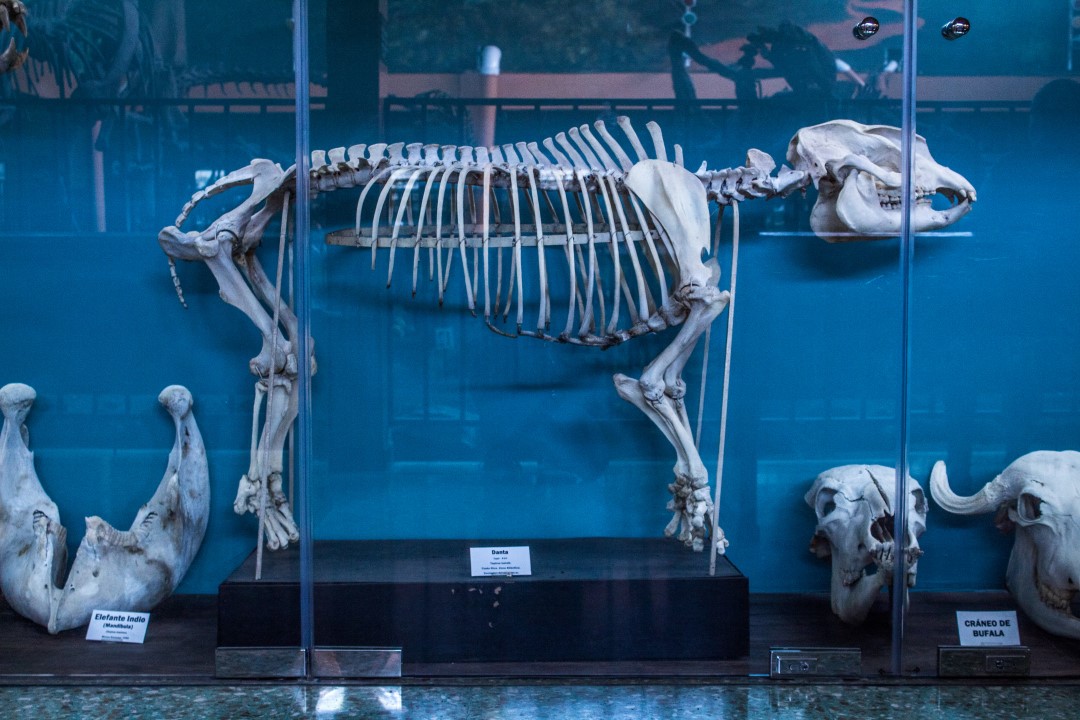
The study of ancestral biological remains, often hidden in geological formations, is fundamental to unveiling the evolution of continental landscapes. Recent research has brought to light the most complete tapir skeleton ever found on the European continent, a discovery that surprises the paleontological community and promises to rewrite parts of the region’s environmental and forestry history. The rarity of such an intact fossil provides an unprecedented glimpse into an ancient ecosystem, allowing scientists to more accurately model the biodiversity and climate change that shaped Europe millions of years ago.
Exact location of the tapir fossil in the Spanish region
Excavation work was concentrated on the renowned paleontological site of Camp dels Ninots, located near the town of Caldes de Malavella, in Girona. Researchers from the Catalan Institute of Human Paleoecology and Social Evolution led investigative efforts inside an ancient volcanic crater, a site known for its scientific value. Official confirmation of the find was made publicly this week, capturing the interest of experts around the world. The importance of Camp dels Ninots lies in its ability to preserve records of prehistoric life in a remarkable way, boosting knowledge about Catalonia’s geological past.
The flooded volcanic crater proved to be an exceptionally preserved environment, acting as a natural trap that protected the tapir’s remains against the action of predators and agents of degradation. The formation of fine-grained sediments and the almost complete absence of oxygen in the ancient lake bed were crucial factors for the impeccable conservation of the biological material. This rare geological combination prevented rapid decomposition and ensured that the bone structure remained unchanged for millions of years in the Spanish province. This condition allowed detailed preservation, offering valuable data for European paleoecology and paleoclimatology.
