

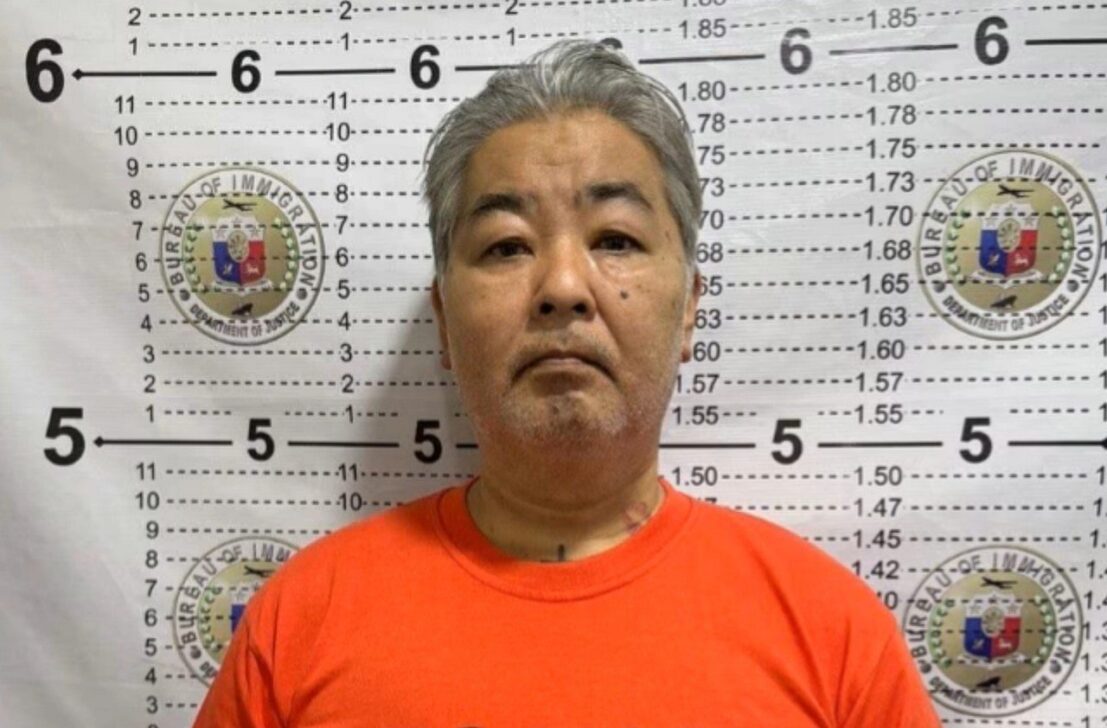
A 56-year-old Japanese man, suspected of being part of a criminal organization that carried out large-scale robberies, was captured in the Philippines. Hideaki Inoue, 56, was reportedly detained in the capital, Manila, and faces forced deportation to Japan, where he will undergo an in-depth investigation.
Capture in Manila and arrest warrant
The moment of Hideaki Inoue’s arrest in Manila was recorded, showing him gesturing with his hand, in an apparent sign of displeasure with the approach. Philippine authorities acted on an arrest warrant issued by the Tokyo Summary Court in connection with suspected theft.
Action of the criminal group and false identity
Inoue is believed to be a key member of a gang that operated from the Philippines, organizing and executing large-scale robberies in Japanese territory. Sources linked to the investigation indicate that the suspect was living under a false identity and residing illegally in the Asian country at the time of his arrest. The use of bases outside Japan by criminal groups has been a growing strategy to hinder the action of local authorities.
Next steps for deportation and investigation
Upon arrest, Inoue is expected to be promptly deported to Japan. There, he will be handed over to the competent authorities so that a full investigation can be conducted. The expectation is that the detailed analysis of the facts will reveal the extent of the group’s operations and Inoue’s exact participation in the crimes attributed.
The challenge of transnational organized crime
Hideaki Inoue’s arrest highlights the complexity of combating organized crime that operates across national borders. Using false identities and staying illegally in other countries are common tactics to avoid detection and justice. Cooperation between Japanese and Philippine authorities is essential to dismantle criminal networks that exploit international logistics to commit large-scale crimes.