

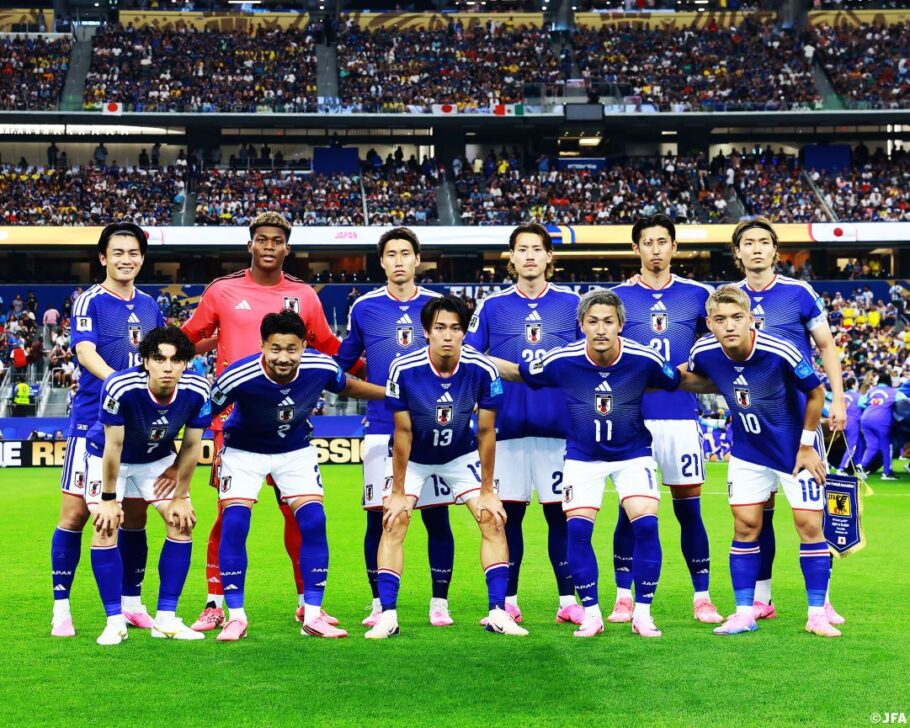
After securing second place in Group F with a thrilling draw against Sweden, Japan confirmed its place as Brazil’s opponents in the first knockout phase of the World Cup. The Asian team has demonstrated remarkable evolution in each world cycle, consolidating itself as a challenging opponent.
Under the leadership of coach Hajime Moriyasu, who has been in charge for eight years, the Japanese team is known for its exemplary discipline and tactical obedience. The team operates with the precision of a digital clock, primarily adopting a 3-4-3 tactical platform, which quickly adjusts to a solid 5-4-1 when defensive.
The system’s flexibility was evidenced in a single change during the first three games. At a disadvantage on the scoreboard against the Netherlands, the team swapped a defender for a striker, switching to a 4-4-2 formation. This tactical change allowed Japan to control the game and achieve a draw with a header from Ogawa, who deflected it off Kamada before finding the net.
The “Blue Samurai” do not usually apply high pressure to the opponent’s ball at the beginning of matches. Marking begins in the middle of the defense, with the aim of denying dangerous spaces close to the area.
When they regain possession of the ball, the team advances as a block, but may face difficulties against well-positioned defenses. Japan becomes more dangerous when finding space to accelerate through the center of the field, using quick, high-quality passes, which resulted in beautiful collective goals against Tunisia and Sweden.
Passing quality is a notable feature in all sectors of the team, with emphasis on midfielders Kamada, Sano and Tanaka, as well as midfielder Doan, who orchestrate the transition and construction of plays.
On the flanks, players like left winger Nakamura, left winger Maeda and Junya Ito, who can play on both sides, are mainly responsible for creating opportunities through dribbling and speed.
The Japanese squad faced significant injury losses before and during the competition. Important strikers such as Mitoma and Minamino, perhaps the most recognized Japanese player today, were not even registered. Captain Endo was cut days before the debut and, throughout the tournament, striker Kubo and defender Itakura, who took on the captain’s armband, had to leave matches due to medical problems.
Despite the absences, the depth of the squad and the quality of the substitutes keep the team at a high level.
Several players demonstrate great versatility on the field. In this World Cup, Kamada, for example, played as a midfielder in two matches and as a striker in another. Doan played the role of right winger in the first two games and then played as a striker in the third.
Coach Moriyasu has proven the consistency of his work by promoting an effective rotation in several positions during the group stage. He did not repeat the lineup, but the team did not lose performance or tactical organization.
Poucos titulares foram mantidos em todos os jogos, e o centroavante Ayase Ueda é um deles. He has shown great quality, not only in his finishing – with two goals against Tunisia –, but also in his role as a pivot and in his ability to serve his teammates, demanding constant attention from defenders.