

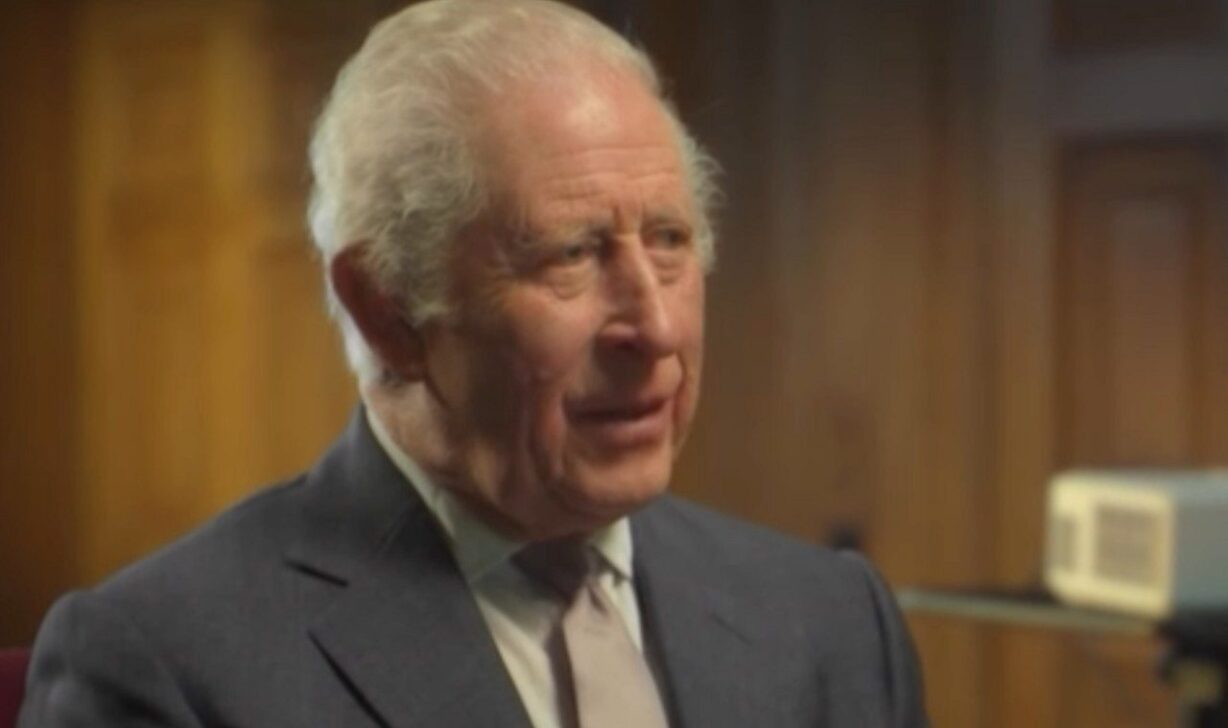
King Charles III will not take up residence at Buckingham Palace even after the completion of a renovation that cost 369 million pounds (equivalent to R$2.53 billion) and lasted a decade. The decision, which marks a historic change, aims to expand public access to the iconic building, which has served as the center of monarchical life for almost two centuries and has been the monarch’s official London residence since Queen Victoria, unlike Clarence House, which has not been the main residence of a reigning monarch for decades.
Royal house officials reiterate that the sovereign and Queen Camilla will continue to carry out their duties at the palace, which will maintain its status as the monarchy’s “ceremonial and operational center.” However, during the remainder of Charles’ reign, the royal couple will maintain their home at Clarence House, a residence located nearby.
“Buckingham Palace is and will remain the seat of the monarchy, the jewel in the crown of our national buildings,” declared James Chalmers, the senior royal official responsible for managing the king’s finances.
The revelation was made this Thursday (25), during a presentation on royal finances, in which Charles became the first British monarch to make public the taxes paid to the government. The monarch forked out £12.9 million (about $16.1 million) in income and capital gains taxes in the 2024-2025 tax year, an increase from £11.7 million the previous year.
Royal measures amid controversies and need for transparency
These announcements come as the royal family searches for a new image, following months of embarrassing reports about the connections between convicted sex offender Jeffrey Epstein and the former Prince Andrew, now known as Andrew Mountbatten-Windsor.
The repercussions surrounding Mountbatten-Windsor have diverted focus from the king’s efforts to modernize the monarchy and demonstrate that this ancient institution is capable of keeping up with the times.
Built in the 1820s, Buckingham Palace has been the London home of every British sovereign since the era of Queen Victoria. With its 775 rooms, the place also houses the offices of the royal bureaucracy and is the stage for luxurious state dinners for visiting heads of state and presidents.
The palace also functions as a significant public meeting place; Crowds gather on its famous balcony to celebrate the end of conflicts, royal weddings and historic events, such as the celebrations of Queen Elizabeth II’s 70th reign.
Additionally, the wide ceremonial avenue known as The Mall uses the palace as an imposing backdrop for its parades.
Need for maintenance and modernization of the iconic palace
However, due to its continuous use, the palace showed the signs of time. In 2017, the Royal Household launched a ten-year program to update aging plumbing, wiring and heating systems, and renovate the building to ensure its ability to house the monarchy for another half century. The project is expected to be completed next year.
However, the king and queen chose to reside at Clarence House, an imposing residence adjacent to the palace, where Charles has lived since his time as Prince of Wales.
This choice will increase public access to the palace, making it possible to hold more events and increase the number of visitors and guided tours around the site, as explained by Chalmers. Currently, the palace receives around 700,000 visitors annually.
Royal family watchers await more details about plans for the palace’s future. Ed Owens, author of the book “After Elizabeth: Can the Monarchy Save Itself,” expressed that it would be unfortunate if the building remained unoccupied for long periods throughout the year.
“I hope there is a ‘second act’ to this decision,” he told the Associated Press. “I’m curious to see if a bolder proposal emerges about the role Buckingham Palace could take in the future.”

Tax disclosure reinforces transparency of the British monarchy
Another relevant information released on the day was the announcement regarding the royal family’s taxes.
Although Charles had previously disclosed details of his personal taxes when he was Prince of Wales, this is the first time he has done so since his accession to the throne following the death of his mother, Queen Elizabeth II, in 2022.
Although the monarchy is financed from several sources, the king only pays taxes on his personal income, which comes mostly from his private properties, such as Balmoral, in Scotland, and Sandringham, on the east coast of England. Charles also filed taxes on capital gains resulting from the sale of assets.
Prince William, who currently holds the title Prince of Wales, also released details of his taxes on Thursday. William paid £7.76m in income and capital gains tax in the 2024-2025 tax year, down from £8.34m the previous year, his office reported.
For the first time, the figures offer the public a tangible understanding of the king’s personal wealth, differentiating it from the castles, jewels and works of art that are inherent to the office but do not constitute his private property.
Charles was under no legal obligation to disclose this information. The king’s tax affairs, like those of any citizen, are strictly confidential. However, he chose to renounce this right to privacy at a time when the monarchy seeks to distance itself as much as possible from Mountbatten-Windsor.
This attitude also consolidates the perception that the monarchy is a public institution and that its functioning must be guided by transparency, as highlighted by Craig Prescott, a specialist in constitutional law and the monarchy at Royal Holloway, University of London.
“If they are open and as transparent as possible, the contrast with Andrew Mountbatten-Windsor becomes even greater,” he commented.