

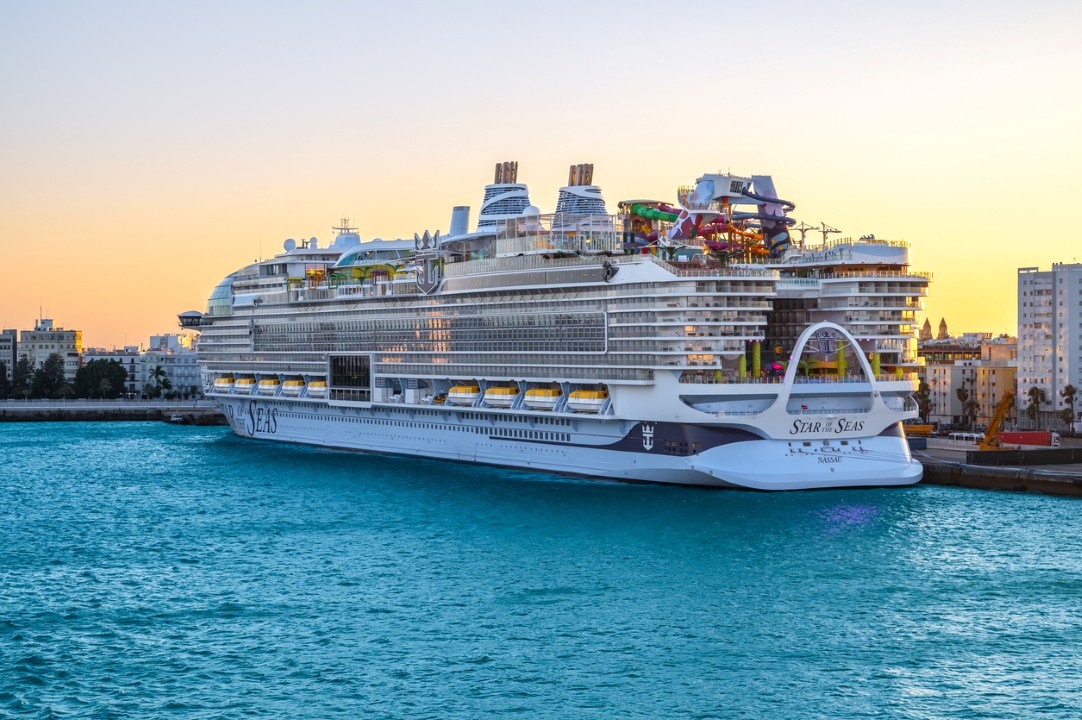
A Royal Caribbean International ship arrived in Alaska with a fin whale, an endangered species, dead attached to its bow. The incident, which occurred on June 19, motivated environmentalists to pressure the company and authorities for a mandatory reduction in the speed of vessels in areas where whales live.
Shocking discovery in Alaskan waters
The case came to light when the Ovation of the Seas, one of the largest ships in the Royal Caribbean fleet, docked in Seward, Alaska. The National Oceanic and Atmospheric Administration (NOAA Fisheries Alaska) confirmed that the fin whale was a 18.6-meter female and was pregnant at the time of death, a fact that amplified the concern of conservation entities.
The animal was discovered on the bow of the cruise, causing consternation among passengers and the local community. The collision raises urgent questions about the safety of marine life in the shipping lanes of large vessels.
Calls for new policies to protect marine life
Following the shocking discovery, the Center for Biological Diversity sent a formal letter to Royal Caribbean on June 24. The organization called on the company to immediately adopt a speed reduction policy for its ships, limiting them to 10 knots (approximately 18.5 km/h) or less when crossing known whale habitats.
Cooper Freeman, director of the Center for Biological Diversity in Alaska, expressed outrage at what happened. He emphasized that the loss of the mother fin whale and her calf is a significant blow to the species’ population, demanding that Royal Caribbean takes responsibility and implements preventive actions to avoid further incidents.

Fin whale fragility and the risk of collisions
The fin whale is the second largest animal on the planet and is classified as “endangered” under the US Endangered Species Act, in addition to having its population reduced under the Marine Mammal Protection Act. The species can be found in all oceans, making it particularly vulnerable to collisions with ships on various commercial and leisure routes.
According to NOAA, the fin whale is considered one of the species most susceptible to collisions with vessels, second only to the North Atlantic right whale. Although both species are protected, the North Atlantic right whale, for example, already has stricter mandatory speed regulations in its critical habitats at some times of the year, something that environmentalists seek to extend and apply more broadly to the fin whale, given the similarity of risk. This gap in fin whale-specific regulations is a central point of pressure exerted by organizations.
Progress of the investigation and details of the necropsy
NOAA reported preliminary necropsy results, which indicated blunt force trauma to the whale’s jaw, spine and ribs. These injuries are consistent with a high-impact collision. However, the official cause of death has not yet been determined, as full analysis of the samples collected could take several months.
Plans are underway to tow the whale’s carcass out to sea as quickly as possible, allowing it to sink and contribute to the deep-sea marine ecosystem, serving as food for several species. The agency continues to monitor the situation and is expected to release more details after the investigation is complete.
Royal Caribbean’s response to the incident
In a statement, Royal Caribbean acknowledged that one of its ships collided with the whale and expressed regret about the incident. The company stated that it takes any impact on marine ecosystems seriously and that the incident was immediately reported to the competent authorities.
The company also stated that it is cooperating fully with NOAA in the investigation and awaiting the full necropsy results. Royal Caribbean has not publicly commented on environmentalists’ specific demand for a mandatory reduction in ship speeds.
Urgency in implementing protective measures
The letter from the Center for Biological Diversity highlighted the importance of mandatory reductions in vessel speed, questioning whether the ship’s crew was aware of the presence of whales on the route and what the ship’s exact speed was at the time of impact.
Environmentalists express frustration with the slowness of government and industry to adopt common-sense solutions to prevent collisions. They argue that Royal Caribbean, like other cruise lines, has the ability to take immediate action to protect whales, regardless of future federal regulations. The pressure intensifies for preventive actions to become an operational priority.