

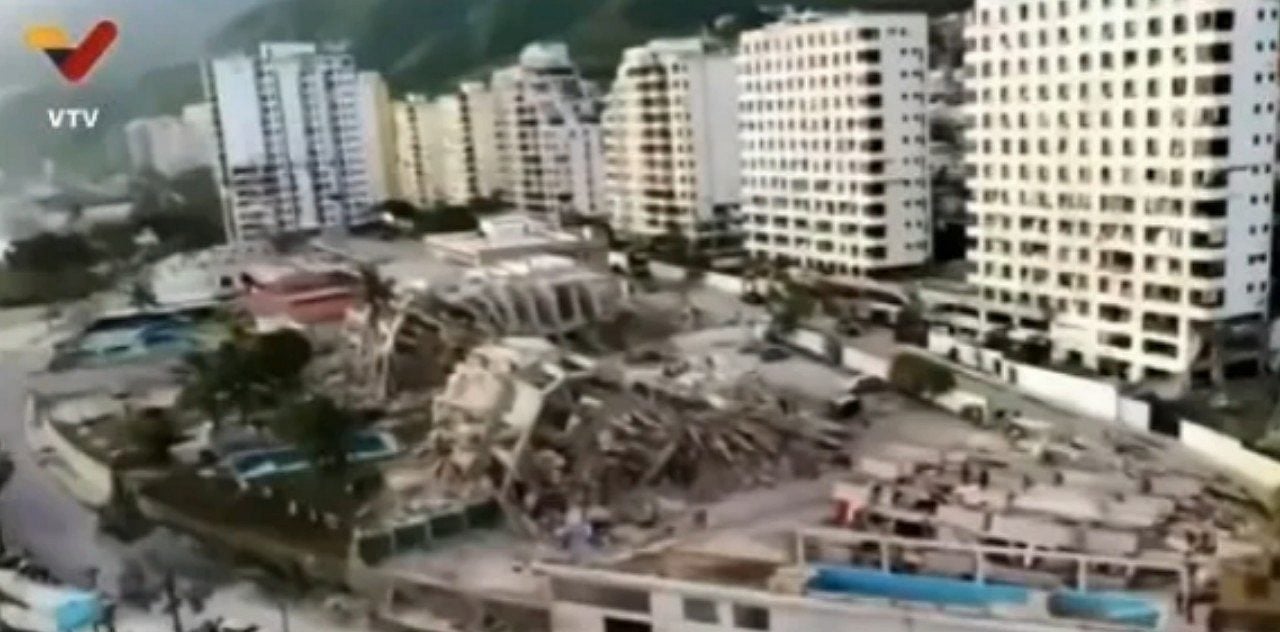
Rescue efforts in Venezuela intensify more than a day after the most powerful earthquakes recorded in the country in a century. The number of fatalities was updated to 235 people, as announced on Thursday night (25) by the Minister of Health, Carlos Alvarado, during an interview with Venezuelan state television.
The minister detailed that this number represents people who arrived dead or died shortly after being admitted to the country’s hospitals and medical care centers.
The search for survivors focuses on the first 48 to 72 hours, a crucial period known as the “golden window” for rescuing buried individuals alive. Experts point out that, after this initial phase, the chances of maintaining life, especially without access to water, are drastically reduced.
Deadlines and strategies for rescuing buried victims
Disaster research reveals that most successful rescues of people alive occur within the first five or six days. Emergency responders often use the so-called “rule of four” as a guide, suggesting that a human can survive four minutes without air, four days without water and four weeks without food.
However, more recent studies indicate that these “universal, inflexible deadlines” may not be entirely accurate. The possibility of survival may extend longer under exceptional circumstances.
Recent experiences and survival factors
A notable example occurred after the 7.8 magnitude earthquake that devastated Turkey and Syria in 2023, where rescues of survivors were recorded up to 10 days after the tremor, exceeding initial predictions.
Professionals specializing in emergencies and disasters highlight that several elements can increase the chances of survival beyond the initial critical period. Among them, the availability of oxygen, water and food for the trapped victims.
Individual health condition is crucial, differentiating between superficial injuries and severe internal injuries. Individuals with chronic illnesses or who depend on specific medications, especially those with effects such as dehydration, face a greater risk, as experts point out.
The high temperatures and low humidity of summer in northern Venezuela represent an aggravating factor, potentially intensifying the danger of dehydration and heat exhaustion for people trapped under the rubble.
Details about the tremors and deaths of Brazilians
The earthquakes occurred on the north Venezuelan coast on Wednesday night (24), less than a minute apart. They caused collapse and structural damage to buildings in the capital Caracas and several other locations.
The second tremor, which reached magnitude 7.5, was considered the most powerful to shake Venezuelan territory since the year 1900, according to data released by the USGS, the United States Geological Survey.
In a note released on Thursday, the Ministry of Foreign Affairs expressed its regret at the death of two Brazilian citizens in Venezuela, victims of the recent earthquakes.
The official statement stated that “the MRE informs, with great regret, the death of a Brazilian citizen as a result of the earthquakes that hit Venezuela.” The agency also assured that it is offering consular assistance to families and that, out of respect for privacy, it will not reveal personal details of the deceased.