6.1 magnitude earthquake shakes regions of Afghanistan and is felt in Pakistan, generating panic
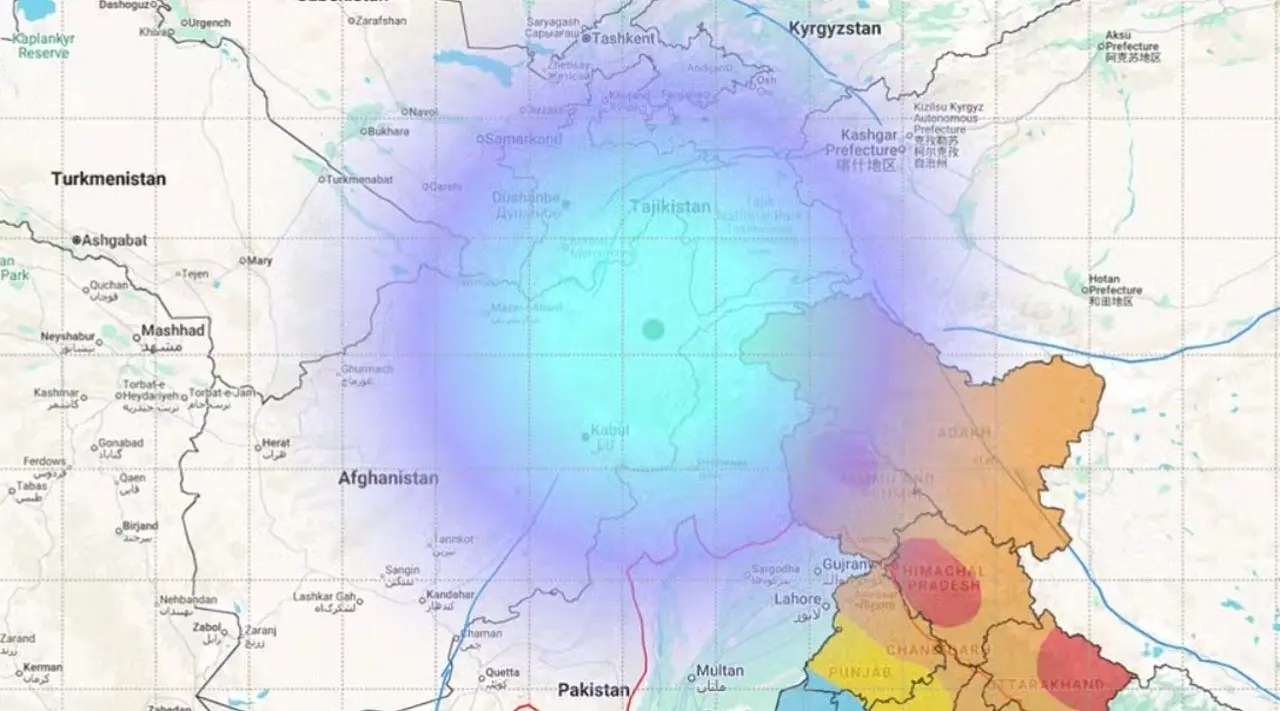
An intense earthquake was recorded in Afghanistan’s capital, Kabul, and parts of northern Pakistan this Saturday. Local residents described tremors that lasted for a considerable period, but so far, there are no official reports of injuries or significant property damage.
According to data from the Euro-Mediterranean Seismological Center (EMSC), the earthquake reached a magnitude of 6.1, occurring in the Hindu Kush area, in Afghanistan. This region is historically recognized for its intense seismic activity, a direct result of the constant collision between the tectonic plates that make it up.
The United States Geological Survey (USGS) also confirmed the magnitude of 6.1, locating the epicenter in northeastern Afghanistan, at a depth of more than 208 kilometers. The movement of the earth was felt in eastern Afghan provinces, such as Khost and Nangarhar, as well as Islamabad, the Pakistani capital, according to information from the AFP agency.
In districts such as Swat, in the Pakistani province of Khyber Pakhtunkhwa, in the north of the country, the population left their homes in a state of shock, as reported by resident Daniyal Ahmad to the Reuters agency.
“It was a very strong shock here in Swat and it lasted a long time,” said Ahmad. “People ran from their homes, and many women and children were seen crying in panic at the situation.”
This seismic event comes just days after earthquakes of magnitudes 7.2 and 7.5 hit Venezuela on June 24, resulting in at least 920 deaths, according to the most recent report from local authorities, and leaving thousands injured and missing.
Leia Também

VAR decides to cancel Colombia’s goal against Portugal after a thorough analysis of the tip of the boot, impacting the classification in Group K of the 2026 World Cup

Lautaro Martínez simply scores a great penalty in Jordan x Argentina at the 2026 World Cup

Rota officer and family member of Eloá Pimentel is ambushed by gunfire at a traffic light in ABC Paulista
In the South American nation, the tremors led to the collapse of hundreds of buildings, with the damage most concentrated in the coastal area of La Guaira and parts of the metropolitan region of Caracas. The Venezuelan government declared a state of emergency, mobilized armed forces for rescue operations and restricted access to certain affected areas, prioritizing the work of rescue teams.
Casualty figures in Venezuela were adjusted several times in the following days as rescuers managed to reach isolated locations and rubble, a common pattern in major seismic disasters. Authorities also confirmed the support of international rescue missions and the arrival of humanitarian aid from several nations.
Earthquakes are natural phenomena caused by the movement of tectonic plates, which are large blocks of the Earth’s crust that move over the planet’s hottest and densest mantle. The energy accumulated by shocks, separations or lateral slips of these plates is suddenly released, generating seismic waves.
The Hindu Kush region, where the earthquake occurred in Afghanistan, is particularly vulnerable to these events because it is located in zones of collision between plates. This geological configuration creates intense forces that shape mountain ranges and activate faults in the crust, explaining the recurrence of large earthquakes in places such as Chile, Japan and the Himalayas. The frequency and intensity of these tremors in the Hindu Kush, compared to other areas of the globe, are indicative of its complex and active geology.
In Venezuela, recent high-intensity tremors were also attributed to the meeting of the South American and Caribbean plates, an area with active geological faults. This tectonic dynamic explains why some countries record more frequent and stronger seismic events.
Experts, however, emphasize that, although the physical mechanism of earthquakes is widely understood, the exact prediction of when and with what magnitude a tremor will occur is not yet a reality.