Chinese Tianwen-2 mission releases first image of Earth’s ‘mini moon’, the asteroid Kamo’oalewa

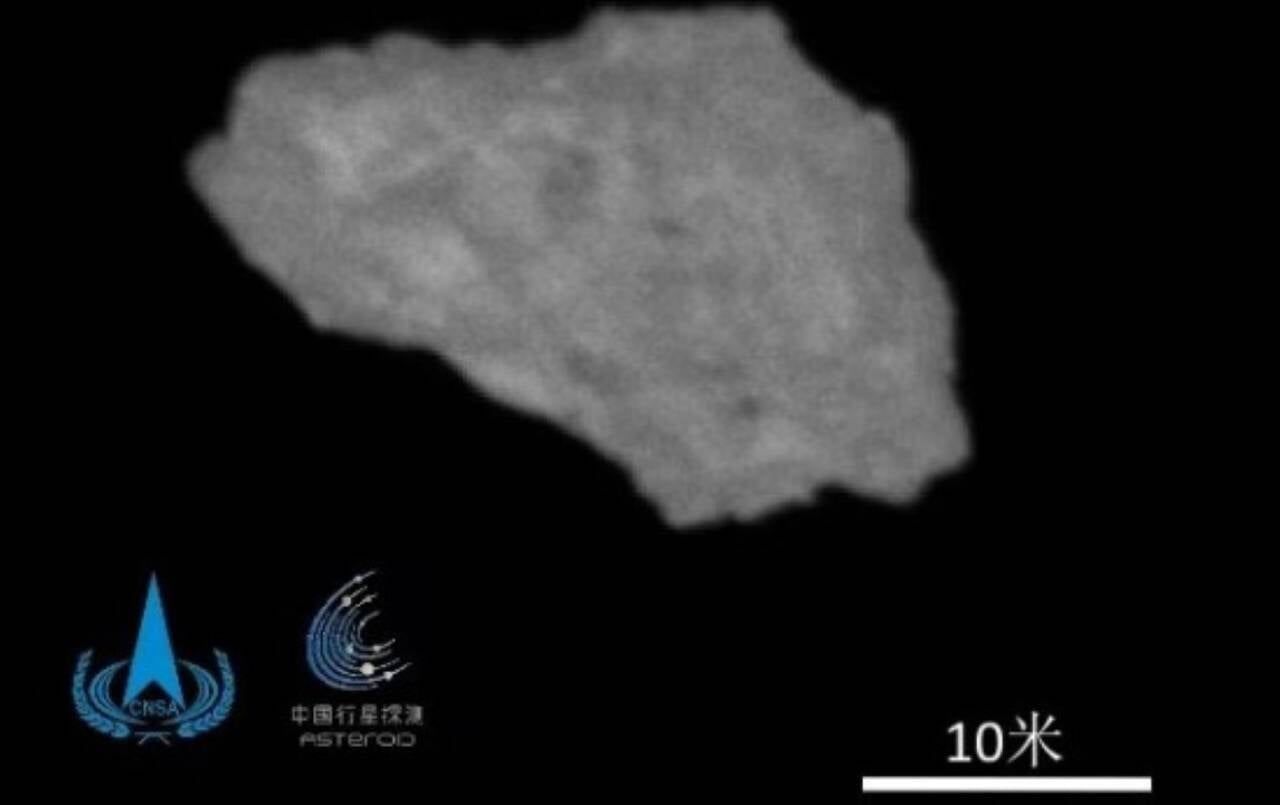
The Chinese Tianwen-2 spacecraft, on an ambitious sample collection mission, recently sent the first image of the asteroid Kamo’oalewa. Popularly known as Earth’s ‘mini moon’, the celestial object is the main target of a journey that aims to uncover secrets about the formation of the solar system and the origin of celestial bodies close to our planet.
China’s probe is now preparing for a crucial phase of approaching and collecting material. This visual landmark represents a significant step on the path to bringing fragments of this asteroid back to Earth, providing unprecedented data for science. The mission reinforces the growing role of the Chinese space program in exploring near-Earth objects.
Understanding the unique orbit of the asteroid Kamo’oalewa
The Kamo’oalewa space rock is no ordinary moon, but rather a “quasi-satellite,” following a complex path around the Sun while remaining close to Earth. Its orbit varies between 9 million and 25 million miles from our planet. Astronomers have already identified at least eight of these objects, which appear to accompany Earth on its cosmic journey.
Some experts affectionately refer to Kamo’oalewa and similar objects as Earth’s “mini moons” or “near moons.” There is an intriguing theory that suggests that Kamo’oalewa could be a fragment of our own Moon, launched into space by an ancient impact. However, observations from the James Webb Space Telescope have presented evidence that questions this hypothesis, making sample analysis even more fundamental to solving the mystery.
A billion-kilometer space journey
The Chinese probe Tianwen-2 completed a long journey to reach its goal, covering around 1 billion kilometers over 400 days. Launched on May 28, 2025, the spacecraft aims to collect samples from Kamo’oalewa and return them to Earth in 2027, when it will perform a flyby and release the samples into the atmosphere.
The asteroid Kamo’oalewa, discovered in 2016, is approximately 20 meters in diameter, comparable to the size of a school bus. It rotates on its own axis every 28 minutes, presenting a challenging environment for collection operations. The probe’s current proximity allows for detailed exploration prior to sampling maneuvers.
Advanced techniques for collecting celestial material
The Tianwen-2 equipment was designed to use three distinct sample collection methods, ensuring flexibility and adaptability to the asteroid’s conditions. This diversity of approaches significantly increases the chances of mission success. Techniques include:
- Tap and collect:A rapid contact and material extraction method, similar to that employed by NASA’s OSIRIS-REx and Japan’s Hayabusa2 asteroid sampling missions.
- Anchoring:The spacecraft physically connects to the space rock, allowing samples to be collected from both the surface and subsurface of the asteroid.
- Hover:A robotic arm extends from the probe as it floats above the asteroid, collecting material from the surface without direct contact from the main spacecraft.
Next steps and exploration of a comet
The China National Space Administration (CNSA) confirmed that the Tianwen-2 probe positioned itself approximately 19 kilometers away from the asteroid in late June. From this position, the probe will begin further scientific exploration. The objective is to map the morphology, material composition and internal structure of Kamo’oalewa, preparing the ground for collection operations.
After depositing the precious samples into the Earth’s atmosphere, Tianwen-2’s journey will not end. The probe will move on to a new phase of its mission, heading towards comet 311P/PanSTARRS. There, it will perform additional observations and studies, offering a unique opportunity to compare the composition and characteristics of an asteroid and a comet, further expanding our knowledge of the solar system’s smaller bodies.
The scientific impact of asteroid sampling missions
The collection and return of asteroid samples, like the one planned by Tianwen-2, represents a crucial advance in space research. Unlike remote observations, the direct study of asteroid material in terrestrial laboratories allows very high precision chemical, isotopic and structural analyses. This could reveal the original composition of the solar nebula that gave rise to our system, before planets formed.
These missions are fundamental to understanding the distribution of water and organic compounds in the early solar system, aspects that are vital to understanding the origin of life. Furthermore, the exploration of these objects offers important data for planetary defense, identifying characteristics that would be relevant in the event of a risk of collision, and also for the future potential of mining space resources.