Green star WD J1330+6435 found 280 light-years from Earth in Draco
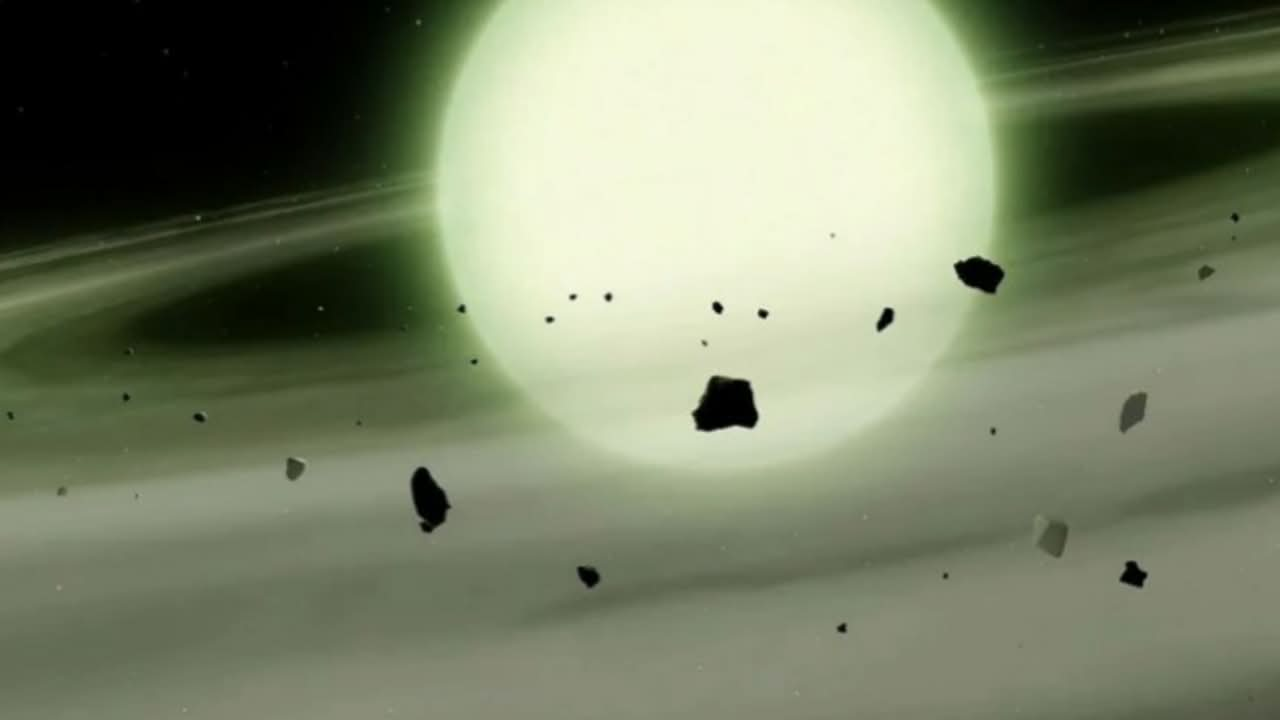
A white dwarf about 280 light-years from Earth is emitting a pure green tone that instruments can measure, and astronomers say it is the first green star ever recorded. The object, named WD J1330+6435, sits in the constellation Draco, the Dragon, in the northern celestial hemisphere. The University of Warwick, in England, led the modeling of its spectrum.
The Observatório Nacional, a research unit linked to the Brazilian Ministry of Science, Technology and Innovation, announced the confirmation on October 29, 2026. The findings were based on a study published in the scientific journal RAS Techniques and Instruments. The star packs about half the mass of the Sun into a volume similar to that of Earth.
How planetary debris gave the star its colour
The green colour comes from what the white dwarf has eaten. Its gravity pulled in rocky fragments of ancient planets that orbited nearby, and the material broke apart and fell onto the star. That process left heavy metals in its outer layers, changing how the star releases heat and light.
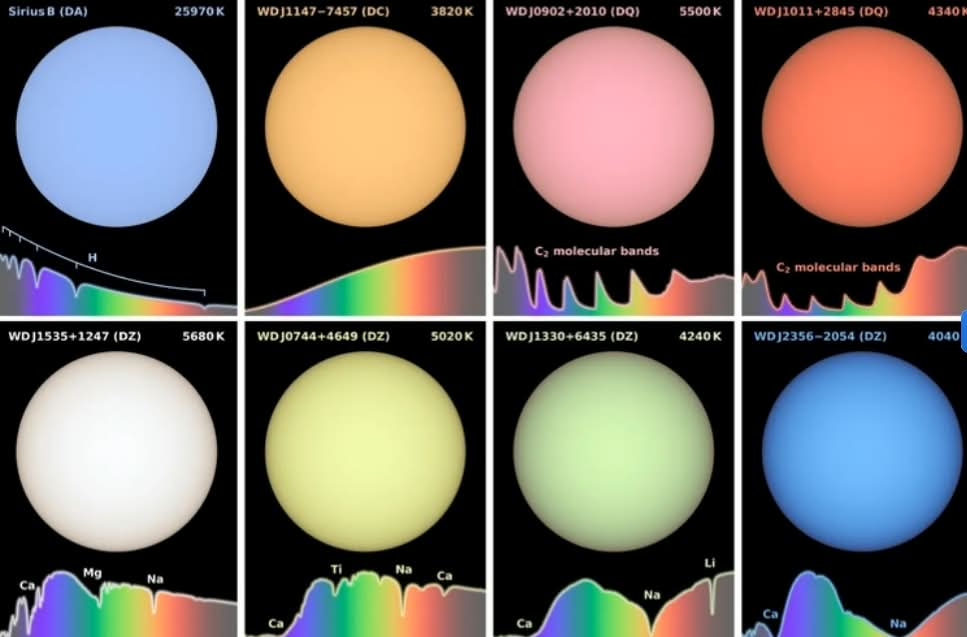
The surface now holds large amounts of calcium, lithium and, above all, sodium, mixed into a helium envelope. Gravity there is so strong that the star concentrates 165,000 times Earth’s mass in a sphere of planetary size. The pressure raises the gas density to levels far beyond those of ordinary stars.
On Earth, sodium absorbs narrow bands of orange light, the same principle seen in old street lamps. In WD J1330+6435, helium atoms collide constantly with sodium particles, which widens the energy levels of the metal. As a result, the layer absorbs whole bands of yellow, orange and part of the red.
With the blue light already weakened by billions of years of cooling, the only light that escapes into space is the yellowish green. Scientists compare the effect to a painter who subtracts colours from a mix, leaving a tone that did not exist before. The light reaching observatories therefore reflects the filtering of the debris, not only the star’s internal heat.
Why astronomers did not expect a green star
The physicist Wilhelm Wien, a German, set out in 1893 the formula known as Wien’s displacement law. It links the peak emission of a body to its absolute temperature, measured in kelvin. Cooler objects, near 3,000 kelvin, look red or orange, and hotter ones, above 20,000 kelvin, look blue.
Stars of intermediate temperature, such as the Sun, with a surface of about 5,778 kelvin, have their emission peak near 500 nanometres, which is green. Even so, the continuous curve described by Planck keeps releasing large amounts of red and blue light. Those colours combine in the human eye into white, which the atmosphere can tint slightly yellow.
Follow: Astronomers find first second-generation planet around white dwarf
WD J1330+6435 breaks this rule. Its colour does not come from its average surface temperature, but from an atomic barrier that blocks the neighbouring radiation. The filtering mechanism replaces the ideal black body model and gives astrophysicists a new case for spectral analysis.
Key data on WD J1330+6435
- Official catalogue designation: white dwarf WD J1330+6435
- Location: constellation Draco, northern celestial hemisphere
- Distance from the Solar System: about 280 light-years
- Mass: about 50% of the Sun’s mass, equal to 165,000 times the mass of Earth
- Volume: comparable to the size of the Earth
- Main atmospheric composition: dense helium with heavy sodium, calcium and lithium
- Cause of the colour: collisional broadening of sodium lines induced by helium under pressure
- Modelling institution: University of Warwick, England
- Institutional release in Brazil: Observatório Nacional
Absorbing white dwarfs are not new, but this star has an anomaly with no known parallel. Sirius B, the closest compact remnant to the Solar System, keeps an atmosphere of incandescent hydrogen, which gives it a pale and uniform blue tone. Cooler remnants, such as WD J1147-7449, have low temperatures and orange spectra without prominent absorption lines.
How astronomers look for white dwarfs like this one
Observing white dwarfs is a long-standing challenge for amateur researchers and large institutions. Their small size and lack of nuclear fusion make their light very faint compared with active main-sequence stars. Astronomers rely on specialized tools and methods to find objects with the profile of WD J1330+6435.
- Large-aperture telescopes: the work needs astronomical reflectors with advanced primary mirrors, coupled to CCD cameras sensitive to faint light.
- Precision spectrographs: real colour and composition are read from the spectral lines, which reveal the chemical elements present.
- Public databases: coordinates and light curves of catalogued white dwarfs can be checked in open archives such as the Gaia satellite and the Sloan Digital Sky Survey.
- Photometric indexes: colour anomalies require combining ultraviolet, green and infrared filters to isolate deviations from Wien’s curve.
Metal pollution in white dwarf atmospheres is now one of the most effective tools for reconstructing the geology of shredded exoplanets. Heavy elements sink quickly in the gravity of these compact bodies, so the continued presence of calcium, lithium and sodium on the surface shows that the planets were destroyed recently on a cosmic timescale.
The discovery sets a methodological reference for studying extinct planetary systems. By showing how rocky debris changes the visual identity of dying stars, scientists can use colour signatures and absorption shifts to map the chemical legacy of planets that ceased to exist billions of years ago. The green white dwarf remains under continuous spectroscopic monitoring to detail each mineral fragment pulled into its dense interior.