For those who grew up in urban India in the 1970s and 1980s, it was common to witness a peculiar kind of “science” not written about in books: the trick of blowing video game tapes. This almost universal ritual consisted of removing the rectangular cartridge from the console, blowing hard on its bottom and replacing it, causing the blinking lines on the TV to disappear and the game to restart with no apparent explanation, but with 100% effectiveness.
At a time when television was still a luxury item and colorful programming was limited to Doordarshan, new establishments known as internet cafes began to emerge in urban areas. In these places, a contagious energy took over the environment, accompanied by the constant clinking of coins on the counters.
The explosion of arcade games on Indian streets
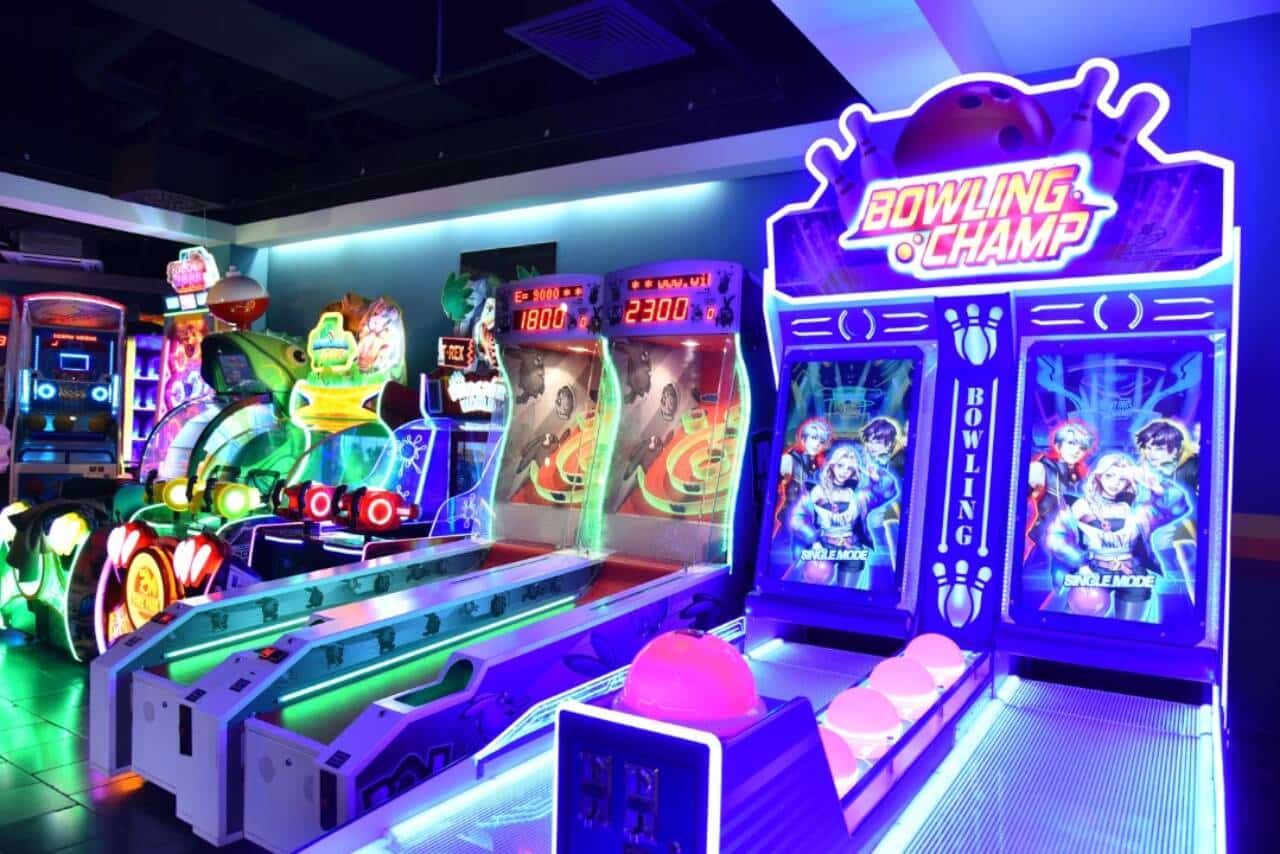
By paying a token of fifty paise, popularly called ‘athanni’, or one rupee, children immersed themselves in the universe of games such as “Space War” and “Street Fighter”, from Atari, an American company. Although these early arcades featured black digital graphics on dark green screens, the thrill of shooting down aircraft or spacecraft was intense and captivating.
Later, in 1986, forty years ago, the global video game scene experienced its greatest revolution. Nintendo, a Japanese company initially known for manufacturing cards, made an audacious bet by launching an 8-bit video game console, which became a worldwide phenomenon driven by the character “Mario”.
The arrival of consoles and the informal games market
The vibrant graphics, spectacular animations and innovative settings of “Mario” have profoundly transformed the universe of children’s games. Spending hours trying to rescue the princess in “Super Mario Bros.” has become one of the most beloved, yet often scolded, childhood activities for many.
However, the original Nintendo consoles were inaccessible to most arcade owners, leaving room for Chinese versions and gray markets like Palika Bazaar in Delhi or Lamington Road in Mumbai. Chinese brands such as Samurai, Media and Terminator quickly became popular, reaching not only stores but also homes.
A huge variety of titles such as “Circus”, “Contra” and “Aladdin” flooded the market. The curiosity is that, often, the famous “999 in 1” cartridges ended up repeating the same 20 or 25 games, just with different graphics and names.
Uncovering the games’ secret cheats and codes
Interestingly, “Super Mario Bros.” It didn’t have traditional keyboard cheat codes, but Indian kids soon discovered some strategies. One of them was the infinite lives trick, which consisted of attaching a turtle to its shell and making it bounce incessantly on the last steps of level 3-1, granting Mario more than 99 extra lives.
Another popular technique was “time travel”, achieved by running across the rooftops of Worlds 1 and 2. This action revealed secret pipes that transported players directly to Worlds 4 or 6, allowing them to skip stages.
In the famous “Contra” game, the iconic Konami Code granted 30 lives instead of the initial three, a crucial advantage that allowed players to advance even under intense enemy fire.
The rise of internet cafes and the computer revolution
With the turn of the 21st century, technology took a significant leap forward. Computers became more accessible, and Internet cafes began to proliferate. These booths, rented for about twenty rupees an hour, offered Indian teenagers a new form of entertainment with local network games like “Counter-Strike,” a precursor to today’s PUBG.
The generation that once enjoyed “Space War” and “Mario” now explored titles like “GTR-2” on office computers and “Tomb Raider”, with Angelina Jolie’s iconic digital avatar. During the same period, Sony introduced the PlayStation 2 to the Indian market, marking another advance.
This was the time when Indian children memorized the “GTA Vice City” cheat codes, whether to resurrect a dying Tommy Vercetti, summon military tanks from the sky or blow up vehicles in mid-air, making the gaming experience even more fun and full of possibilities.
The era of mobile gaming and the emergence of Indian developers
The arrival of Reliance Jio in 2016 democratized access to mobile internet and affordable smartphones. As a result, games are no longer restricted to a single environment, gaining space on mobile devices. Titles like PUBG and Free Fire quickly dominated the mobile gaming market.
In this new scenario, live game broadcasts have become a phenomenon on YouTube. However, the real innovation lies in India’s transition from a mere consumer market for foreign games to a creation hub. A small studio in Pune, for example, surprised the world with “Raazi: An Ancient Epic”. These days, Indian developers are creating horror games like “Kamala” and open-world titles like “Mumbai Gullies” that reflect the essence and culture of their own streets, in contrast to the nostalgia of saving Mario’s princess from the dragon.