

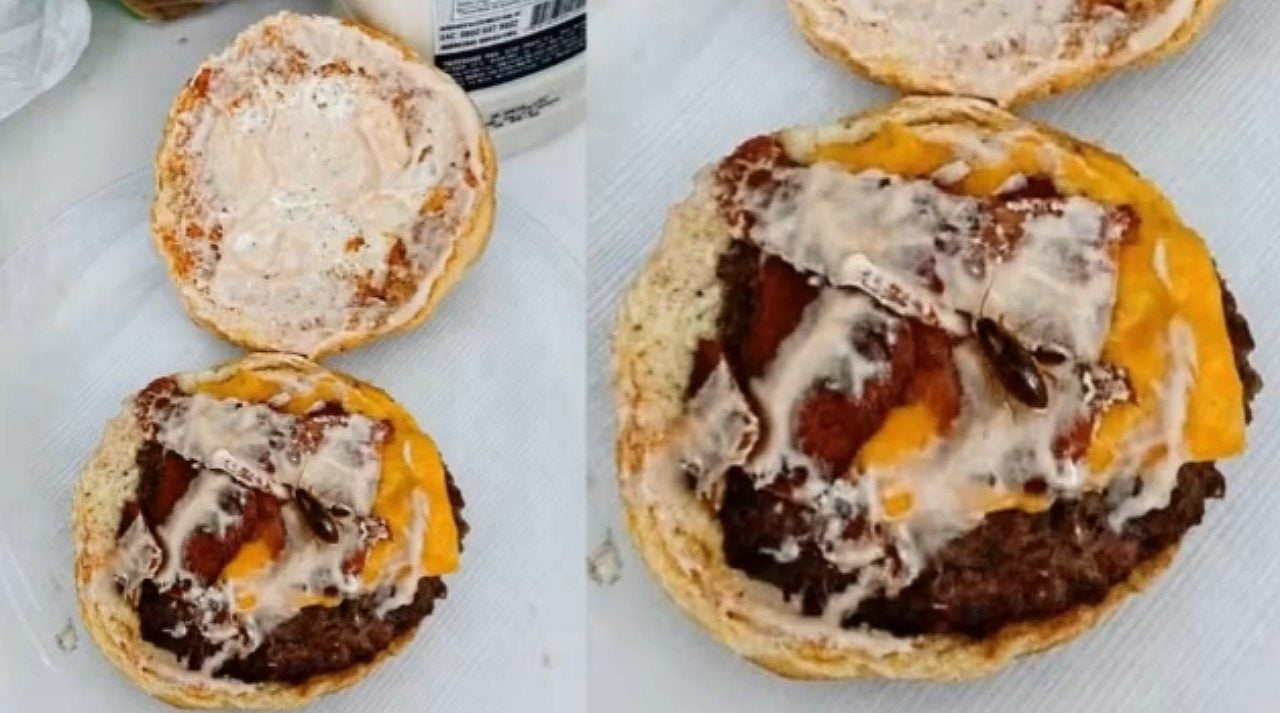
Last Tuesday, in São José dos Pinhais, in the Metropolitan Region of Curitiba, a hamburger restaurant identified an attempted scam where a customer used artificial intelligence to insert the image of a cockroach into his snack, requesting a refund for the order. The incident highlights a new challenge for commercial establishments in the face of the growing sophistication of digital fraud, making verifying claims a more complex task for companies.
The burger order was placed through a delivery app at 7:28 pm and delivered to the consumer’s home approximately half an hour later, at 7:57 pm. Later, at 9:04 pm, the customer got in touch to ask for his money back, sending a photograph of the alleged pest and a message detailing what happened.
On the same topic: Moroccan is detained in Paraná after carrying out a scam and abandoning women at a bus station
In the communication, the customer stated: “A cockroach came into my burger and the packaging arrived open. I lost my money and was left without a snack, it made me sick to eat it all 😡😡😡”.
When starting the process of verifying the complaint, the establishment’s team began to notice obvious inconsistencies, which raised strong suspicions about the veracity of the complaint.
Alisson Zen, owner of the burger restaurant, highlighted the anomalies found in the image sent by the customer: “The cockroach was completely clean. Furthermore, we never put mayonnaise on the top of the bread. How can there be mayonnaise on the top of the bread [in the photo], if we always apply it to the base?” He also observed a change in the shade of the mayonnaise, which differed from the house’s standard.
More on this story: Fake police scam in Japan extracts 5.68 million yen from man with isolation tactics and artificial intelligence threat
Given the suspicions, the burger restaurant sent a motorcycle courier to the customer’s address with the aim of collecting the supposedly contaminated snack. However, the individual refused to assist the delivery man.
Customer may be held responsible for embezzlement
Delegate Emmanoel David warned about the increasing frequency of scams that use artificial intelligence resources. He emphasizes that, when carrying out this type of fraud, the individual may be charged with the crime of embezzlement.
David further explained that, if the customer is imputing a criminal offense to the company or restaurant, he may also be liable for false reporting of a crime, in addition to fraud, whether completed or just attempted.
Learn more: Cybercriminals take control of WhatsApp accounts in moments; know how to defend yourself
To prevent similar situations, the delegate advises that companies and consumers pay attention to the smallest details that could indicate fraud, such as the original layout of the products, the colors and any other elements that may have been digitally modified.
He advises establishments to record photos or videos of food assembly and to demonstrate that the packaging was sealed and tamper-proof, making it impossible for any foreign object to be present. Such evidence will serve as crucial evidence to indicate that bad faith came from the end consumer.