The Belgian Grand Prix, held this Sunday, July 21, 2026, saw Mercedes’ Kimi Antonelli win from pole position and expand his lead to 45 points at the top of the drivers’ championship. However, the race was marked by incidents and controversial decisions by the stewards, generating debates about the application of the rules in Formula 1.
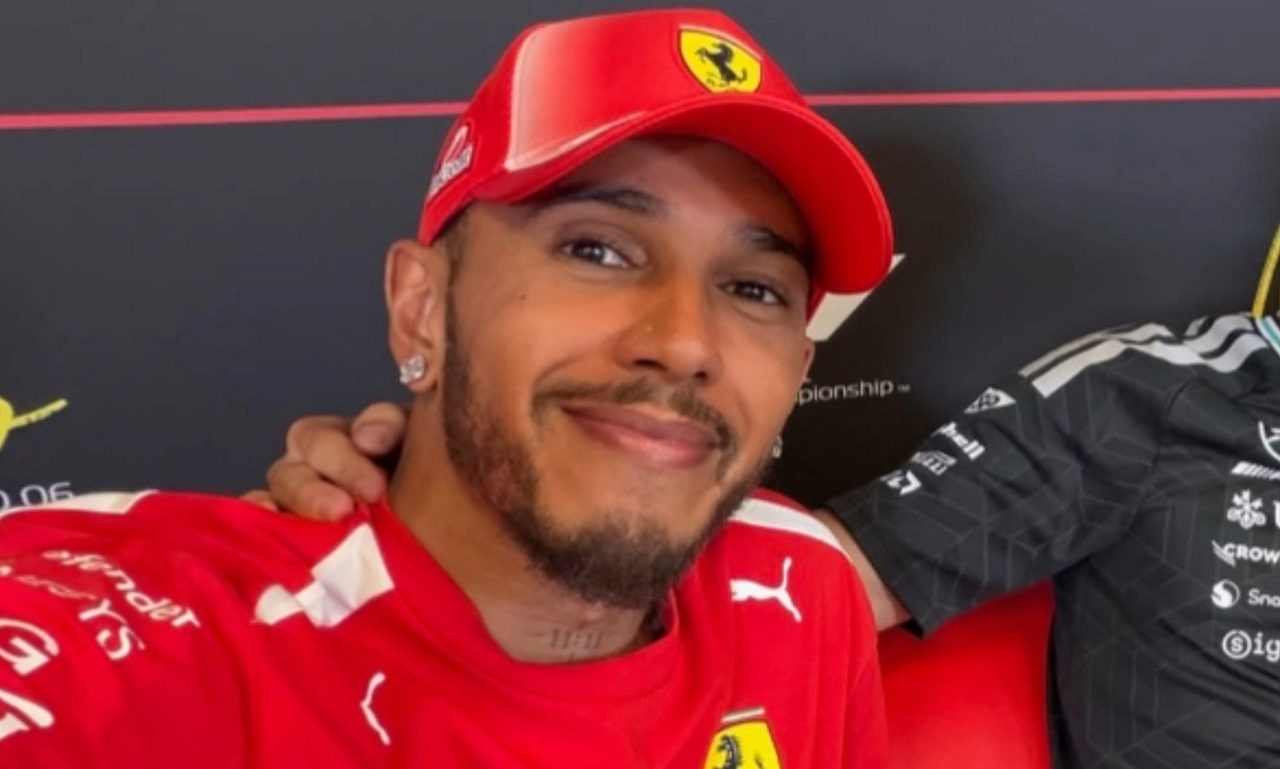
His teammate, George Russell, had to abandon the race after a collision on the first lap with Ferrari’s Lewis Hamilton. This incident caused Russell to drop to third place in the overall standings, while Hamilton overtook him, taking second place after finishing the race in fourth.
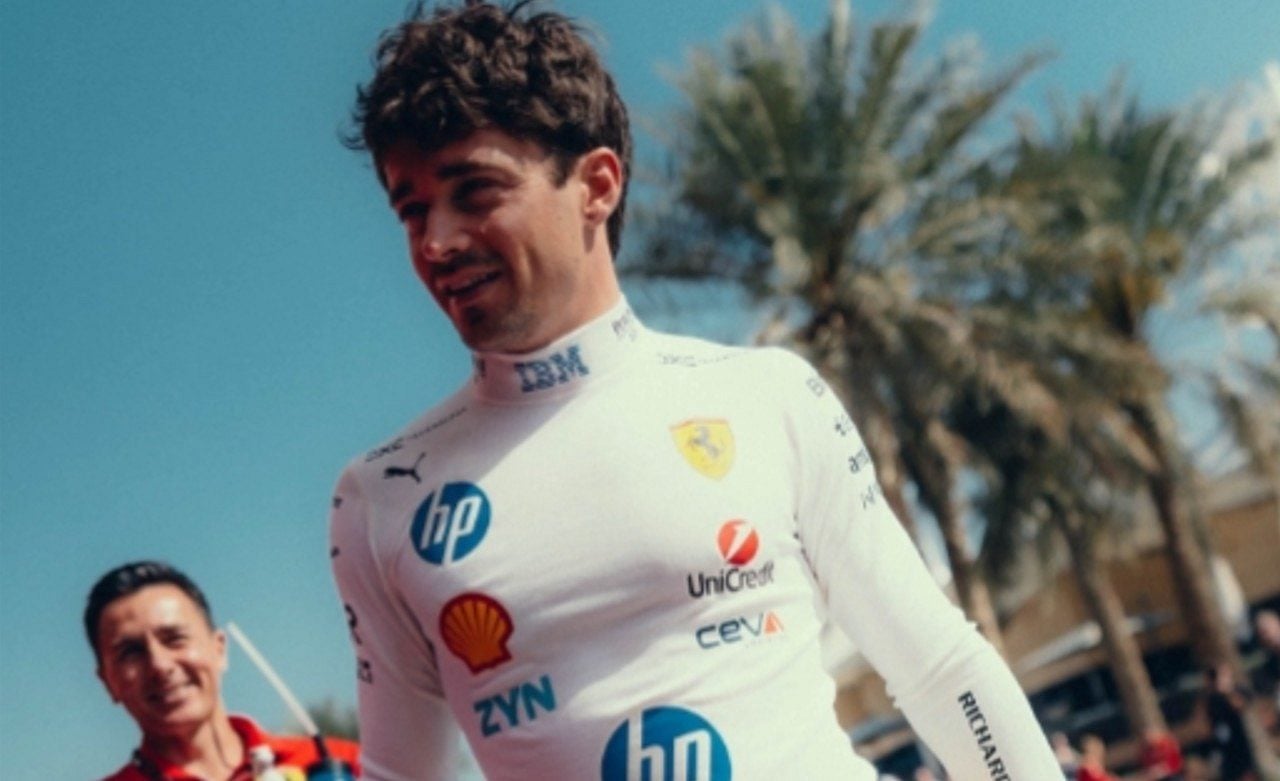
Charles Leclerc, also from Ferrari, secured second place, behind Antonelli, and Max Verstappen, from Red Bull, completed the podium in third place. BBC Sport F1 correspondent Andrew Benson clarified some of the most frequently asked questions following the eventful round at Spa-Francorchamps.
Understand Lewis Hamilton’s penalty and Charles Leclerc’s acquittal
The justifications given by the stewards for the incidents involving Hamilton and Russell, and Leclerc and Piastri, were based on a series of detailed criteria, aligned with Formula 1’s specific guidelines for track driving.
In relation to the initial accident between Hamilton and Russell on the first lap, the stewards’ decision indicated that Russell had positioned his vehicle appropriately next to Hamilton’s car, on the outside of the track, during the approach to the corner. This position gave him the “right to space in the race”, a crucial rule in Formula 1 that determines the responsibility of the driver who is on the inside in a position dispute.
They continued to explain that the collision between the two cars was started by Hamilton’s vehicle sliding, which ended up hitting Russell’s car, even after trying to make a steering correction.
It concluded that Russell “remained within the available racing area and the collision was caused by [Hamilton] failing to maintain sufficient distance”, which led to Hamilton being found “wholly at fault for the collision”.
The standard penalty for such circumstances is usually ten seconds. However, the sanction imposed on Hamilton was reduced to five seconds given that he “acknowledged [Russell’s] presence, attempted to maintain an appropriate distance from the track and made a genuine attempt to avoid contact”.
Additionally, the stewards took into account that the incident was not caused by an “aggressive or deliberate maneuver” and occurred on the opening lap, a time when a slightly greater margin of error is allowed for competitors.
As for the clash between Leclerc and Piastri, the race rules were applied equally rigorously. The stewards ruled that Piastri was not close enough to the Ferrari car to be entitled to the same treatment that Russell had received.
The justification for this difference is that although Piastri had “some overlap”, Piastri’s “front axle… was not ahead of [Leclerc’s] front axle and there was no possibility of completing an overtake from that position”.
Objectively, the commissioners’ conclusion to this point proves difficult to dispute, given the literal application of the regulation.
The subsequent part of the decision was assessed as more subjective. “[Leclerc] did not deliberately force [Piastri] off the track. [He] followed the racing line before the entry of turn five, moving slightly to the left… and lateral contact occurred between the two cars,” they stated.
A notable episode occurred backstage before the podium ceremony, being broadcast on television. Leclerc watched the replay of the incident alongside Max Verstappen and Kimi Antonelli, and his eyes widened as he held his breath at the contact, muttering: “That was…”
Verstappen promptly interrupted him, stating: “It was calculated.” Leclerc looked at him, they both laughed and then Leclerc sat back, visibly embarrassed, and covered his face with his cap, showing recognition that his maneuver had been risky and within the limits of the rules.
It is possible to argue that Leclerc did not adhere to the rule which requires that a driver, when defending his position by changing trajectory, must leave a space equivalent to the width of a car on the outside of the track when returning to the racing line.
After the race, Andrea Stella, McLaren team principal, was asked about his perception. He explained that he had not yet analyzed the stewards’ opinion, but stressed: “When cars are side by side for so long, we must ensure that the car that is not on the racing line, because it is defending the inside, leaves enough space, because if there is contact that is not controlled, the accident will be very serious.”
The importance of the public and the future of the Belgian Grand Prix
One of the questions raised by fans concerns the record attendance at the Belgian Grand Prix and the apparent contradiction of such a beloved circuit not being on the calendar annually, while others, less popular, remain.
Formula 1 has confirmed that this year’s edition of the Belgian Grand Prix recorded a historic attendance, with 400,000 people attending the event throughout the weekend at Spa-Francorchamps.
It is crucial to note that the F1 calendar is set by Formula 1 itself, and not by the FIA, which only ratifies the schedule in its world council. F1 considers several factors when deciding which races will be held.
Although finances are an important aspect, money is not the only determinant. Some races pay lower fees, often because they are seen as having greater intrinsic and historical value to the sport.
This consideration applies to Spa, a circuit with a rich history and a layout that sets it apart from most of the rest of the calendar. Classic and traditional tracks such as Spa and Silverstone, as well as events in Austin, in the United States, face the challenge of not being able to match the fees paid for races financed by nations that use them for public relations purposes, such as Saudi Arabia and Bahrain.
This is a complex dilemma for Formula 1. The organization recognizes the desire to keep iconic circuits like Spa on the calendar for their sporting relevance, but it also needs to guarantee the financial viability of the championship. To balance these interests, a compromise was reached.
The current situation states that Spa will host the Belgian Grand Prix in four of the six years of its current contract. This means that the circuit will be replaced by another race in the years 2028 and 2030, in a rotation of the calendar.
While this is not an ideal situation for many motorsport enthusiasts, it is considered a better solution than Spa’s total absence from the Formula 1 calendar.
Mercedes’ challenges in understanding the lack of power in hybrid engines
Mercedes has struggled to understand the origin of George Russell’s deficit on straights, as the team has comprehensive data on battery, combustion and electrical engine power, as well as aerodynamic drag and car settings.
During the Belgian Grand Prix, the Mercedes power unit exhibited unexpected behavior. Russell was directly affected by a mysterious power reduction during a lap in qualifying, which contributed to his disadvantage over Kimi Antonelli. Mercedes team principal Toto Wolff estimated that the loss of performance due to the engine problem was approximately 0.2 to 0.25 seconds.
An almost identical scenario was observed at McLaren, with Oscar Piastri compared to Lando Norris. Both drivers also experienced a loss of power on the first lap, a factor that influenced both the incident between Russell and Hamilton and Antonelli’s overtaking of Max Verstappen on the approach to Eau Rouge.
As Wolff stated, “All of the Mercedes engines lacked power at the exit of the first corner, so it wasn’t a problem unique to George. It affected him more than Kimi, but Kimi also had this problem to some extent.” Wolff described the situation as a “new issue”.
The central issue lies in the extreme complexity of Formula 1’s new hybrid engines and the rigorous standards that regulate them. Even the engineers at the teams and manufacturers are still in the process of continually learning how to optimize and fully understand the behavior of these high-tech power units.
One of the direct impacts of this complexity is that small variations in the way of flying can have a disproportionate effect on energy availability, which contributes to the dissatisfaction of some pilots with these engines.
Andrea Stella, McLaren team principal and renowned for his technical clarity, has addressed this topic extensively throughout the season. Over the weekend in Spa, he explained that, “to operate these power units, you don’t operate them in open circuit, where I could have an offline simulation and say, ‘Oh, this is how the electrical power will be distributed and it will always be identical to itself’.”
Stella continued: “A large part of the controller that operates the power unit performs calculations in real time, and the power unit anticipates and calculates what it needs to do. A lot happens while the car is moving.”
“That’s why it’s not so easy to understand what kind of calculations were made while the car was moving,” he added, highlighting the difficulty of predicting exact behavior in real time.
“I’m sure we’ll understand why, but at the same time you need to be able to anticipate and ensure that the power unit operates as expected,” said Stella, underlining the need for control and prediction.
He also emphasized that “because this is not only due to the influence it has on the power-limited sections, [and] on the straights, but also because it affects the braking points”.
“Because if you have an additional amount of force harvested before braking, you will be approaching braking 10 km/h slower and your braking point changes,” he detailed, showing how small variations impact driving.
“Mastering this is quite difficult for drivers, and it is one of the reasons why people talk about the difficulties in exploiting engine power from a driving point of view”, concluded Stella, illustrating the challenges faced by competitors.
“It’s not just about getting the most out of the power unit, but also because variations in the power unit affect the references as you approach a corner,” he elucidated, explaining how inconstancy affects decision-making on the track.
“But the variations that are significantly relevant are so small that they can occur from one lap to another, even if you have learned from previous laps”, he concluded, demonstrating the subtlety and difficulty of managing these fluctuations.
This high complexity also helps to explain McLaren’s frustration this season in some aspects of its relationship with Mercedes, especially with regard to the amount of information received about the detailed functioning of the engine.
As Stella pointed out, “it is only now, in the middle of the season, that we begin to have the necessary tools to anticipate, optimize and study these sensitivities”, indicating a process of continuous learning and improvement of analysis tools.
Team strategies in qualifying: the use of vacuum on the grid
The practice of drivers sacrificing their qualifying session to offer a gap to their teammate is a tactic that refers to the way Red Bull conducted qualifying in Belgium.
Isack Hadjar conceded a slipstream to Max Verstappen during the final session, resulting in a difference of around 0.3 seconds in Verstappen’s lap time. This strategic maneuver was crucial so that Verstappen could qualify on the front row of the grid, instead of starting the race from sixth position.
If this practice became routine and was adopted by all teams without restrictions, there would certainly be regulatory consequences to preserve the integrity of individual qualification.
However, in this specific scenario, the tactic was considered perfectly understandable and completely within the norms of the sport. Hadjar had received a 30-place grid penalty for exceeding the power unit component limit in his car.
Therefore, even if he had progressed to Q3 and recorded a competitive lap time, he was already destined to start at the bottom of the grid, regardless of his performance in the session. Given these circumstances, Red Bull’s decision to ask Hadjar to provide Verstappen with a vacuum made perfect sense, maximizing the team’s chances in qualifying.