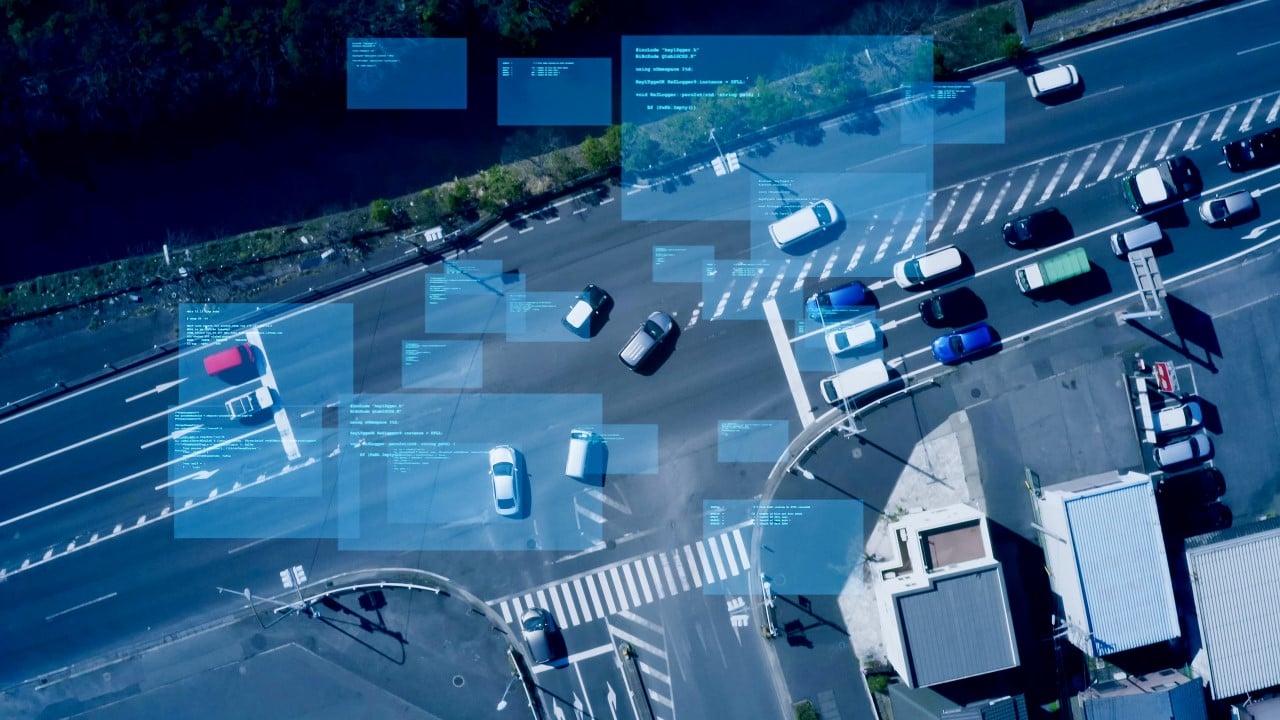
The Chinese government adopts a strategy for artificial intelligence that deviates from the standard debated in Western countries. Far from prioritizing virtual text assistants or the search for artificial general intelligence (AGI), the Asian nation channels billions in resources into platforms that allow metropolises, industrial hubs, logistics networks and public services to operate with instantaneous adjustments.
The global market is often faced with technological advances coming from Chinese territory. Examples range from algorithms that break records in performance tests to ultra-automated factory complexes and hyperconnected urban centers. The common justification for this scenario points to the abundance of engineers, massive volume of data and strong injection of state capital, factors that, although real, do not explain the complete picture of this evolution.

The true difference of the Asian power lies not only in the size of the investment, but in the purpose given to the technology. Within the country, intelligent systems assume central roles in strategic coordination, scenario projection and resource management. The priority goes far from creating programs that simulate human conversations, focusing on engineering solutions that guarantee the uninterrupted functioning of highly complex ecosystems.
This divergence of focus reveals a much broader understanding of the concept of computational intelligence. The model is shaped both by the demands of the contemporary economy and industrial guidelines and by ancient philosophical currents in the region, which value constant transformation, mutual dependence between elements and the capacity for continuous adaptation.
Practical applications overcome dependence on text-based virtual assistants
In Western markets, the debate about the technological future is usually restricted to the impact of text generators, productivity-enhancing applications and theoretical artificial general intelligence. Even though these segments have enormous commercial value, they illustrate only a fraction of what technology can achieve in the physical world.
The most audacious projects implemented in China have an architecture focused on critical infrastructure, taking control of fundamental operations for society, such as:
- Automated management of vehicle flow on urban roads.
- Prevention of logistical bottlenecks in the distribution of goods.
- Continuous monitoring of heavy machinery and electrical networks.
- Instant update of virtual replicas of entire municipalities.
The central purpose of these innovations abandons the mimicry of human language to focus on the regulation of physical movement, absorption of complex variables and immediate response to everyday fluctuations.
It is exactly for this reason that terms such as smart manufacturing, predictive logistics and digital twins dominate the country’s development plans. Such platforms operate proactively, calculating future probabilities to perform automatic corrections long before a failure comes to the attention of human supervisors.
From this perspective, it is clear that the Chinese government is not just pursuing the creation of algorithms with greater raw processing capacity. The real objective is to build a smart infrastructure base that operates under a logic that is fundamentally different from the rest of the world.
Ancient philosophical concepts shape modern software engineering
To decipher this technological route, it is necessary to turn our eyes to the intellectual traditions of the past. More than three hundred years ago, an exchange of historic letters between the European continent and Beijing connected two completely different views on the functioning of logic and intelligence.
In the year 1701, mathematician Gottfried Wilhelm Leibniz sent correspondence to Joachim Bouvet, a French Jesuit missionary living in the court of Emperor Kangxi, detailing his new binary arithmetic. The European scientist proved that any numerical value could be translated using just the digits 0 and 1, a revolutionary mathematical concept that, centuries later, would form the absolute basis of all modern digital programming and computing.
Bouvet’s response brought a drawing of the 64 hexagrams present in the I Ching, the classic Chinese Book of Changes. As each figure is made up of six lines, which vary between continuous and interrupted, the system generates exactly 64 combinations. Leibniz instantly noticed the parallel with his binary code and came to believe that ancient Asian thinkers had already mapped out this mathematical logic.
Even if the European deduction was hasty, the correlation carries undeniable historical weight. The I Ching is far from being a mathematical treatise along Western lines, in fact functioning as a guide for interpreting transformations. The relevance of its symbols is not in the current state of the figure, but in the possibilities for mutation that it offers.
No formation in the book represents a definitive scenario. Specific lines undergo changes, transforming an entire design into a completely new one. The entire work focuses on flow, transition phases and the unfolding of facts, reflecting a mentality that values the continuous process rather than seeking permanent stability.
The limitation of traditional codes in the face of dynamic environments
Contemporary computer science has followed a path opposite to this fluidity. Technology inherited the practice of slicing reality into isolated pieces, such as bits, code fragments and absolute numbers. This method proved to be extremely effective, serving as the foundation for the creation of complex software and current neural networks.
The big obstacle is that the physical world managed by machines rejects stagnation. Traffic in metropolises flows non-stop, stock markets fluctuate every second and cargo ship routes change with the weather. A traditional algorithm can photograph a scene with millimeter precision, but runs the risk of becoming obsolete in the next fraction of a second.
It is at this exact point that Beijing’s tactics take on unique contours. The country’s most impactful projects are born with the requirement for uninterrupted adaptation. The developers’ goal goes beyond simply reading static data, seeking to create mechanisms that maintain safe operations while the surrounding environment undergoes mutations.
A clear analogy for this difference is the comparison between a printed map and a navigation compass. While the map details the geography of a fixed location, the compass points the way forward. Algorithms that work like maps deliver rich reports, but fail in the face of rapid unforeseen events, while systems designed like compasses guarantee work continuity regardless of the weather.
Technology takes control of essential public services
For the common user, contact with machine learning occurs individually and directly, whether through an automatic translator, an advanced search engine or an image generator. These features deliver convenience, but operate under the logic of a traditional application that the individual accesses only when a specific demand arises.
The technological frontier explored by the Chinese elevates artificial intelligence to the level of a basic public utility service. Far from acting as a mere virtual oracle, the neural network takes control of traffic lights during peak hours, changes the route of freight trains to avoid accidents, distributes the electrical load of entire neighborhoods and activates the maintenance of industrial turbines before they fail.
The project known as City Brain, implemented in Hangzhou, perfectly illustrates this dynamic. The system is not limited to storing mobility statistics, but cross-references instant information about traffic jams, ambulance lanes and bus fleets to orchestrate urban routine. The metropolis is now treated by servers as a living organism, overcoming the antiquated view of independent intersections.
This format of urban management is completely at odds with the frenzy caused by conversational robots that dominate global headlines. This is much more rigorous engineering, as it requires platforms with the ability to physically interact with the real world, assuming responsibilities that go far beyond writing coherent texts.
New metrics evaluate the purpose of automated decisions
Asian technology forums often debate theories that go beyond simple mass data mining. A frequently cited model is DIKWP, a method that takes the traditional hierarchy of data, information, knowledge and wisdom, and adds purpose as the fifth fundamental pillar. The premise establishes that an intelligent system needs to understand why information is critical, and not just process it mathematically.
Another recurring term in laboratories is gongsheng, which can be interpreted as joint evolution or symbiosis. The concept argues that society, computers and governments function as connected gears that change each other over the years. Under this lens, artificial intelligence stops being just pure calculation and becomes a