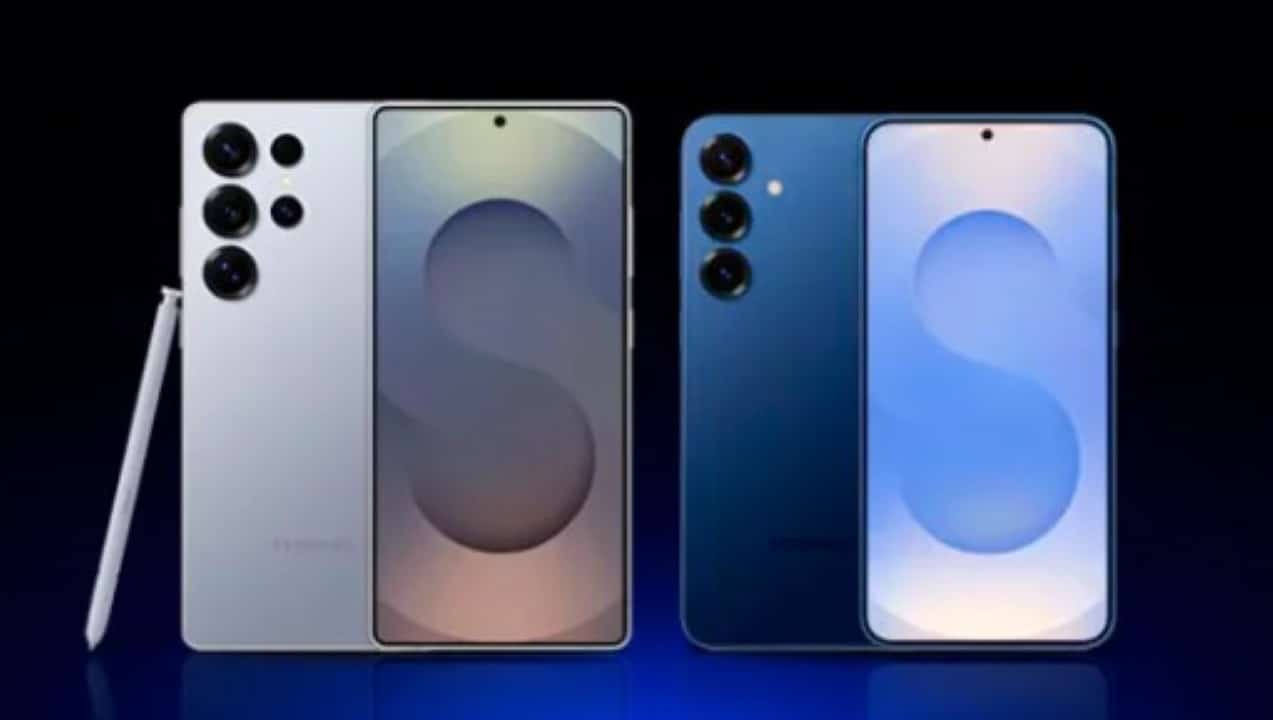
Recent posts on Asian technology forums have revealed what should be the definitive look at Samsung’s next big launch. The unofficial images of the Galaxy S26 Ultra show that the manufacturer will maintain the famous digital pen on the body of the device, but will promote a profound change in the camera module, leaving behind the aesthetics used in recent generations.
The main aesthetic novelty is the grouping of the rear lenses, which lose the individual rings seen in previous models. The South Korean giant decided to unify the photographic sensors on a single elevated island, adopting a visual identity that refers to the foldable cell phones in the Galaxy Z Fold family and delivering a rear panel with a more minimalist appearance.

The structural design of the smartphone follows the current industry standard with straight edges, adding only a slight curvature at the corners to ensure ergonomics during daily handling. The confirmed presence of the S Pen attached to the chassis serves as a relief for users focused on productivity, reinforcing the corporate vocation of the equipment compared to its main competitors in the premium market.
Even with the official launch only scheduled for the Unpacked event in February 2026, the appearance of these images reveals the manufacturer’s next steps. The strategy aims to polish a format that is already commercially successful, avoiding drastic changes that could scare away the brand’s traditional buyers.
New lens grouping transforms the visual identity of Samsung devices
The modification to the image capture module indicates an important standardization for the company’s future devices. By abandoning separate rims, the company builds a unified design language that makes it easier for the end consumer to recognize the product. This concentration of cameras in a single block also optimizes the manufacturing process and offers an extra layer of protection against mechanical shocks to the glass.
The construction of the phone continues to rely on noble materials, using a titanium structure capable of reducing the device’s weight while increasing impact resistance. The matte back panel works as a barrier against sweat and grease marks, a determining factor for customers who invest high amounts in electronics and demand an impeccable finish, associated with the luxury market.
Update in capture components promises to revolutionize night photography
The smartphone’s main sensor will maintain its 200 megapixel resolution, but with a completely renewed internal architecture. The market awaits the debut of an unprecedented ISOCELL component, designed with larger light receptors, which results in clearer night photographs and an extremely fast autofocus system, even in very low light conditions.
The photographic system will also feature an ultra-wide lens equipped with geometric correction software to avoid distortions at the edges of photos. For remote captures, the set will feature two distinct telephoto cameras, capable of providing optical zoom of five and ten approximations, using high-resolution sensors to ensure that details are not lost during magnification.
The elevation of the new rear module has an important practical function, as it prevents the lenses from scratching when touching rough surfaces when the cell phone is placed on a table. Aware of this change in format, manufacturers of protective accessories have already started to design specific cases that perfectly accommodate the new shape of the device.
The entire set of cameras will work in sync with the Galaxy AI platform, which has received significant improvements. The intelligent system will automatically balance light and shadow, eliminating visual noise from dark images, while the photo app’s generative functions will give the user the power to remove people from the background or recreate entire scenes with simple touches on the viewfinder.
Writing accessory receives autonomous functions driven by intelligent software
The space reserved for storing the S Pen continues to be a fundamental attraction for former consumers of the extinct Note line. Screen stroke latency has reached such a low level that the experience resembles using ink on paper, while mid-air gesture controls will now work in a variety of applications. The native note-taking app also gains autonomy to organize confusing texts and create automatic summaries of audio-recorded meetings.
New processor chip performs advanced calculations ensuring data privacy
The device’s performance will be handled by the new generation of processors from the Snapdragon line. The difference with this chip is the physical expansion of its neural processing unit, allowing the cell phone to perform complex artificial intelligence operations locally, without having to send sensitive user information to external servers on the internet.
The equipment’s screen will use Dynamic AMOLED 2X technology, measuring approximately 6.8 inches. The developers increased the maximum lighting capacity of the panel to ensure perfect reading in direct sunlight, preserving the variable refresh rate that ranges from 1 to 120 Hz, an essential feature for saving battery power when reading still texts.
To guarantee fluidity in the transition between dozens of open applications, the motherboard will receive RAM memory modules in the LPDDR6 standard, working together with very high-speed UFS storage chips. The most basic version of the smartphone will be sold with 12 GB of volatile memory and 256 GB of file space, offering an extended useful life for those who do not change their cell phones frequently.
Finishing options include classic shades and limited editions in online commerce
The selection of colors designed for the official launch will try to please both the corporate public and consumers looking for a bolder look. The leaked information indicates that the international market will receive the following options:
- Traditional finishes: Shadow Black, Silver White and Shadow Silver.
- Colorful alternatives: Glacial Blue, Cobalt Violet and Rose Gold.
Repeating a sales strategy that generated good results in the past, Samsung will reserve some exclusive shades only for customers who purchase through its online store. This tactic generates a feeling of exclusivity and directs the sales flow to the brand’s own channels, reducing dependence on large retail chains.
Release calendar indicates commercial availability shortly after the official announcement
The company’s planning establishes February 25, 2026 for the global presentation of the product, releasing pre-sales immediately after the event. The devices will begin to be delivered to buyers at the beginning of March, bringing a 5000 mAh energy tank and, as a big new feature in charging, support for 60 W sources, which represents a historic leap for the brand and considerably reduces the time needed at the socket.
Structural evolution of the phone meets the demands of the premium electronics market
The visual change compared to the previous generation highlights a preference for more sober lines. Replacing the dispersed lenses with a unified module responds to a request from the luxury segment for more discreet and sophisticated devices, bringing the cell phone’s design closer to the aesthetic standards found in high-value vehicles and haute horlogerie.
By keeping the digital pen untouched and redesigning only the back, the manufacturer finds the perfect balance between bringing new features and respecting the product’s history. The final balance is a smartphone that offers familiarity to loyal customers, but presents a renewed look enough to motivate the change of device, consolidating its position as the main working instrument in the business world.