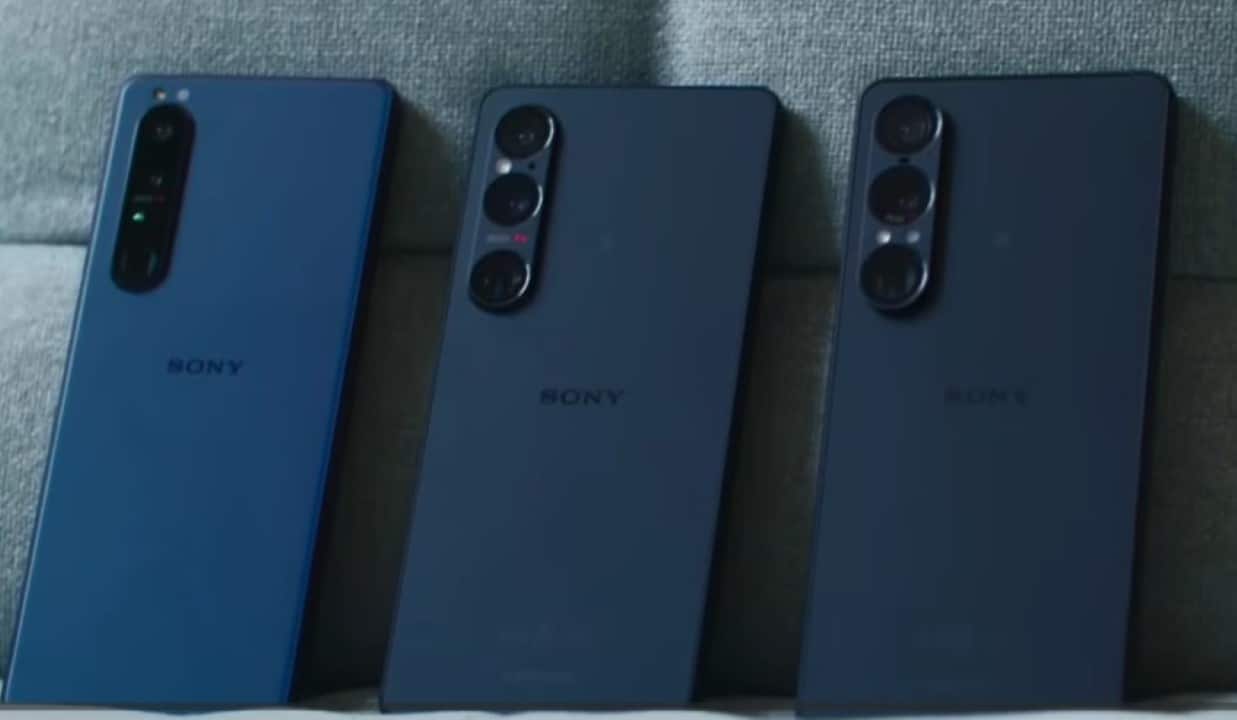
A practical assessment carried out in outdoor environments pitted two mobile technology giants face to face to find out who dominates image capture. The clash between the Sony Xperia 1 VIII and the Google Pixel 10 Pro XL highlights opposite paths in engineering: the Japanese manufacturer invests heavily in advanced physical components, while the search giant places its chips on artificial intelligence. Evaluated in sunlight and during the early hours of the morning, the devices revealed well-defined virtues and limitations.
Placing the devices in the real world serves to demystify what the technical sheets promise on paper. More robust physical components guarantee a greater input of native light, while computational systems apply instant millimeter corrections to the image. It remains to discover which of these strategies delivers the best final result to the user at the time of clicking.
Understand how the choice of physical components defines each device
The photographic architecture of the Japanese model is impressive as it houses three sensors from the Exmor line with generous dimensions. The main lens delivers 48 MP in a 1/1.35″ piece, accompanied by a 1/1.56″ ultra-wide lens and a telephoto camera that preserves practically the same proportions. On the other hand, the Google cell phone adopts a more contained physical set, featuring a 50 MP primary sensor, as well as 48 MP ultra-wide-angle and telephoto options, the latter being equipped with a five-fold optical zoom.
The differences in light capture become evident when analyzing the lens apertures. Google’s equipment reaches f/1.7 on the main sensor, allowing a higher light input than the f/1.9 mark registered by Sony’s competitor. However, the scenario changes completely in auxiliary cameras, where the Asian manufacturer boasts 1/1.56″ components versus much smaller 1/2.55″ parts used in the Pixel, both in the enlarged and close-up view.
The range of the zoom lenses also marks a clear division between the competitors. While the Sony device reaches an optical limit of 2.9x, the American smartphone goes further by guaranteeing a native magnification of 5x.
Performance in sunlight reveals the weight of artificial intelligence
When subjected to scenes with strong natural lighting, the Pixel 10 Pro XL displays a formidable mastery of automatic balancing. Driven by the Gemini artificial intelligence engine, the system calibrates contrast, saturation and exposure almost instantly. Darkened areas come to life without the result looking fake, maintaining Google’s classic visual identity, characterized by bright, well-balanced tones.
The Xperia 1 VIII shines by delivering records that are much more faithful to reality, benefiting directly from the superior size of its internal parts. The device captures the raw essence of the environment, avoiding an overly processed appearance and ensuring deeper contrasts. Meticulous details on metal surfaces, fabric weaves and foliage maintain an impeccable texture, something that rival software tends to smooth out during rendering.
The wider aperture of f/1.7 present on Google’s cell phone manages to balance the disadvantage of the smaller sensor during daytime clicks. The background blur effect, known as bokeh, appears more stable in American processing. On the other hand, the Japanese alternative generates a more organic blur, although it presents slight flaws in cropping the edges in images with a lot of depth.
Night captures show the superiority of native light harvesting
At night, the basic physics of photography speak louder and component size becomes the main factor. The Xperia 1 VIII can absorb a much greater amount of photons in each individual pixel, which drastically reduces visual noise without relying on software tricks to make up the image. Despite this, both devices manage to preserve an admirable level of detail even on poorly lit streets.
Not to be left behind, the Pixel 10 Pro XL activates an extremely aggressive night mode based on computational calculations. The system applies intense filters to clean up grain, force sharpness and increase the contrast of the scene. The final product loses some of its naturalness, but gains in clarity, allowing distant signs to be read with ease. The Asian competitor prefers to show exactly what the human eye sees, even if that means maintaining some of the grainy texture of darkness.
Although Google’s brighter lens helps with capture, the sensor’s reduced dimensions take their toll in dark environments. When the user photographs holding the device with their hands, without the aid of a tripod, the victory of the Sony model is indisputable.
Auxiliary lenses expose the limits of hardware and software
When activating the ultra-angular camera, Sony’s 1/1.56″ piece delivers image quality that stands out to the eye. Distortions in the corners of the photo are minimal and the sharpness remains impeccable from edge to edge. The American device, limited by a 1/2.55″ sensor, suffers in this aspect, generating blurred edges and losing valuable information in the widest angles.
The game changes when it comes to photographing distant objects, thanks to Google’s 5x optical approximation versus its rival’s modest 2.9x. When you push the digital zoom beyond its physical limit, the Pixel’s artificial intelligence kicks in to reconstruct the image and save the details. The Xperia tries to maintain naturalness, but the photo quickly starts to show blown pixels when it passes the three times enlargement mark.
Technical details of the cameras to assist in purchasing decisions
- Primary camera of the Japanese model: 48 MP, f/1.9 aperture, 1/1.35″ part and 1.12 μm pixels.
- Primary camera of the American device: 50 MP, f/1.7 aperture, 1/1.3″ piece and 1.2 μm pixels.
- Sony wide-angle lens: 48 MP, f/2.0 aperture, 1/1.56″ part, 1.0μm pixels.
- Google wide-angle lens: 48 MP, f/1.7 aperture and 1/2.55″ sensor.
- Sony optical zoom: 48 MP, f/2.8 aperture, 2.9x reach and 1/1.56″ part.
- Google optical zoom: 48 MP, f/2.8 aperture, 5.0x range and 1/2.55″ sensor.
- Xperia front lens: 12 MP with HDR support.
- Pixel front lens: 42 MP resolution.
Final thoughts on the premium smartphone clash
The Asian manufacturer masters the art of recording scenes faithfully and shines in the absence of light. The American company is unbeatable when it comes to delivering images ready for social media and reaching distant objects. Purist photographers will certainly be enchanted by the Xperia, while those looking for practicality and automatic corrections will find the ideal tool on Google.
One factor that may weigh in the balance is the financial aspect, as the Pixel 10 Pro XL appears with a reduction of US$250 on the Amazon platform for the 256 GB edition, considerably improving its value for money. The device package also includes a 6.8-inch OLED display and all the processing capacity of the Gemini ecosystem.
The two cell phones represent the pinnacle of the mobile technology market today. The consumer’s final decision is not just based on specifications, but on the preference between equipment with superior physical parts or a system guided by advanced algorithms.