The race begins to observe comet PanSTARRS before it disappears from the sky
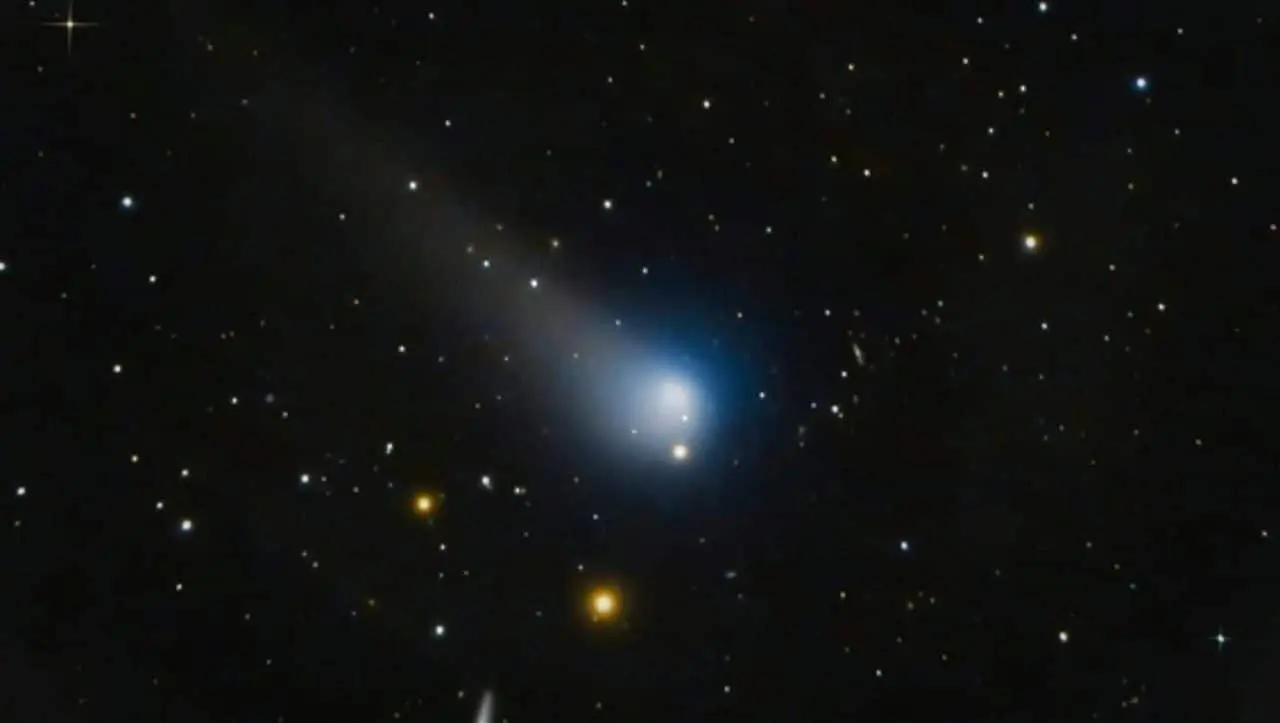
A rare celestial spectacle is capturing the attention of astronomy enthusiasts around the world: comet C/2025 R3 (PanSTARRS), a long-period rock of ice and dust that became visible before dawn on April 8, 2026. This distant visitor to our solar system offers a limited observation window, requiring observers to “hunt” against the sun’s growing brightness, which will soon overshadow it. The opportunity to see an object with such history is an invitation to look at the sky with a new perspective.
What makes comet PanSTARRS a rare and special event
Discovered by the Pan-STARRS project in Hawaii in September 2025, comet C/2025 R3 (PanSTARRS) is classified as a long-period comet. This means your journey originates in the coldest reaches of the solar system, like the vast and distant Oort Cloud. Its orbit around the Sun takes hundreds or even thousands of years to complete, making each appearance a unique event for most human generations. The opportunity to observe PanSTARRS now is unique, offering a glimpse of a primordial object that carries untouched material from the early formation of our solar system, acting as an authentic cosmic “time capsule.” Unlike short-period comets, which return more frequently, PanSTARRS’s visits are truly sporadic and valuable for science and amateur observation.
More on this story: Discover the Great Rift, a hidden feature of the Milky Way visible to the naked eye
Comets are essentially “dirty snowballs” made up of ice, dust and rocks that orbit the Sun. As they approach our star, the ice sublimates (goes directly from a solid to a gaseous state), creating a glowing coma around the nucleus and, in many cases, a spectacular tail. The composition and origin of PanSTARRS, coming from such a remote region, make it an object of great scientific interest, as it can offer clues about the conditions of the solar system in its early stages. The difficulty of observing it is a small price to pay for the chance to witness something so ancient and distant.
The expectation of brightness and the challenges of observation
Comet PanSTARRS currently has a magnitude of about +6, which puts it at the limit of naked-eye visibility in extremely dark sky conditions, far from any light pollution. For reference, the lower the magnitude number, the brighter the object. A +1 magnitude star is much brighter than a +6 star. However, its brightness is expected to increase rapidly as it approaches perihelion — the point of its orbit closest to the Sun — scheduled for April 19 and 20, 2026. The estimate is that it could reach magnitude +3, which would make it a relatively easy object to observe with binoculars and possibly visible without the use of equipment in ideal skies, although binoculars will always provide a superior view.
On the same topic: Comet discovered in Chile reaches closest approach to the Sun and may shine in the April sky
See Also

Hurricane Lala arrives in Hawaii with winds of 120 km/h and closes airports

Lucas, singer of the country duo Lucas & Matheus, died in Portugal after a heart attack

Workers from seven professions guarantee INSS retirement in 15 years
However, this increase in brightness comes with a crucial challenge, a true “geometric trap”. As the comet approaches the Sun and becomes more luminous, it also moves to a lower position on the horizon in the early morning sky. This means he will need to fight the increasing luminosity of twilight. The skies will not be completely dark, but lightening quickly. Therefore, its peak brightness may coincide with the most difficult conditions for observation as the battle against daylight intensifies, requiring observers to be alert at the exact darkest moments before sunrise, when the comet will be lowest on the horizon and most exposed to the morning glow. This race against time and light is what makes watching PanSTARRS so thought-provoking.
Guidelines for the comet hunt: dates and equipment
For those wishing to witness this astronomical phenomenon, planning and preparation are essential. Observation requires traveling to locations with low light pollution and a clear, unobstructed view of the eastern horizon. Big cities and their lights are great enemies of observing faint objects like comets. 10×50 binoculars are highly recommended to begin with, as they magnify the comet’s faint glow and help distinguish its fuzzy shape, which can appear like a “ghostly blur.” Additionally, more equipped enthusiasts might consider a manual camera with a telephoto lens and a tripod for recording images, while a smart telescope offers a more detailed, automated view.
Learn more: Comet Lemmon crosses cosmic serpent at the end of October with naked-eye visibility
It is essential to consult updated star maps or astronomy applications to identify the comet’s exact position in the sky each morning. The orbit of comets is dynamic, and their apparent position changes from day to day. The observation window is narrow, starting well before dawn, when the sky is still dark, and ending abruptly with the arrival of sunlight. The days close to perihelion, between April 19 and 20, are considered the most promising for those looking for the greatest intensity of brightness from the celestial object, but remember the challenge of daylight.
Practical tips for successful comet observation
- Plan your night out:The comet is only visible before sunrise, so wake up significantly before dawn to give yourself time to prepare.
- Choose the ideal location:Choose a vantage point with a clear eastern horizon and as little artificial light as possible to maximize visibility.
- Prepare your equipment:Have 10×50 binoculars on hand, as they are the most accessible and effective tool for most birders. If so, a telescope can reveal more details of the coma and tail.
- Consult celestial maps:Use astronomy apps or printed star charts to precisely locate the comet in relation to known constellations each night.
- Eye adaptation:Allow your eyes to adjust to the darkness for at least 15 to 20 minutes before you start looking for the comet. Avoid looking at high-bright cell phone screens.
- Dress in layers:Early mornings can be considerably cold, even in regions with mild temperatures during the day. Wear clothes that keep you warm and comfortable.
- Have patience and persistence:The comet may appear as a subtle, diffuse, almost ghostly blur against the brightening sky, requiring a careful look and repeated scans of the expected area.
The appearance of comet C/2025 R3 (PanSTARRS) is a vivid reminder of the vast and dynamic nature of the universe, an invitation to appreciate the celestial phenomena occurring above us. For those willing to brave the cold and dark of early morning, the reward is a fleeting glimpse of a piece of cosmic history, an object that has traveled billions of miles to grace us with its presence for a brief period. This is an unmissable chance to connect with the immensity of space, taking advantage of the last opportunities before the comet continues its long journey back into the cosmic depths.