Purchasing a state-of-the-art panel to take advantage of the power of the PlayStation 5, Xbox Series X or Apple TV 4K does not always guarantee a perfect visual experience the first time you use it. Most buyers invest thousands of dollars in premium screens, but end up frustrated when faced with washed-out images, lack of brightness and lifeless textures. This obstacle, which scares many users right after taking the device out of the box, rarely points to a defect in the display, being simply the result of a blockage in the operating system or the wrong choice of connection wires.
The reason behind this data throttling lies in the standard adopted by automakers when programming rear doors. Technology giants configure inputs to ensure maximum compatibility with obsolete devices, ensuring that any player transmits signal without choking. To prevent old hardware from crashing when receiving a load of data that it cannot process, brands intentionally limit bandwidth, directly punishing the performance of the latest consoles on the market.
Understanding the severity of this restriction requires an analysis of the visual flaws that arise when television forcefully compresses the digital signal. The most notable issues affecting gameplay and media consumption include:
- Drastic reduction in color palette, which negates the real benefits of 10-bit HDR technology.
- Exaggerated chroma compression, resulting in blurry text and blurry-looking navigation menus.
- Refresh rate barrier, making it impossible for the monitor to reach the coveted 120Hz during multiplayer matches.
- Frame synchronization fails, causing annoying horizontal cuts when the game camera rotates quickly.
Brands’ decision to limit broadband aims to reduce technical support costs
Keeping HDMI connections operating at the most basic level is a corporate maneuver calculated to reduce the volume of complaints through customer service channels. If a customer installs a television and decides to plug in an old DVD player, the system needs to translate that signal immediately. If the door was already unlocked from the factory to receive massive data packets, these outdated devices would collapse, resulting in black screens, unbearable hissing or continuous image failures.
To avoid thousands of daily calls reporting supposed manufacturing defects, the industry standardized this security lock. In the past, the difference in voltage and processing of an old player was capable of burning out the logic board of a modern TV. Today, according to the guidelines of the HDMI Licensing Administrator consortium, the responsibility for releasing the full flow of information falls on the consumer, who most of the time has no idea that they need to scour the menus to activate the true potential of their purchase.
Direct impact of digital throttling on contrast and lighting quality
The restriction on the flow of information directly affects the integrity of the digital signal that travels from the video game to the screen’s LEDs. With the default setting activated, the input port creates a bottleneck, forcing the console to squeeze the video file violently before sending it over the cable, which destroys the richness of detail generated by the graphics processor.
The most aggressive reflection of this compression appears in color subsampling, which the operating system usually downgrades to the 4:2:0 format. In practice, the television throws away crucial pigmentation data to save bandwidth, eliminating the smooth transition between different tones and creating marked color bands on the screen, a defect that becomes evident when navigating through the system’s interfaces.
Dynamic range is also severely hampered by this software barrier. Without a free path for data transit, the image processor is unable to interpret the 10-bit matrices. The practical result is a brutal drop in display capacity, dropping from 1.07 billion shades to the limited 16.7 million of the 8-bit standard, impoverishing the viewer’s immersion.
The natural transition between the darkest areas and the lighting peaks loses all the impact planned by the art directors. The intense glare of the sun in an exploration game or the metallic reflections in a movie scene become opaque, causing a very expensive display to deliver the same visual result as a monitor manufactured almost a decade ago.
Blocking advanced features destroys fluidity in online video games
In the world of electronic games, the need for instant processing increases the demands on hardware, making this factory lock even more harmful. Computers aimed at gamers and next-generation consoles send a colossal amount of data every millisecond to ensure that complex scenarios and fast movements are rendered without delay.
When the tailgate works in restricted mode, vital technologies like Variable Refresh Rate (VRR) and Automatic Low Latency Mode (ALLM) are instantly disabled. The player loses the advantage of ultra-fast response time, starting to deal with noticeable delays between the control command and the action on the screen, in addition to suffering from image breaks during sudden camera movements.
Under these limiting conditions, achieving 4K resolution with a fluidity of 120 frames per second becomes unfeasible, as this configuration requires the free 48 Gbps traffic guaranteed by the HDMI 2.1 standard. When detecting input blocking, the video game itself reduces the quality of the textures or cuts the frame rate in half, wasting all the investment made by the consumer in the equipment.
Lack of standardization between brands confuses users when releasing the signal
The journey to unlock the flow of data comes up against the absence of a unified vocabulary among manufacturers, who invent different commercial names for the exact same function. Samsung, for example, hides the release under the name HDMI UHD Color in the Tizen interface. LG prefers to call the HDMI Ultra HD Deep Color feature within webOS. On the other hand, Sony requires Bravia device owners to change the signal format to advanced mode. Brands like TCL, Philips and Panasonic adopt equally unintuitive menus. Ultimately, all these virtual keys are just to ensure that the 18 Gbps of the 2.0 standard or the 48 Gbps of the 2.1 version flow freely.
Step by step to reconfigure the operating system and get the most out of the display
To break down this barrier, the owner must use the remote control and navigate to the television’s software control panel. The basic route involves accessing the global settings gear and looking for the menu dedicated to physical connections, external device management or video ports, depending on who manufactured the screen.
Finding the signal formats section is the definitive step to changing the rules for that specific port where the console is connected. When changing the switch from standard mode to enhanced format, the screen usually flashes or goes black for a few seconds, the time required for the logic board to restart its protocols and start accepting the full volume of uncompressed data.
Importance of using certified cabling to avoid physical bottlenecks in the connection
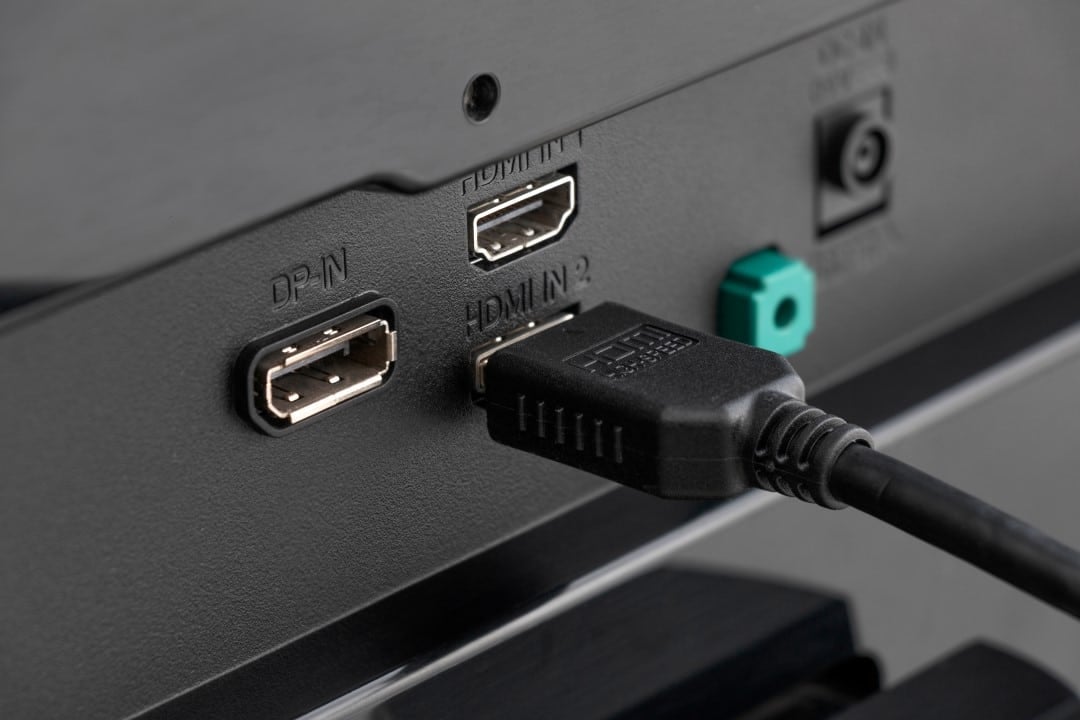
The internal structure of the cable works like the highway along which all this load of information travels, making any software adjustment useless if the wire is inadequate. Reusing an old cable, which has severe bends in the protective mesh or oxidized pins, creates an insurmountable physical resistance that nullifies all the advantages activated in the TV system.
To ensure that the dynamic brightness and high frame rate reach the image processor intact, it is crucial to invest in wires approved by regulatory agencies. Cables labeled as high-speed get the basic job done, but to extract every drop of performance from modern ports, models certified as ultra-high-speed are non-negotiable requirements at the time of assembly.
Care required when connecting obsolete devices to broadband-enabled ports
Although next-generation hardware depends on this data highway to shine, experts’ recommendation is to activate the feature exclusively on the ports that will receive these consoles. Old devices, when forced to operate on an input with the maximum flow unlocked, often suffer from signal drops, sudden muteness or complete image freezing. Due to this risk, the user must configure each HDMI port separately, respecting the technological limitations of each device connected to their entertainment center.