Research reveals microplastics in snails and mussels from the bottom of the Indian and Pacific Oceans By Beatriz
5 min read
 |
New research, published on August 4, revealed the presence of microplastics in deep-dwelling snails and mussels in the Indian and Pacific Oceans. Researchers aboard the ship Isabu observed live images of these animals, collected at a depth of around 2,000 meters, around hydrothermal vents. The discovery highlights the scope of plastic pollution, even in the most isolated regions of the planet.
The expeditions that led to this discovery began in 2016, when scientists explored the North Fiji Basin, in the southwest Pacific Ocean. This was the first of two missions focused on living things that thrive near underwater hydrothermal vents. Later, the team headed to the Indian Ocean to continue their studies.
At each location, an underwater robot was used to collect the specimens. When brought to the surface, each animal was wrapped in aluminum foil and quickly frozen at -80°C, in order to avoid any external contamination. The complexity of the work required weeks to gather just 12 animals during the two journeys, which took place between 2016 and 2019.
Almost a decade after collections, data analysis revealed that human activities even affect life in distant ecosystems. The study, published in the scientific journal Water Research, confirmed the presence of plastic microparticles in 11 of the 12 animals analyzed, which represented four different species of mussels and snails.
“Finding contamination in almost all animals was still a shock,” said Se-Joo Kim, study co-author and researcher at the Korea Research Institute of Bioscience and Biotechnology. “I expected to detect some. I didn’t expect 92% of the specimens.”
Over the past ten years, microplastics have been frequently recorded in deep-sea sediments and, more recently, in other deep-sea species such as lobsters and crabs. Kim explained that “the chemical signature in animals living 2,000 meters deep still reflects what people are doing on the surface above them.”
However, the precise mechanisms by which deep-ocean organisms absorb microplastics are not yet fully understood, as stated by Ana Carolina Ronda, a biochemist at the Argentine Institute of Oceanography, who was not involved in the research.
The expert added that the study contributes to expanding the understanding of “how microplastics, even on the seabed and at enormous depths, can be absorbed by various species.”
How microplastics reach the bottom of the sea
The pathways by which microplastics descend below 200 meters, reaching the deep water zone, are intricate. Although plastics naturally float, they become heavier as microbes and algae attach, making them easier to descend. The process intensifies when they are incorporated into fish feces or zooplankton, such as small marine animals and larvae. Near the ocean floor, underwater currents spread them, while underwater canyons direct them to specific points.
“And once they arrive, they stay,” Kim explained. In the vast marine abyss, the absence of light, heat and oxygen prevents the chemical processes that degrade plastics at the surface from occurring. “Everything that reaches the seabed accumulates there for periods much longer than a human lifetime,” meaning the environmental impact is long-lasting and growing.
Recovering any material from these depths is a costly and time-consuming task. The study required a team specialized in deep-sea taxonomy, ecology and microplastic analysis. Funding came from three Korean ministries and the Korea Research Institute of Bioscience and Biotechnology, using two vessels equipped with -80°C freezers, microscopes, imaging systems, culture facilities and DNA sequencers.
Given this complexity, each sample was treated as an item of great value in the laboratory. To prevent cross-contamination during handling, the researchers used natural fiber clothing, pure cotton lab coats and disposable latex gloves. Glass vials, dissection forceps, scissors, and knives were sterilized, and everything was wrapped in aluminum foil rather than plastic materials. “You work carefully with what the ocean allows you to catch,” Kim reported.
Consumption of microplastics by marine animals
The lush ecosystem of giant tube worms (Riftia pachyptila), clams, mussels, blind crabs, hydrothermal vent shrimp, limpets and snails that cluster around the vents consumes everything it finds, including microplastics. The new research offers insights into how these creatures’ different feeding mechanisms can influence the amount of plastic pollution in their bodies.
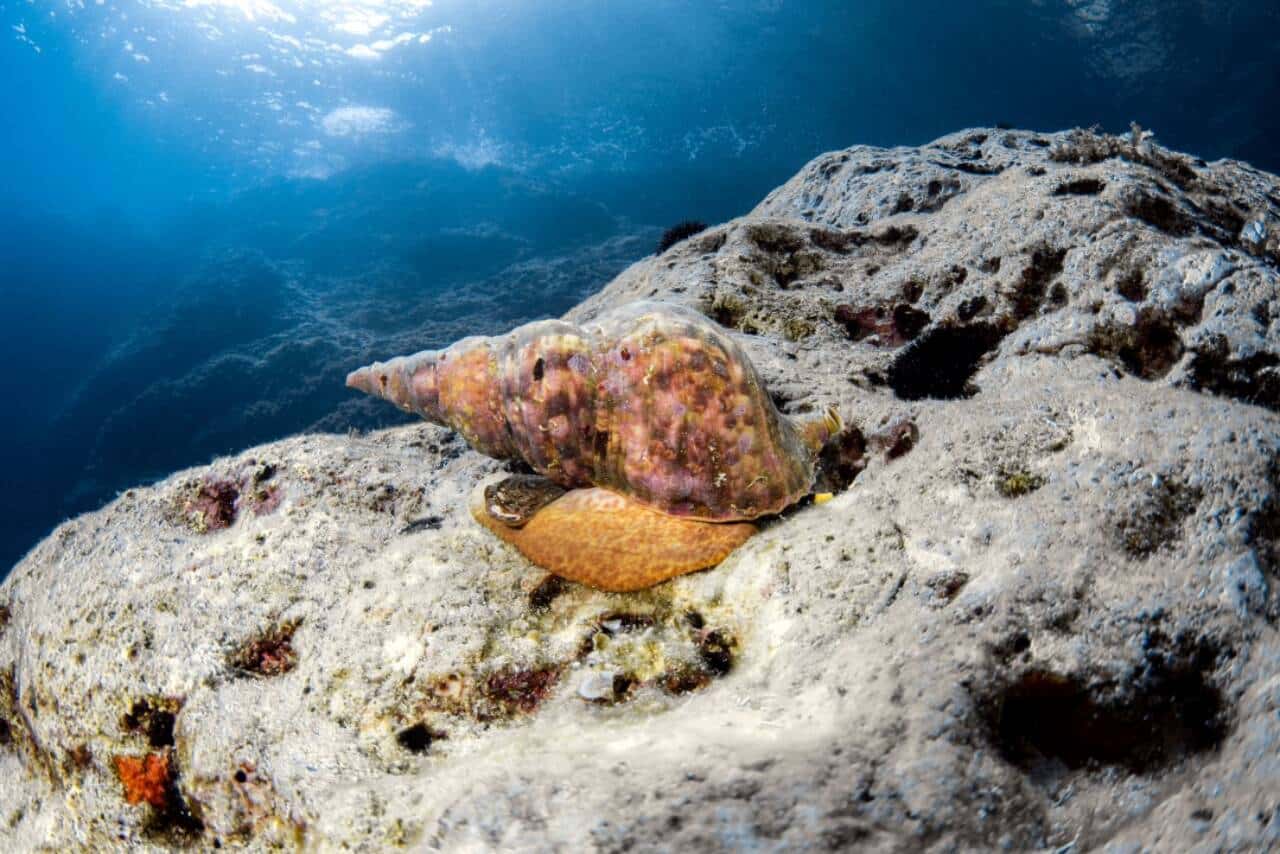
Deep-sea snail species, for example, feed on microbial mats, slimy bacterial films that cover hydrothermal vents and the seabed, and which trap microplastic particles. The researchers suspect that the snail’s intestine and digestive gland, which combines the functions of the liver, pancreas and intestines in humans, trap these particles. Higher concentrations of microplastics were found in these organs than in the gills or muscles.
In contrast, deep-sea mussels did not show particle accumulation in specific tissues. This could be explained by their way of feeding: by filtering the water to collect microbes and floating debris, “both the gills and digestive organs are continually exposed to suspended microplastics,” the researchers wrote.
Differences in contamination between oceans
This new study is the first to compare microplastic contamination in animals from two different oceans. Kim stated that “Comparing separate oceans is, in our opinion, essential if you want to link high-sea contamination directly to human activity, rather than simply documenting that plastic is everywhere.”
Specimens from the Indian Ocean had up to 14.7 times more microplastics than those from the southwest Pacific. Research suggests this can be attributed to the fact that the Indian Ocean receives around 15% of coastal plastic waste and 20% of global riverine waste, making it the second largest load after the North Pacific. Furthermore, regional monsoons can accelerate the transport of land-based pollutants to the ocean, as indicated by the authors.
Biochemist Ronda expressed skepticism about this conclusion. She has already analyzed samples from the ocean floor near Hawaii, near the vast accumulation of plastic waste known as the Great Pacific Garbage Patch, expecting to find sky-high levels of microplastics. However, she said that she did not observe a linear relationship between the amount of microplastics on the surface and at the bottom of the sea. “So, is it really because of disposal in the area, or do these microplastics come from somewhere else?” he asked.
Ronda added that it is crucial to investigate whether microplastics are affecting the biological processes of these animals. “Many new questions arise from these results,” he said.
For Kim, the study of these still little-known ecosystems is vital to uncovering the role of the ocean as the planet’s life support system. “We still don’t know which species are the key ones, the ones whose loss would spread across the entire planet,” he declared. “If a link breaks in the deep-sea food pyramid, we have very little idea what that means for surface ecosystems, which highlights the urgency of understanding and mitigating plastic pollution.”