President Xi Jinping has reiterated the importance of China’s food security for more than ten years, emphasizing the need to strengthen national production and reduce dependence on imported food. This guideline is present in the goals outlined by the Chinese government in its 15th Five-Year Plan, a document released at the beginning of the year that covers the period from 2026 to 2030.
This Five-Year Plan details China’s main strategic objectives for the next five years, focusing on economic and social development. The current document sets the goal of increasing national production of essential agricultural items, such as soybeans, corn and meat, of which Brazil is an important global supplier.
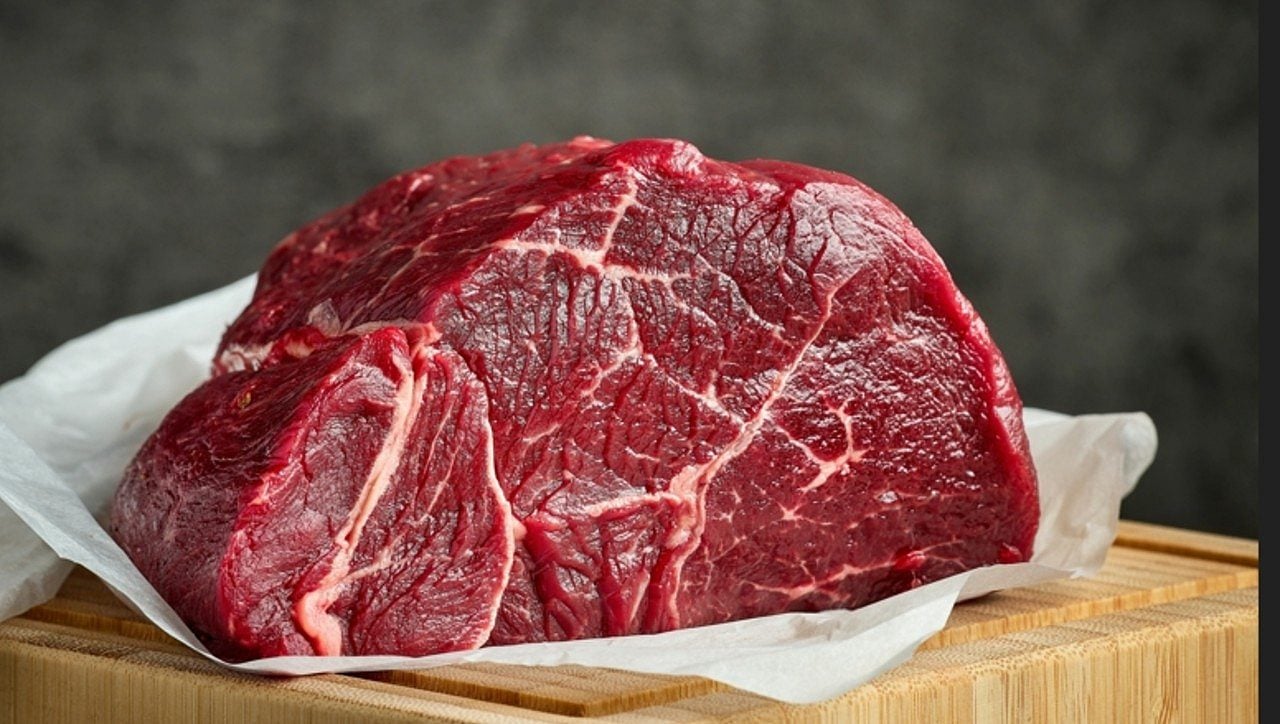
The imposition of quotas on beef imports, applied by China to several nations, including Brazil, already reflects this new approach. The Asian country seeks to achieve 85% self-sufficiency in beef and lamb, starting from the current 70%.
But what is the impact of this strategic change for Brazil? Experts indicate that, although a rupture or abrupt decrease in Chinese imports is not expected, the situation demands immediate adaptation on the part of Brazilian companies.
Theo Paul Santana, who founded the consultancy Destino China and assists in business with the Asian country, explains that the future focus will not only be on volume, but on the quality of exports. For him, this implies adding value, transforming pure commodities into premium cuts, processed products and consolidated brands, in addition to the need to diversify markets to avoid dependence on a single buyer.
He adds that Brazil will maintain its relevance because China itself recognizes its geographic limitations, making it impossible to “invent land and water”, despite its engineering capabilities.
Despite having a larger territory than Brazil, China has a restricted amount of cultivable land. Much of its territory is made up of mountainous, arid or desert regions, and the country holds less than 5% of the world’s freshwater reserves. Given this, the Chinese strategy must prioritize increasing productivity, using technological advances such as genetic improvement of seeds and modern machinery to produce more in the same area.
Larissa Wachholz, former special advisor to the Ministry of Agriculture and currently partner at Vallya Associados, emphasizes that, although China is not expected to achieve total self-sufficiency, it is crucial not to underestimate its ability to achieve the proposed goals. She notes that, throughout her experience following Chinese public policy, the country demonstrates consistent results when directing technological, educational and financial efforts towards its objectives.
Main objectives of the Chinese plan for food security
Among the various approaches to the Chinese plan, experts highlight some main focuses:
- Expand grain production, aiming for 725 million tons per year by 2030, exceeding the 715 million tons harvested in the previous year.
- Strengthen agricultural technology, increasing the contribution of science and technology to rural development from 64% to 67%.
- Reduce soybean imports, reducing the use of soybean meal in animal feed from approximately 14% to less than 10% by 2030.
- Achieve greater self-sufficiency by producing at least 95% of essential grains such as rice and wheat domestically, as well as achieving 85% self-sufficiency in beef and lamb and 70% in dairy products.
Theo Santana notes that China has already achieved self-sufficiency in key grains such as rice and wheat. He adds that the production of these foods exceeds 100% of domestic demand, according to data from the Chinese National Bureau of Statistics. However, the country has not yet reached the targets set for other food products. The production of beef and lamb, for example, supplies 70% of national demand, while milk production reaches 62%.
Impact of Chinese strategy on Brazilian exports
Consultant Theo Paul Santana points out that China’s strategy is mainly aimed at grains consumed by the population, products that Brazil rarely exports to the Asian country. He states that Brazilian sales to China consist precisely of products in which the Asian country faces difficulties in being self-sufficient, such as soy and meat.
In 2023, China registered a record import of almost 112 million tons of soybeans, with more than 70% of this volume coming from Brazil. Chinese domestic production only supplies about 20% of domestic demand. Larissa Wachholz explains that China is “uncomfortable” with this dependence. In response, the country is intensifying investments in technology and genetic improvement, including transgenic seeds – a subject previously considered “taboo” – aiming to increase production without expanding the cultivated area or water consumption.
The Brazilian grain market is already experiencing the consequences of this policy, with a reduction in corn exports. After a record harvest in China last year, cereal imports by the Asian country fell from 8.4 million tons in 2024 to less than 4 million in 2025. Consequently, the Ministry of Agriculture reported a 20.8% drop in the value of Brazilian corn exports to China last year.
Further evidence of this trend has manifested itself in the beef sector, where China has implemented quotas for Brazil and other exporting nations. In January, China imposed a 55% surcharge on Brazilian meat imports that exceed 1.1 million tons. According to Fernando Enrique Iglesias, consultant at Safras & Mercado, this limit was already exceeded in July.
Santana explains that the quota was established after a safeguarding investigation. The Chinese Ministry of Commerce justified the measure by stating that imported meat was harming the local industry, and that the action aimed to stabilize the herd and allow time for Chinese producers to reorganize. However, the expert predicts that this policy will have a limit. Santana details that China produces approximately 7.8 million tons of beef, but consumes between 11 and 12 million tons. He describes this deficit as structural, and the OECD estimates that it could reach around 4 million tons per year by 2032. Therefore, the quota serves to manage the pace of imports and protect local livestock farmers, but it does not resolve dependence, functioning more as a temporary protection than a definitive closure of the doors.
What adaptations should Brazil make for the future?
One of the solutions highlighted is the diversification of export markets. Santana reports that in 2025 alone, Brazil gained access to more than 200 new markets, of which almost 20 were destined for beef. However, replacing part of the Chinese market, responsible for half of Brazilian beef exports, represents a considerable challenge.