
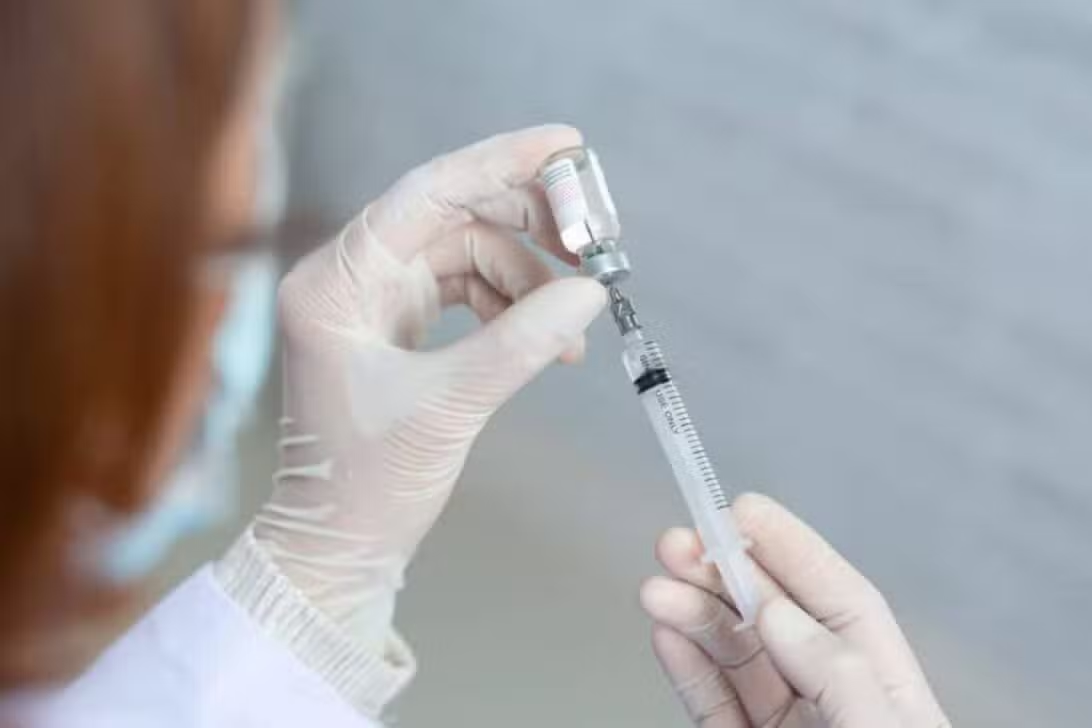
A revolutionary vaccine, developed with the help of artificial intelligence, has undergone initial testing in humans, revealing a “modest” immune response. The phase 1 trial, focused on the safety of the vaccine, took place in mid-August 2026 and represents a crucial step in the application of the technology to public health.
The main proposal behind the use of artificial intelligence is to improve the vaccine’s ability to attack the sarbecovirus family, which includes SARS-CoV-2. This approach aims not only to combat existing strains, but also to predict and prepare for future mutations, accelerating the development of adapted and more effective vaccines.
Development through artificial intelligence and the fight against mutations
The artificial intelligence technology used in the creation of this vaccine allows for a complex analysis of the viruses’ genetic and structural data. This accelerates the identification of immunogenic targets and optimizes the design of the vaccine, making the development process faster and more effective against emerging variants. This method could represent a significant advance in the global response to pandemics.
Innovative needle-free application technology
In addition to innovation in development, the vaccine stands out for its method of application. It is designed to be administered without a needle, using a specialized jet injector. The system, known as PharmaJet Tropis, uses fluid dynamics to deliver vaccine components precisely, eliminating the need for punctures with metal syringes. This difference can facilitate adherence to vaccination, especially for people who are averse to needles.
Preliminary results and safety of the new vaccine
The first clinical tests, which included a small group of 39 participants, had as their main focus the assessment of the safety and tolerability of the immunizer. The results pointed to an immune response that the researchers classified as “modest” in humans. This generated a contrast with the data observed in mice, where the immunological reaction was more intense.
Despite the difference, the study authors confirmed that the initial objective of phase 1 was fully achieved, demonstrating the safety of the compound and its ability to initiate an immune response. The analysis also indicated evidence that the model can direct responses to conserved regions of sarbecoviruses, an important point for protection against future variants.
Next steps for the effectiveness of the immunizer
Phase 1, although crucial to ensure safety, was not intended to prove the vaccine’s effectiveness. To this end, a second clinical trial is already underway, this time with 200 participants. The objective is to determine whether the vaccine can provoke a lasting and robust immune response in a broader and more diverse human population. The real challenge will be to see whether this response can offer effective protection against the disease.
What are sarbecoviruses and the importance of this research
Sarbecoviruses form a genus of RNA viruses that include SARS-CoV, responsible for the SARS epidemic in 2002-2003, and SARS-CoV-2, which causes COVID-19. The development of a vaccine targeting conserved regions of this viral family is strategically important. This could offer more comprehensive protection against different strains and minimize the impact of future pandemics, rather than developing a vaccine for each variant that emerges.