The team responsible for reimagining one of the most influential titles in the history of video games confirmed significant advances in the production of the third and final chapter of the saga. Square Enix directors and producers revealed that the conclusion of the trilogy of remakes is scheduled to hit the market in 2027. The chosen year coincides exactly with the thirtieth anniversary of the launch of the original game for the first PlayStation, which debuted in Japan on January 31, 1997, marking a commemorative date of great importance for the digital entertainment industry.
Information from the Creative Business Unit I division indicates that the main script has already been completely finalized, allowing developers to now focus on recording voices and improving game mechanics. The dubbing process for the protagonists is underway, which signals the transition from a pre-production phase to full-force development. The studio’s objective is to deliver a work that surpasses the scale and emotional charge of previous titles, definitively closing the narrative arc started in 2020.
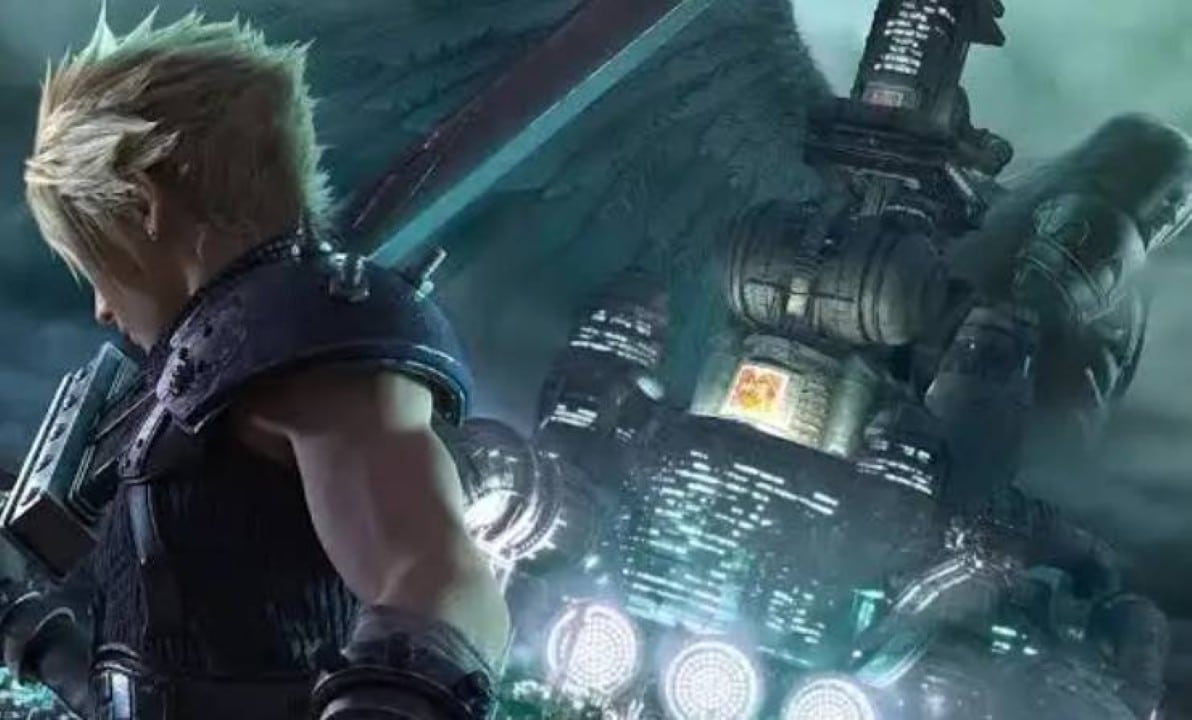
Possible transition to Unreal Engine 5 promises to revolutionize graphics
One of the most debated topics behind the scenes and in technical forums concerns the visual leap planned for the end of the journey. While the first two volumes were built on the consolidated basis of Unreal Engine 4, software engineers are now evaluating the feasibility of migrating the project to Unreal Engine 5. This technological update would make it possible to render scenes on a colossal scale, something fundamental for the functioning of the Highwind aircraft and for displaying complex geometries that the old engine would not support fluidly.
The change, however, faces considerable logistical challenges, as a large number of resources and systems are already optimized for the current platform. The creators’ priority is to prevent the search for graphical excellence from delaying the release schedule, maintaining the focus on deepening the immersion of the virtual universe. The final choice on the technology adopted will seek a balance between aesthetic innovation and the stability necessary to guarantee a global debut without performance failures.
If the new technology is effectively implemented, industry analysts and enthusiasts anticipate a series of substantial improvements to the user experience, with emphasis on the following aspects:
- No more disguised loading screens, such as slow animations when passing through narrow gaps.
- High precision dynamic lighting applied in open oceans and deep dungeons.
- Noticeable improvement in characters’ facial expressions during cinematic scenes.
- Advanced physics to support aerial combat and free navigation with the flying vehicle.
The strategic weight of releasing the outcome on the franchise’s thirtieth anniversary
For Square Enix’s management, aligning the arrival of the latest game with the brand’s three decades of existence represents a robust marketing move and a tribute to its loyal followers. The year 2027 carries strong symbolism, functioning as a bridge between veterans who experienced the 32-bit era and younger audiences. The company treats the launch not just as a commercial product, but as a cultural event that ends a work cycle of more than ten years.
The warm critical reception for the second chapter, entitled “Rebirth”, raised the bar for the story’s conclusion. The directing team, which has remained practically intact since the beginning of the project, introduced complex concepts of multiple timelines, generating intense debates about the direction of the narrative. The current challenge is to tie up these loose ends in a way that satisfies both purists, who demand fidelity to classic events, and newcomers looking for new twists.
Design Challenges in Creating a Fully Explorable Open World
The open world structure, already tested in the previous title, will undergo exponential expansion with the introduction of full control over the Highwind aircraft. Historically, obtaining this vehicle marks a turning point in gameplay, allowing unrestricted access to practically all continents on the map. Designers work hard to translate the old aerial view of the world map into a realistic three-dimensional environment, ensuring that the transition occurs without breaking the technical coherence of the software.
In addition to exploration through the skies, iconic and previously unseen locations in this new version, such as the Rocket Town launch base and the deep North Crater, will require a colossal modeling effort. Following the recently established quality standard, the internal order is to maintain the density of relevant activities, prioritizing secondary missions rich in history rather than filling the map with repetitive and empty tasks.
Changes in the exclusivity strategy and the impact on the console market
Following the tradition of previous volumes, the conclusion of the saga should maintain a period of temporary exclusivity on PlayStation family consoles, a partnership that Sony uses to boost sales of its devices. However, recent financial reports indicate that Square Enix is reformulating its corporate guidelines after initial sales of “Rebirth” fell below management’s most optimistic projections. The publisher’s new stance aims to maximize profits and the reach of its franchises, indicating a faster transition to multiplatform releases in the future.
The delivery of this three-part work will represent the end of an era for the veteran developers who returned to reimagine the universe they themselves helped create in the 1990s. Successfully completing this endeavor will serve as a testament to the Japanese studio’s ability to modernize absolute classics, keeping them relevant for a new generation of consumers within an increasingly competitive and demanding global market.
The volume of searches for terms related to the development of the third part of Final Fantasy VII is already growing on search platforms. Expectations surrounding the use of Unreal Engine 5 and the 2027 release window dominate discussions on social media, reflecting the community’s strong engagement with Square Enix’s intellectual property.
Following behind the scenes of the creation of the final chapter of this remake has become a point of continuous interest for specialized media. The outcome of the journey of Cloud Strife and his allies promises not only to redefine Japanese RPG production standards, but also to consolidate a new model for how the industry deals with the preservation and renewal of its own historical legacy.